Thailand's government has postponed planned peace negotiations with southern insurgent groups indefinitely following a coordinated assault in Narathiwat that resulted in five ranger fatalities and multiple civilian injuries. The talks, which were set to resume in September in Malaysia, represent a significant setback for a peace process that had been gaining momentum before the attack exposed the fragility of ongoing diplomatic efforts.
The violence occurred when six masked assailants opened fire and detonated pipe bombs at a security checkpoint in Ban Bukit Sami, Rangae district, Narathiwat province, on the evening of July 22. The assault left five rangers dead and wounded six civilians, including a three-year-old girl. The scale and coordination of the attack sent shockwaves through Thailand's security establishment and prompted immediate questions about whether groups opposed to the peace process remain capable of derailing diplomatic progress.
Thanat Suwannanont, director of the National Intelligence Agency and head of Thailand's Southern Border Provinces Peace Dialogue Panel, announced the suspension during a media briefing on Tuesday. His language suggested genuine frustration that momentum built through careful negotiation had been undermined by a single act of violence. He stressed that the government had invested time in establishing proper dialogue channels and had seen initial progress before the attack forced a reassessment of strategy. The delay represents a cooling-off period rather than a permanent rupture, though Thanat acknowledged that rebuilding trust would require time and careful management.
The decision reflects a fundamental tension in counterinsurgency strategy: whether to respond to violence with military escalation or to maintain diplomatic channels despite provocations. Thai authorities have chosen to temporarily suspend talks rather than withdraw entirely from dialogue, suggesting that even amid heightened security concerns, policymakers recognise the limitations of military solutions alone. Prime Minister Anutin Charnvirakul has consistently advocated for dialogue as a long-term strategic approach rather than a reactive response to individual incidents, a position that frames the current suspension as tactical rather than strategic.
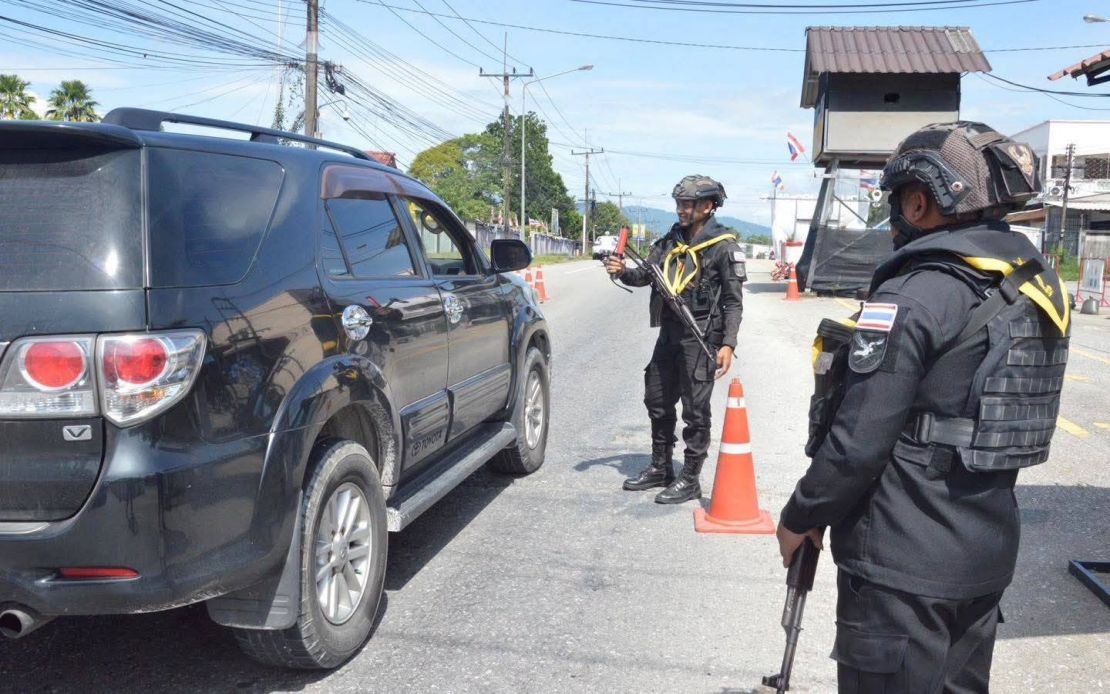
In response to the attack, Thailand declared Martial Law across 13 districts in Narathiwat province to facilitate an intensive manhunt for the perpetrators and strengthen overall security infrastructure. This dual approach—simultaneously suspending talks while escalating military presence—aims to demonstrate resolve to both the insurgent movement and the Thai public without completely severing diplomatic channels. The Narathiwat Provincial Court has issued arrest warrants for two suspects aged 45 and 43, identified by investigators as being linked to the assault. Both men face charges including terrorism, premeditated murder of government officials, armed robbery resulting in death, and firearms and explosives offences.
The Internal Security Operations Command has authorised military forces to establish roadblocks throughout Narathiwat based on real-time intelligence, granting security agencies expanded operational authority during the search phase. This enforcement apparatus represents a significant expansion of state presence in the border region and underscores the gravity with which authorities are treating the incident. The scope of the dragnet suggests investigators believe additional participants may still be at large beyond the two formally charged suspects.
For Malaysian observers, Thailand's approach carries important implications. Malaysia has hosted previous rounds of peace talks and maintains a delicate diplomatic role as a neutral mediator in a conflict that has claimed thousands of lives since the insurgency intensified in 2004. The suspension may affect Malaysia's capacity to facilitate future negotiations and could complicate the country's efforts to maintain balanced relationships with Bangkok and various stakeholder groups. The attack also reminds regional governments of the persistent volatility in southern Thailand, a factor that has occasionally spilled across borders and affected security dynamics in northern Malaysia.
Thanat's remarks indicated that the government believes some elements within the insurgent movement may be committed to derailing negotiations, even if broader leadership structures favour dialogue. His comment that "although the fighters may have acted according to their instincts" suggests authorities assess the attack as potentially emanating from hardline factions rather than representing unified movement strategy. This internal differentiation complicates the resumption of talks, as Thai negotiators must determine whether to engage with moderate elements while managing more radical wings opposed to compromise.
The suspension timeline remains unclear. Officials stated there will be no negotiations in September but provided no specific date for resumption. This ambiguity may reflect genuine uncertainty about whether conditions will stabilise sufficiently to restart formal discussions or a deliberate policy choice to maintain pressure on insurgent groups to police their own ranks and prevent further violence. The demand for explanation that Thailand has directed to the insurgent leadership suggests officials are testing whether dialogue partners can exert sufficient discipline over their constituent factions.
Thailand's southern insurgency represents one of Southeast Asia's most intractable security challenges, with roots in historical grievances, religious and ethnic tensions, and cross-border dimensions. Previous peace initiatives have achieved limited success, and the current suspension reflects how easily progress can be reversed. The attack demonstrates that genuine dialogue requires more than government willingness to negotiate; it requires sufficient coordination and internal discipline among insurgent movements themselves, a condition not always present in decentralised armed organisations.
Security analysts in the region note that the timing of the attack, during an active dialogue process, may indicate deliberate attempt by hardliners to sabotage negotiations. Such spoiling attacks represent a calculated strategy to poison diplomatic atmosphere and demonstrate that violence remains relevant. If this assessment is correct, the Thai government faces a strategic dilemma: resuming talks appears to reward attacks, yet indefinite suspension may entrench positions and eliminate whatever diplomatic opportunities exist.
The international community, including Malaysia and other regional partners, will watch how Thailand manages the balance between security imperatives and diplomatic necessity over coming months. The suspension period offers space for both sides to assess their options and potentially recalibrate approaches. Whether this pause leads to renewed negotiation or deeper entrenchment remains a critical question for regional stability.

