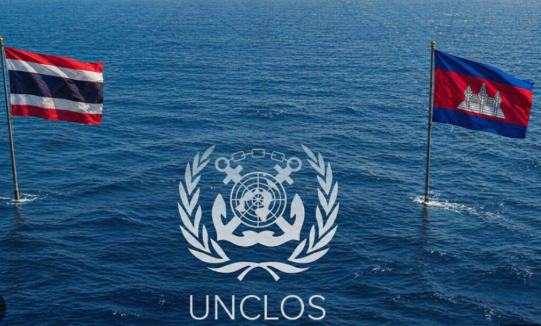
Thailand has formally entered a compulsory conciliation process with Cambodia under the United Nations Convention on the Law of the Sea over their long-standing maritime boundary dispute in the Gulf of Thailand, but Bangkok has carefully positioned itself to limit the scope and authority of the proceedings. The Thai Ministry of Foreign Affairs submitted its formal response on June 19, following Cambodia's notification transmitted on June 2. Throughout its acceptance, Thailand has emphasised that this process differs fundamentally from litigation and that any recommendations produced will not carry legal force, preserving Bangkok's flexibility in subsequent bilateral negotiations.
The conciliation framework under Unclos represents an intermediate step between informal diplomacy and binding international arbitration, a distinction that appears central to Thailand's strategic approach. By accepting participation while denying the binding nature of outcomes, Thailand demonstrates willingness to engage with international mechanisms without surrendering ultimate decision-making authority. This calculated acceptance reflects broader Southeast Asian diplomatic patterns, where nations engage with multilateral processes while retaining sovereignty over substantive disputes.
Thailand has appointed Deputy Prime Minister and Foreign Minister Sihasak Phuangketkeow as its official Agent in the conciliation proceedings, alongside Deputy Agent Songchai Chaipatiyut, Thailand's ambassador to Kuwait and a former senior official at the Department of Treaties and Legal Affairs. The delegation reflects the seriousness with which Bangkok regards the process, placing high-ranking officials at the forefront despite its insistence on non-binding outcomes. Thailand also selected two conciliators it considers internationally recognised experts in maritime law: Judge Albert J Hoffmann of South Africa and Judge Rudiger Wolfrum of Germany, individuals whose credentials Thailand believes will strengthen the commission's credibility.
The procedural framework established under Unclos Annex V contemplates a nine-member conciliation mechanism, though Thailand and Cambodia have each appointed two conciliators with responsibility for selecting a fifth chair within 30 days. The commission will then conduct proceedings expected to conclude within approximately 12 months, producing a report containing recommendations rather than binding determinations. This timeline and structure provide both nations with extended opportunity for private negotiations whilst the formal process unfolds, potentially allowing for diplomatic breakthroughs outside the conciliation chamber.
A fundamental divergence between the two countries concerns the conciliation's scope. Thailand insists the proceedings should address exclusively maritime boundary delimitation under Unclos, treating the dispute as a technical question of drawing lines separating maritime jurisdictions. Cambodia's notification, according to Thai officials, encompasses not only delimitation but also provisional arrangements for joint development and equitable resource sharing, reflecting different priorities regarding the disputed area's resources. This distinction matters substantially, as resource-sharing frameworks typically require ongoing cooperation and compromise, whereas boundary delimitation can theoretically produce a final, demarcated line.
Underlying this dispute lies the Gulf of Thailand's significance as a region believed to contain considerable natural gas deposits and other hydrocarbon resources. For decades, the maritime boundary question has been inseparable from energy resource development aspirations, with both nations viewing the contested waters through the lens of potential economic benefit. The overlapping claims create uncertainty for energy companies and investment, making resolution valuable for regional economic development.
Thailand's recent termination of the 2001 Memorandum of Understanding with Cambodia, which had provided a framework for managing overlapping continental shelf claims, contextualises the current conciliation. Prime Minister Anutin Charnvirakul justified this cancellation on grounds that 25 years of negotiations under the agreement had produced insufficient progress, yet Thai officials insisted the move did not signal hostility toward Cambodia but rather an attempt to restart discussions on a clearer foundation. By terminating the old framework whilst accepting Unclos conciliation, Thailand has arguably repositioned itself, moving away from bilateral mechanisms that had stalled toward international procedures offering greater structure.
Thailand's characterisation of conciliation as exploratory rather than determinative appears designed to manage domestic expectations and maintain strategic flexibility. By stressing that conciliators are neutral experts rather than judges, and that their recommendations carry no legal force, Bangkok has essentially told its constituents that this process cannot impose an unwanted settlement. This messaging permits Thailand to participate constructively whilst reserving the right to reject recommendations deemed unfavourable, though such rejection would carry diplomatic costs in the international community.
The bilateral negotiation preference that Thailand continues to emphasise reflects broader regional dynamics in Southeast Asia, where nations frequently prefer bilateral channels to multilateral dispute resolution mechanisms. Direct negotiations allow greater confidentiality, flexibility, and room for creative compromises that public proceedings cannot accommodate. Thailand's insistence that conciliation should ultimately facilitate bilateral talks rather than replace them suggests Bangkok envisions the process as a structured negotiating setting rather than a prelude to binding outcomes.
For Malaysia and broader Southeast Asian observers, Thailand-Cambodia conciliation illustrates how maritime boundary disputes in the region remain contentious and difficult to resolve through either bilateral negotiation or formal international processes. The Gulf of Thailand situation mirrors maritime challenges elsewhere in the region, from the South China Sea to the Andaman Sea, where resource competition, historical claims, and geopolitical considerations intertwine. Thailand's strategy of accepting international process participation whilst denying binding authority may establish precedent for how other regional nations approach maritime disputes.
Cambodia's decision to initiate compulsory conciliation under Unclos presumably reflects frustration with stalled bilateral negotiations and desire to internationalise the dispute, invoking international law as arbiter when bilateral diplomacy had reached impasse. However, Cambodia's acceptance that recommendations will be non-binding effectively means that Thailand, if unsatisfied with conciliation outcomes, retains capacity to continue refusing concessions it judges disadvantageous. This asymmetry suggests that unless both nations genuinely desire settlement, conciliation may ultimately produce a report filed away rather than implemented.
The coming months will reveal whether the conciliation process generates genuine momentum toward resolution or merely formalises continued disagreement. The selection of neutral conciliators and the structured timeline provide opportunities for creative problem-solving that purely bilateral negotiations might not facilitate. Yet Thailand's careful positioning throughout its acceptance suggests Bangkok will scrutinise any recommendations critically before committing to implementation, particularly if they diverge from Bangkok's preferred maritime delimitation framework.

