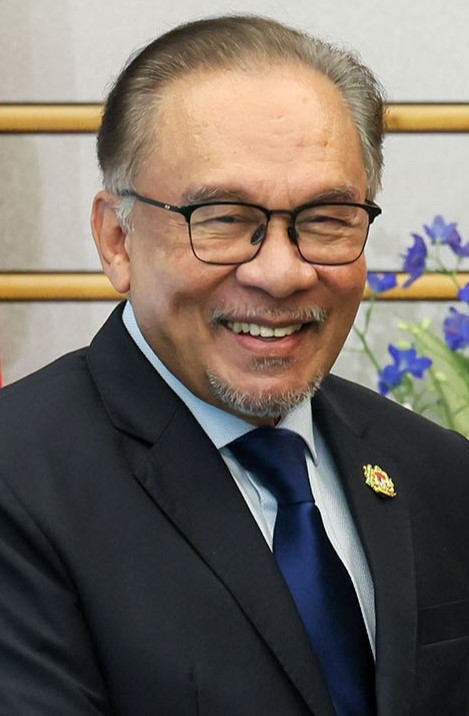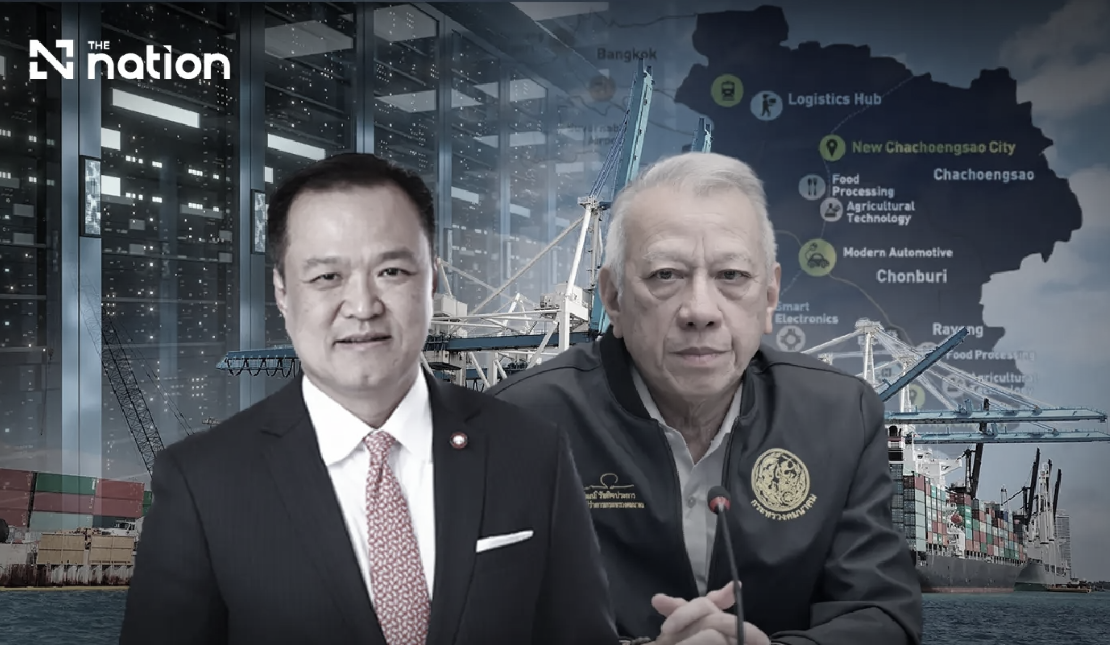
Thailand's Prime Minister Anutin Charnvirakul has consolidated control over the Eastern Economic Corridor, removing it from Deputy Prime Minister and Transport Minister Phiphat Ratchakitprakarn's oversight in a move designed to refocus the sprawling development zone toward emerging investment opportunities. The transfer of authority, formalised through Cabinet orders signed on June 15 and acknowledged during a Cabinet meeting on Tuesday, represents a significant recalibration of Thailand's approach to one of Southeast Asia's most ambitious regional development initiatives. Rather than signalling internal discord, government sources characterise the restructuring as a deliberate strategic repositioning that will allow the Prime Minister to personally shepherd foreign investor relations and present Thailand's Eastern Economic Corridor through an entirely new investment lens.
The decision to centralise EEC authority under Anutin's direct management follows discussions between the Prime Minister and Phiphat in the preceding week, according to Government House officials. Phiphat had reportedly flagged persistent friction between the EEC Office and the Board of Investment, institutional tensions that apparently motivated his own recommendation that Anutin assume direct supervisory responsibility. The deputy premier's public statements on Wednesday acknowledged that he had not received advance notice of the orders, learning of the decision only when it was read aloud during the Cabinet session. Notably, Phiphat refrained from characterising the restructuring as a demotion or demoralisation, instead framing it as an administrative recalibration within government decision-making structures.
The significance of this shift extends well beyond Bangkok's bureaucratic corridors. For regional observers tracking Thailand's economic positioning, the reconfiguration signals Bangkok's recognition that traditional heavy manufacturing—the EEC's original strategic anchor—faces mounting constraints. Electricity and water availability have become genuine bottlenecks, with procurement costs for these essential utilities climbing steadily. Rather than attempting to squeeze additional industrial capacity into an already-stressed infrastructure envelope, Anutin's administration is pivoting toward sectors that offer comparable investment appeal without identical resource demands. This pragmatic recalibration offers instructive lessons for other Southeast Asian economies similarly grappling with the limits of traditional industrialisation strategies.
The newly articulated investment strategy positions the Eastern Economic Corridor as a global food security hub, leveraging the region's established competitive advantages in livestock, fisheries, agriculture, and horticulture. This reframing carries particular resonance in an era when international investors and governments increasingly prioritise supply chain resilience and agricultural self-sufficiency. Thailand's eastern provinces possess genuine agricultural strengths that have historically been underutilised as international marketing platforms. By consciously elevating these sectors and presenting them as components of a coherent regional development strategy, Bangkok aims to attract a different investor demographic—one oriented toward long-term food production partnerships rather than manufacturing cost optimisation.
Equally significant is the government's determination to position the EEC as a premier data centre destination. This sector represents fundamentally different economics from traditional manufacturing, yet it requires equally substantial infrastructure coordination spanning electricity generation, water supply, and telecommunications capacity. The Energy Ministry is preparing a new electricity user category—designated Type 9—specifically calibrated for data centre operations. These facilities would pay premium tariffs reflecting their exceptional power consumption, a pricing structure that rewards heavy electricity users while ensuring grid stability. For Malaysia and other neighbouring economies competing for regional data centre investment, Thailand's strategic push signals intensifying regional competition in this high-value sector.
The data centre initiative reflects sophisticated understanding of contemporary investment geography. Financial institutions, technology companies, and multinational corporations increasingly require geographically distributed computing infrastructure to ensure operational resilience and compliance with data residency regulations. Southeast Asia's growing digital economy, combined with its position relative to major Asian markets, makes the region strategically valuable for data centre operators. Thailand's explicit positioning of the Eastern Economic Corridor as a data infrastructure hub represents a calculated bid to capture investment flows that individual countries cannot command alone. For Malaysian stakeholders monitoring regional competitiveness, this development underscores the necessity of comparable strategic clarity regarding data centre development and digital infrastructure investment.
Government sources were careful to insulate the restructuring from concurrent controversies surrounding the three-airport high-speed rail project. Phiphat had previously taken firm positions on the contractual architecture governing this long-delayed initiative, resisting proposals to shift from the original payment model—in which private contractors complete construction before receiving state compensation—toward a "build-and-pay" arrangement tied to incremental progress. Sources attributed to Anutin himself indicated that the Prime Minister similarly opposed amending the original contract with Asia Era One, the private partner linked to CP Group. By explicitly disconnecting the EEC reshuffle from railway policy disputes, government messaging aimed to prevent the Eastern Economic Corridor restructuring from becoming entangled in infrastructure funding controversies that have complicated Thailand's development agenda for years.
The government's repositioning of the EEC also appears to entail subtle questioning of previously endorsed initiatives. Government sources indicate that Anutin enquired about the timeline for a proposed Disneyland development within the corridor, querying whether preliminary studies had demonstrated investment returns sufficient to justify implementation. These inquiries suggest a broader administrative philosophy emphasising feasibility assessment and commercial viability before committing public sector support. For the broader regional context, this approach signals potential reorientation away from flagship megaprojects toward demonstrably viable investment categories.
The consolidation of EEC authority under Anutin's personal direction carries implications beyond Thailand's borders. Regional governments competing for foreign direct investment will likely observe Bangkok's strategic recalibration with considerable attention. The explicit decision to deemphasise traditional manufacturing in favour of agricultural export positioning and digital infrastructure development may influence how neighbouring economies frame their own investment propositions. Malaysia, Vietnam, and Indonesia all possess comparable advantages in food production and emerging data centre capability, yet none has necessarily articulated these advantages within coherent regional development frameworks as explicitly as Thailand is now attempting.
For foreign investors evaluating Southeast Asian expansion opportunities, the restructuring represents clarification of Thai government priorities and decision-making authority. Anutin's personal assumption of EEC stewardship signals that foreign investors will increasingly interface directly with the Prime Minister's office rather than navigating multiple ministerial channels. This centralisation of authority potentially accelerates investment decision cycles by reducing bureaucratic friction, though it also concentrates risk around individual political figures. International investors accustomed to navigating Thailand's complex political landscape will likely view clearer lines of authority as moderately positive, provided that political stability surrounding Anutin's administration remains credible.
The Eastern Economic Corridor itself remains Thailand's most significant regional development initiative, encompassing Rayong, Chachoengsao, and Chonburi provinces. The zone has attracted substantial investment in petrochemicals, automotive manufacturing, and electronics production, yet faces genuine capacity constraints that traditional expansion cannot overcome. By consciously repositioning the corridor toward food security export platforms and data centre infrastructure, Bangkok acknowledges both the limits of existing industrial capacity and the financial opportunity embedded in emerging global demand patterns. The success of this repositioning will substantially influence Thailand's ability to maintain its position as Southeast Asia's primary foreign direct investment destination over the coming decade.