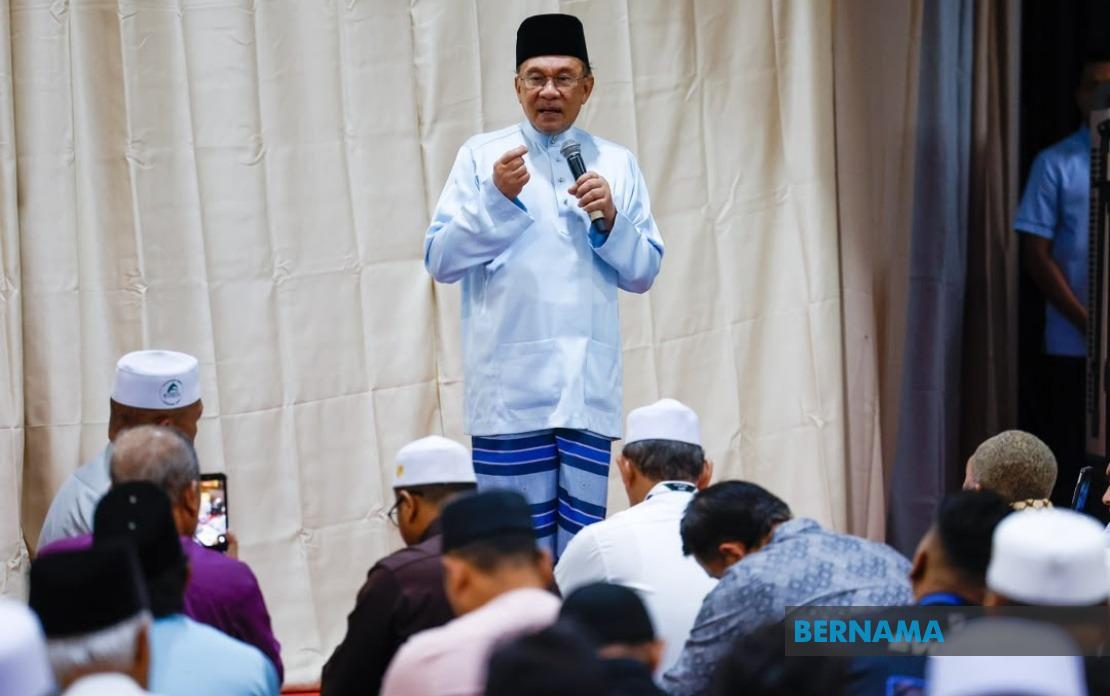
Prime Minister Datuk Seri Anwar Ibrahim has pushed back against suggestions that the release of the Royal Commission of Inquiry report on Lembaga Tabung Haji constitutes political point-scoring, instead presenting the disclosure as a fundamental obligation to shield the financial interests of Malaysia's Muslim community. Speaking at a community gathering in Port Dickson, the premier stressed that transparency around the troubled pilgrim fund transcends ordinary partisan calculations and touches on matters of institutional trust and fiduciary responsibility.
The RCI report carries particular significance because it documents how critical warnings from the central banking authority were apparently disregarded over a span of years. Bank Negara Malaysia had raised red flags regarding the financial health of Tabung Haji in 2014 and again in 2017, yet appropriate remedial action does not appear to have followed. This pattern of overlooked regulatory alerts suggests systemic governance failures within an institution that manages the savings of millions of Malaysians preparing for the Islamic pilgrimage to Mecca. The commission's investigation has therefore unearthed not merely isolated missteps but a troubling sequence of missed opportunities to avert mounting difficulties.
Anwar, who simultaneously holds the Finance Ministry portfolio, underscored that the report itself was not authored by his administration, a clarification aimed at addressing potential accusations that his government had weaponised the findings for electoral advantage. The inquiry was commissioned by the previous administration, and its conclusions reflect an independent assessment of institutional performance spanning an extended period. By highlighting this procedural distinction, the premier sought to elevate discussion above the threshold of partisan controversy and anchor it firmly to matters of substance and public accountability.
The planned parliamentary debate scheduled for August 11 represents the government's commitment to open deliberation of the report's contents and recommendations. By inviting all members of parliament to participate in a full airing of the findings, the administration signals confidence that the evidence and analysis can withstand scrutiny from across the political spectrum. This approach also permits legislators to question officials, propose reforms, and shape policy responses based on comprehensive discussion rather than selective disclosure or media narratives. For a matter affecting the depositor base of Tabung Haji, which includes people from virtually every state and demographic segment, such inclusive parliamentary engagement lends legitimacy to whatever corrective measures may subsequently be introduced.
The Tabung Haji situation carries implications extending far beyond individual savings accounts. The fund serves as a critical financial institution within Malaysia's Islamic finance ecosystem, and its stability affects public confidence in religiously-aligned investment vehicles. When regulatory bodies detect problems and those concerns are not adequately addressed, it raises questions about institutional coordination, accountability mechanisms, and the responsiveness of management to supervisory guidance. These systemic vulnerabilities, once exposed through an official inquiry, demand transparent discussion and decisive remediation.
For Malaysian depositors, particularly the millions who have entrusted their pilgrimage savings to Tabung Haji over decades, the RCI findings represent a crucial moment of institutional reckoning. Many of these individuals are ordinary working people for whom the hajj fund represents a disciplined savings vehicle and a pathway to fulfilling a fundamental religious obligation. Their financial security and the preservation of accumulated funds depend on effective oversight and timely intervention when risks emerge. The government's decision to bring the report into the public domain reflects recognition that these stakeholders possess a legitimate claim to understand what happened to their money and what steps will be taken to restore confidence.
The timing of the report's release, occurring as parliamentary session resumes, allows for legislative oversight to occur at a moment when broader national governance questions are under active consideration. This convergence creates an opportunity to contextualise Tabung Haji's challenges within wider discussions about regulatory effectiveness, corporate accountability, and institutional reform. The debate can therefore extend beyond individual failings to encompass systemic improvements that might prevent similar lapses in other government-linked companies and statutory bodies.
Anwar's framing of the report as a matter of community trust rather than political advantage appears designed to inoculate the government against criticism that it is exploiting institutional failure for electoral purposes. By emphasising the moral dimension of depositor protection and the constitutional imperative of parliamentary oversight, he positions the release as an exercise in responsible governance rather than tactical point-scoring. Whether this characterisation fully persuades sceptical observers will likely depend on how thoroughly parliament engages with the findings and how substantive the ensuing reforms prove to be.
The RCI report ultimately represents a test of Malaysia's willingness to conduct honest institutional self-examination and implement meaningful corrections. The public disclosure and parliamentary debate provide mechanisms through which accountability can function and corrective action can be formulated with public input. For Malaysian Muslims holding accounts in Tabung Haji, the coming weeks will be crucial in determining whether the inquiry process translates into tangible improvements in governance, risk management, and protection of their deposited funds.

