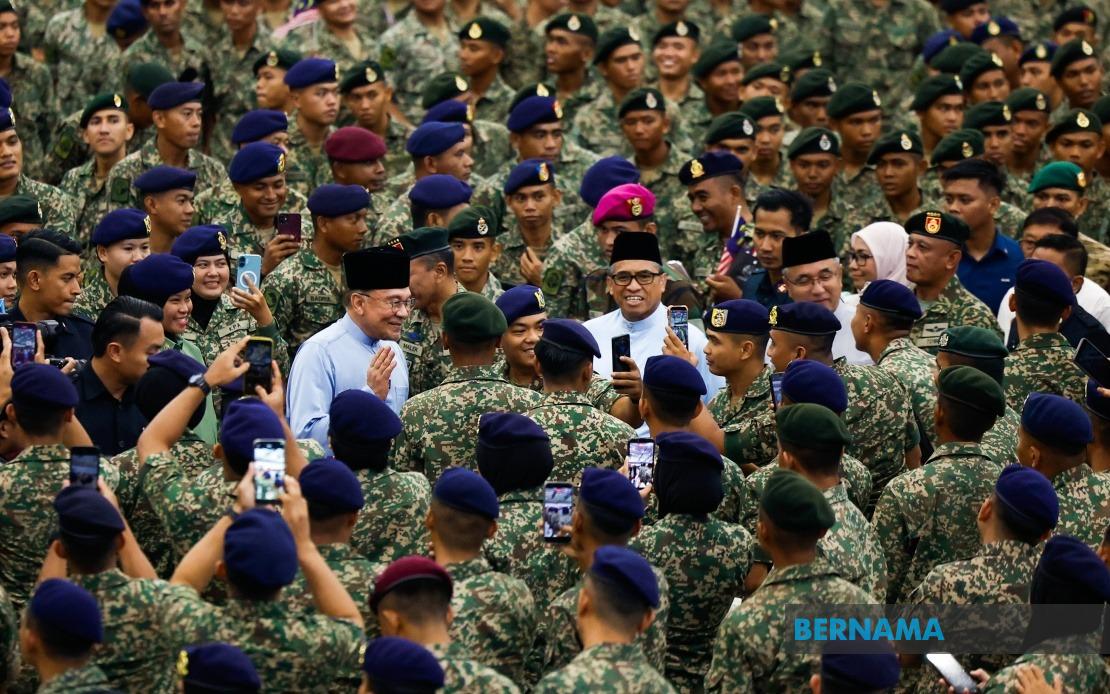
Prime Minister Datuk Seri Anwar Ibrahim has provided the first official explanation for why the Royal Commission of Inquiry report into Lembaga Tabung Haji (TH) remained unpublished for three years, attributing the delay to concerns about triggering panic among the fund's 8.7 million depositors and risking financial destabilisation of the institution entrusted with Muslims' savings for pilgrimage. Speaking in Port Dickson on July 24, Anwar acknowledged that transparency and public access to information are fundamental principles of democratic governance, yet the government faced a delicate balancing act between accountability and institutional stability during the immediate aftermath of the inquiry's completion.
The decision to withhold the report reflected a pragmatic calculation about the vulnerability of Malaysia's pilgrims' fund at the time the inquiry concluded. Anwar explained that releasing damning findings about the sale of TH's strategic assets—the central focus of the RCI—would have immediately eroded public confidence, potentially triggering the very crisis the government sought to prevent. The prospect of millions of depositors withdrawing savings simultaneously posed an existential threat to TH's liquidity and operational capacity. By keeping the report confidential during this critical window, authorities essentially bought time for remedial measures to take effect and for the institution to stabilise before subjecting it to public scrutiny.
The government's credibility for this approach rests substantially on demonstrable improvements at TH under new leadership. Chairman Tan Sri Abdul Rashid Hussain took the helm with a reputation for turnaround expertise, and the fund has since returned to operational strength and financial health. Most significantly, TH recently secured international recognition by winning the Best Haj Management award for the current pilgrimage season, validating claims that institutional reforms have yielded tangible results. These achievements provide concrete evidence that the delay was justified by improved outcomes, not merely by evasion of accountability.
Yet Anwar's framing also represents an important admission that the government now believes TH has reached a threshold of stability where transparency no longer poses systemic risk. The Prime Minister indicated the full RCI report would be released imminently, pending consultation with the Chief Secretary to the Government on procedural requirements. This timeline suggests the MADANI administration has calculated that disclosing the inquiry's findings—whatever criticisms they may contain—will no longer destabilise a fundamentally sound institution. For Malaysian depositors, particularly the millions who entrust their hajj savings to TH, this represents a shift from protective confidentiality to transparent accountability.
Anwar's comments were made alongside senior government officials including Chief Secretary Tan Sri Shamsul Azri Abu Bakar, Deputy Defence Minister Adly Zahari, and military leadership, underscoring the cross-government nature of the decision and its implementation. The presence of defence and security figures signalled that the government regards institutional stability as a matter of broader national interest, not merely financial administration. This framing reflects Malaysia's particular vulnerability during the earlier period when social stability was paramount concern following the change in government.
The Prime Minister positioned the delayed release as consistent with the MADANI Government's commitment to good governance and preventing abuse of power, arguing that protecting institutional integrity ultimately serves the public interest. He emphasised that safeguarding institutions entrusted with community savings—particularly those serving Muslim and FELDA populations—requires maintaining confidence in their management and sustainability. This rationale acknowledges the special status of TH within Malaysia's financial system and its particular importance to rural and Islamic communities who depend on its services for religious fulfilment.
However, the government's position has drawn scrutiny from within the ruling Pakatan Harapan coalition itself. Senior figures from Amanah, DAP, and PKR issued a joint statement arguing that Cabinet deliberation must determine whether the RCI report should now be made public. They explicitly invoked principles of transparency and accountability, contending that Malaysian citizens have an inherent right to understand the facts regarding allegations about TH's strategic asset sales. This internal coalition pressure reflects growing confidence that institutional stability is no longer the primary concern, and that withholding the report any longer would undermine the transparency credentials the MADANI government has campaigned on.
The joint statement from coalition partners carries particular weight because it comes from constituencies traditionally championing government accountability and institutional reform. By suggesting Cabinet review rather than automatic publication, they acknowledged complexity in the decision while simultaneously advocating for disclosure on principle. This reflects a broader shift in Malaysian political discourse toward demanding government transparency even when it reveals institutional failures or past mistakes. The statement's language—emphasising citizens' right to know facts and resolution of outstanding questions—frames publication as essential to resolving public uncertainty about TH's past management.
The RCI itself was established to investigate serious allegations concerning the disposal of TH's investment properties and strategic holdings, transactions that generated significant public concern about governance failures and potential financial losses for depositors. The inquiry's scope encompassed whether asset sales were conducted in the fund's best interests and whether proper governance protocols were followed. For three years, these findings remained confined to government files, creating space for speculation and rumour while preventing factual public understanding of what the official investigation actually discovered.
For Malaysian depositors and the broader FELDA community particularly dependent on TH services, the impending report release represents closure on a period of institutional uncertainty. The fund handles enormous sums—billions of ringgit in accumulated pilgrim savings—making its governance integrity essential to rural retirement security and religious observance. Public access to the RCI findings will enable informed assessment of whether past management failures have genuinely been remedied under new leadership, or whether systemic vulnerabilities persist despite recent positive indicators.
The timing of the report's release also carries political significance within Malaysia's evolving governance framework. The MADANI administration has positioned itself as champion of institutional reform and accountability following years of governance criticism under previous governments. Publishing the TH RCI report demonstrates commitment to these principles while building political capital for future transparency initiatives. It also potentially preempts opposition claims that the government is selectively withholding inconvenient findings, though opponents may argue the three-year delay itself constitutes improper institutional protection.
International perspectives on Malaysia's financial governance and Islamic institutional management will also be influenced by the report's eventual public release. As a major global pilgrimage fund with international dimensions, TH's governance practices attract attention from Muslim-majority countries and Islamic finance observers. Transparency regarding past management decisions and current reforms will strengthen Malaysia's reputation for institutional oversight and financial integrity. Conversely, continued secrecy would reinforce perceptions that Malaysian authorities prioritise institutional image over public accountability.
Moving forward, the government's challenge involves releasing the RCI findings while managing potential reputational consequences for individuals or entities implicated in past decisions. Cabinet deliberation will likely focus on whether names should be redacted, whether recommendations have been implemented, and how the report should be framed to emphasise institutional recovery rather than dwelling exclusively on past failures. These presentation choices will significantly influence public reception and whether the release satisfies coalition partners' demands for genuine transparency or merely constitutes controlled disclosure of sanitised findings. The government's success in balancing accountability with institutional confidence-building will likely set precedent for future RCI releases and broader transparency practices.

