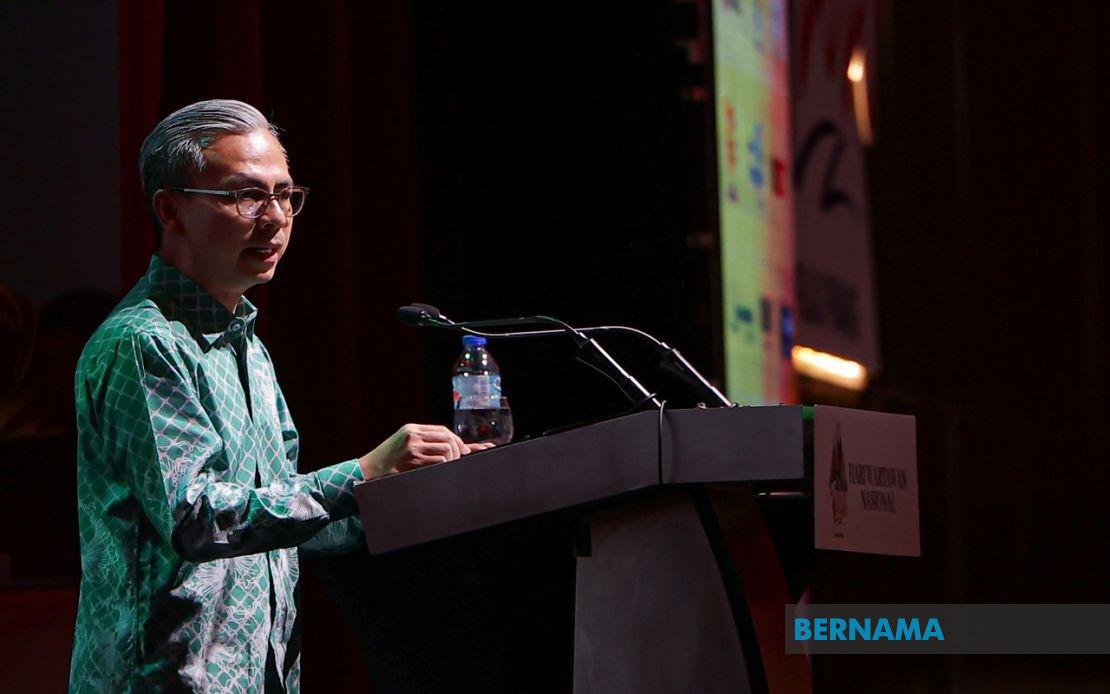
Telekom Malaysia has assumed the role of strategic partner for Tabung Kasih@HAWANA, committing RM500,000 to shore up a welfare assistance programme serving journalists and former media workers throughout Malaysia. Communications Minister Datuk Fahmi Fadzil unveiled the partnership at the National Journalists' Day Grand Finale in Butterworth on June 20, emphasising the telecommunications giant's corporate social responsibility drive to bolster the media sector during a period of considerable economic strain.
The contribution arrives at a critical juncture for Malaysia's media landscape, which has experienced severe contraction in advertising revenues over the past several years. Annual advertising expenditure in the sector has fallen dramatically from RM4.5 billion to approximately RM2 billion, squeezing newsroom budgets and placing individual journalists under increasing financial pressure. Fahmi's announcement of TM's involvement carries implicit messaging to the broader business community about the necessity of corporate stewardship towards a sector that plays a foundational role in democratic discourse and public information.
Since its establishment in April 2023, Tabung Kasih@HAWANA has distributed RM2.26 million in emergency and welfare assistance to 773 media practitioners across the country. The fund represents a safety net for journalists facing medical emergencies, family hardship, or other unforeseen circumstances that threaten their livelihoods. TM's RM500,000 injection substantially expands the fund's capacity to respond to applications from media workers in distress, directly extending financial relief to individuals within newsrooms, freelance operations, and retired journalists who lack adequate social security provisions.
Fahmi used the platform to issue a broader appeal to government-linked companies and private sector entities to follow TM's example through various collaborative mechanisms. Beyond direct financial contributions, he highlighted the potential for strategic partnerships encompassing sponsorships, advertising placements, and industry development initiatives that could stabilise media organisations grappling with revenue shortfalls. The minister's advocacy reflects recognition that media sustainability requires structural support rather than ad-hoc charity, positioning corporate engagement as integral to preserving editorial independence and operational capacity.
The advertising revenue crisis facing Malaysian media mirrors challenges confronting news organisations across the developed and developing world, driven by digital disruption and the migration of advertising dollars to technology platforms. However, Malaysia's situation carries particular implications for regional information ecosystems. As advertising revenues compress, news organisations reduce investigative capacity, international coverage, and beat reporting, potentially narrowing the scope of public understanding on complex issues. TM's partnership with Tabung Kasih@HAWANA thus functions as both humanitarian relief and implicit investment in maintaining professional journalism infrastructure.
The government has also signalled commitment to supporting media workforce development through backing for Project Sigma 2.0, a Google Malaysia initiative executed alongside the Malaysian Media Council and Malaysian Press Institute. This programme aims to equip media professionals with contemporary skills in digital technologies and artificial intelligence, recognising that competitive capacity in these domains remains essential for news organisations seeking to innovate their business models and editorial practices. Professional development support complements direct financial assistance, acknowledging that media sustainability depends on both immediate welfare and long-term capability enhancement.
Parallel to domestic initiatives, Fahmi highlighted the signing of a memorandum of understanding between Malaysia's national news agency Bernama and TATOLI, Timor-Leste's national news agency. This bilateral agreement represents a deliberate expansion of regional media cooperation and information-sharing mechanisms within the ASEAN framework, particularly significant given Timor-Leste's recent accession as ASEAN's eleventh member state. The collaboration underscores commitment to deepening institutional relationships among Southeast Asian news organisations, facilitating the exchange of journalistic standards, training initiatives, and editorial perspectives across borders.
Timor-Leste's admission to ASEAN during the 47th ASEAN Summit in Kuala Lumpur last year marked a significant moment for regional institutional expansion. By establishing news agency cooperation protocols, Malaysia and Timor-Leste embed media engagement within the broader architecture of ASEAN integration and multilateral cooperation. These agreements create channels for credible information flow and coordinated journalistic practices across a geographically diverse region, supporting the regional principle of mutual respect and shared prosperity while simultaneously elevating the technical and professional standards of news distribution.
The convergence of domestic welfare support, workforce development initiatives, and regional media partnerships reflects a coherent policy approach to media sustainability. Fahmi's ministerial role positions him at the intersection of industrial policy and democratic governance, recognising that healthy media ecosystems cannot be sustained through market forces alone. The appeal to companies to increase advertising placements with local media represents an economic argument complementing ideological commitments to press freedom—companies that depend on credible local news for market intelligence and brand communication have rational incentives to support the institutions producing that information.
For Malaysian readers and Southeast Asian observers, these developments carry significance extending beyond immediate industry concerns. The viability of professional journalism determines whether citizens and businesses have access to reliable information about government decisions, corporate conduct, and social trends. When advertising revenues collapse and individual journalists face financial desperation, editorial quality and investigative capacity inevitably suffer. TM's partnership and the government's broader support mechanisms acknowledge this reality, positioning corporate engagement and state policy coordination as complementary approaches to preserving the institutional infrastructure of accountability journalism in Malaysia and across ASEAN.

