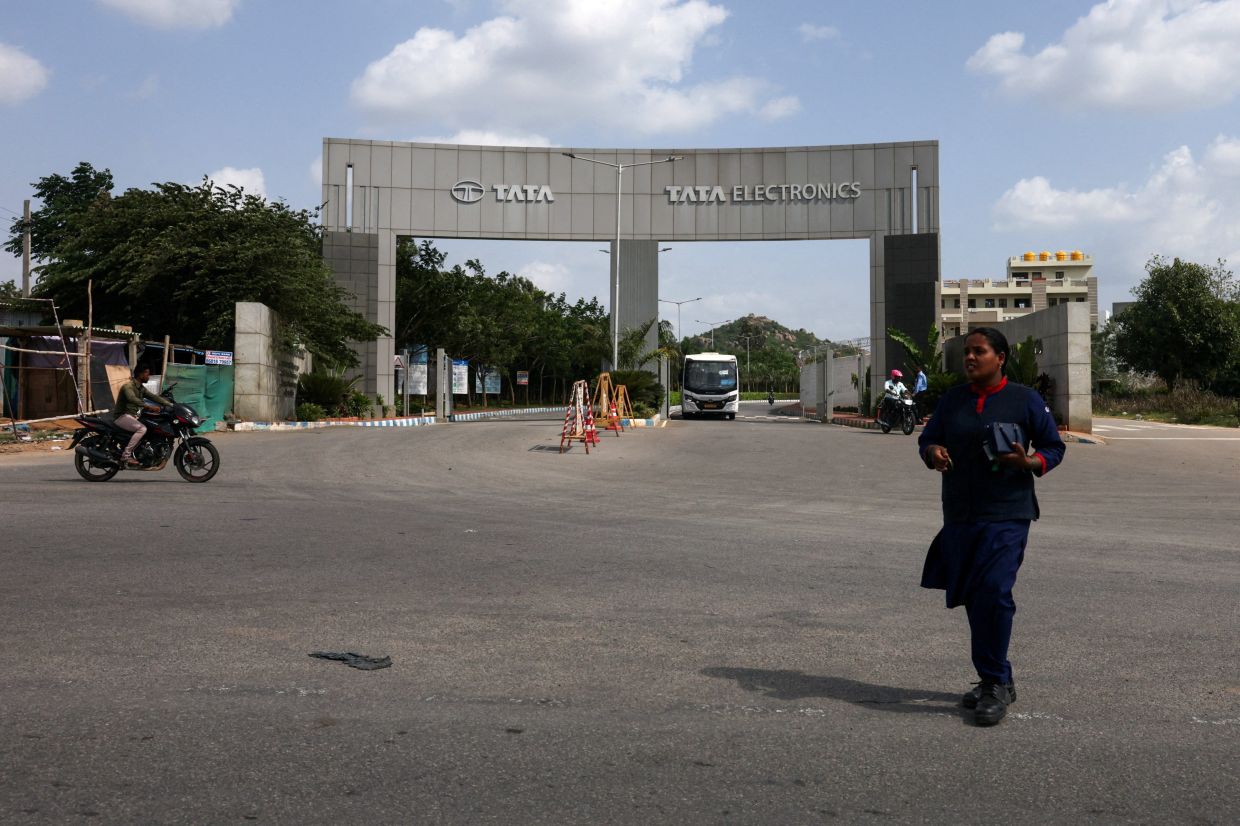
India's Tata Electronics admitted this week to suffering a significant cybersecurity attack that may have compromised confidential manufacturing data belonging to two of the world's largest technology companies—Apple and Tesla. The disclosure, coming months into investigations by security researchers, underscores a troubling vulnerability in the global electronics supply chain at a time when major manufacturers are actively diversifying operations away from China. The incident represents not merely an isolated corporate crisis but a potential blow to India's aspirations to become a globally competitive manufacturing destination.
Tata Electronics announced the breach on June 22 after researchers documented the appearance of purported Apple and Tesla documents on dark web platforms operated by a ransomware collective known as World Leaks. According to security experts who reviewed the data, the stolen materials include over 200,000 files totalling more than 630 gigabytes. The sheer scale of the theft suggests a sophisticated, prolonged intrusion rather than a simple opportunistic hack. Among the exposed files are component design specifications, manufacturing quality standards, internal project documentation, and sensitive employee records including passport details of international staff members. The data has reportedly been accessible on dark web marketplaces since at least June 10, providing an extended window for potential misuse before the breach became public knowledge.
While Tata Electronics maintains that the incident "has had no impact on our operations across businesses, which remain unaffected," the company's response protocols and timeline raise questions about detection and disclosure practices. Insiders revealed that the company informed some employees at its iPhone assembly operations in Tamil Nadu only recently, suggesting weeks may have passed between the initial intrusion and internal notification. For Apple specifically, a source indicated the company is conducting a "full analysis" of the breach while responding to a ransom demand—a detail Tata has declined to confirm or discuss publicly. This pattern of delayed transparency is concerning for customers relying on Tata's security assurances and for regulators scrutinizing the company's operational standards.
The timing of this breach compounds existing challenges for Tata's relationship with Apple. The Indian manufacturer is simultaneously facing investigation over alleged contamination of farmland near its iPhone assembly facility in Hosur, the very location whose data appears extensively in the stolen files. Tata currently produces roughly one-third of all iPhones assembled in India, making it Apple's second-largest manufacturing partner in the country after Foxconn. This concentration of production at a company facing security incidents and environmental scrutiny highlights the risks of Apple's supply chain diversification strategy. Rather than reducing dependency on any single location or manufacturer, Apple's India expansion may have simply shifted risk to a new geography without fundamentally improving supply chain resilience.
The breach also exposes Tesla's vulnerability through its reliance on Tata for component manufacturing. Stolen documents include specifications for chargeport controllers used in Tesla's Model Y SUV variants and internal design drawings for Project Highland, Tesla's codename for an upgraded Model 3 sedan. These materials represent genuine competitive assets; detailed manufacturing specifications can provide rivals with insights into production costs, assembly sequences, and component sourcing strategies. The fact that documents in the stolen cache were explicitly marked as trade secrets and proprietary information underscores both the sensitivity of the materials and the brazen nature of their theft and publication.
World Leaks, the ransomware group claiming responsibility, has previously targeted Nike and other major corporations, establishing a pattern of targeting high-value targets with significant reputational exposure. The group's operational model typically involves theft followed by publication on dark web platforms as leverage to coerce ransom payments. Security researchers who reviewed the Tata data noted that alongside technical files and design documents were years of email communications and system logs, providing attackers with extensive intelligence about internal operations, decision-making processes, and potential future vulnerabilities. This broader intelligence value may actually exceed the immediate commercial value of technical specifications.
The incident illustrates a fundamental asymmetry in cybersecurity: while corporations invest billions in manufacturing quality and supply chain optimisation, the security infrastructure protecting digital assets often lags far behind. Tata Electronics, managing operations for companies like Apple with some of the world's most sophisticated security practices, apparently failed to prevent the theft and exfiltration of massive quantities of protected data. This suggests either inadequate network segmentation between customer systems and internal networks, insufficient monitoring of data movement, or delayed detection capabilities that permitted attackers extended access. Whatever the root cause, the breach raises serious questions about whether manufacturing companies in emerging markets possess the cybersecurity maturity demanded by their multinational customers.
From a broader perspective, this incident threatens to undermine India's credibility as a manufacturing alternative to China. Prime Minister Narendra Modi has championed electronics manufacturing as a cornerstone of his Make in India initiative, actively promoting the country as a destination for companies seeking to diversify away from Chinese dominance. Major contracts from Apple, Tesla, and other multinational firms represent validation of this strategy. However, a string of security incidents—including Tata's own cyberattack on the Jaguar Land Rover subsidiary that halted production for six weeks—suggests that operational reliability extends beyond product quality to encompass information security and business continuity. Customers weighing risks of India manufacturing against alternatives like Vietnam or Indonesia will necessarily factor in security track records when making strategic decisions.
The Indian Computer Emergency Response Team, the government agency responsible for coordinating national cybersecurity incident response, has not publicly addressed the Tata breach or outlined any investigation. This silence is notable given that the incident involves one of the country's largest manufacturers and sensitive data from globally significant technology companies. Effective national cybersecurity governance requires transparent communication about major incidents, industry coordination on threat intelligence, and clear regulatory frameworks for breach notification and investigation. The absence of visible government engagement suggests either that the incident is being handled through private channels or that India's public institutions lack adequate capacity to respond to breaches of this magnitude and complexity.
For Malaysian technology companies and manufacturers, the Tata incident carries specific cautionary lessons. Malaysia has similarly positioned itself as an alternative manufacturing location and electronics supply chain hub. Any breach affecting Malaysian manufacturers serving multinational clients could similarly undermine regional competitiveness and trigger customer diversification strategies. The incident underscores the importance of robust cybersecurity investment, particularly at the network and data protection levels, as a foundational element of supply chain competitiveness. Companies in Southeast Asia seeking to attract and retain premium manufacturing contracts must recognise that security assurances are now as essential as quality certifications and pricing competitiveness.
The unfolding situation at Tata Electronics also demonstrates the limitations of corporate transparency in managing cyber incidents. While Tata's public statement acknowledges the breach and claims business continuity, the company has avoided specifics about the incident's scope, the attackers' entry vectors, or the actual ransom demand. Apple and Tesla have declined to comment entirely. This pattern of minimal disclosure, while protecting competitive interests in the short term, ultimately generates more suspicion and damage to corporate reputation than fuller, earlier transparency would have provoked. Stakeholders—from customers to investors to regulators—are left drawing conclusions from fragmentary public information and dark web publications rather than from authoritative corporate or government sources.
Moving forward, the Tata breach will likely accelerate conversations within multinational corporations about supply chain security standards and due diligence requirements for manufacturing partners. Technology companies may increasingly demand independent security audits, implement stricter network isolation for proprietary data, or restructure supplier relationships to reduce the amount of sensitive information shared with contract manufacturers. These developments could ultimately make supply chain diversification more expensive and complex, potentially slowing the shift away from China-centric manufacturing models. For India and other emerging manufacturing destinations, the implication is clear: becoming a trusted supply chain partner requires investment in security infrastructure that matches the sophistication of manufacturing operations themselves.

