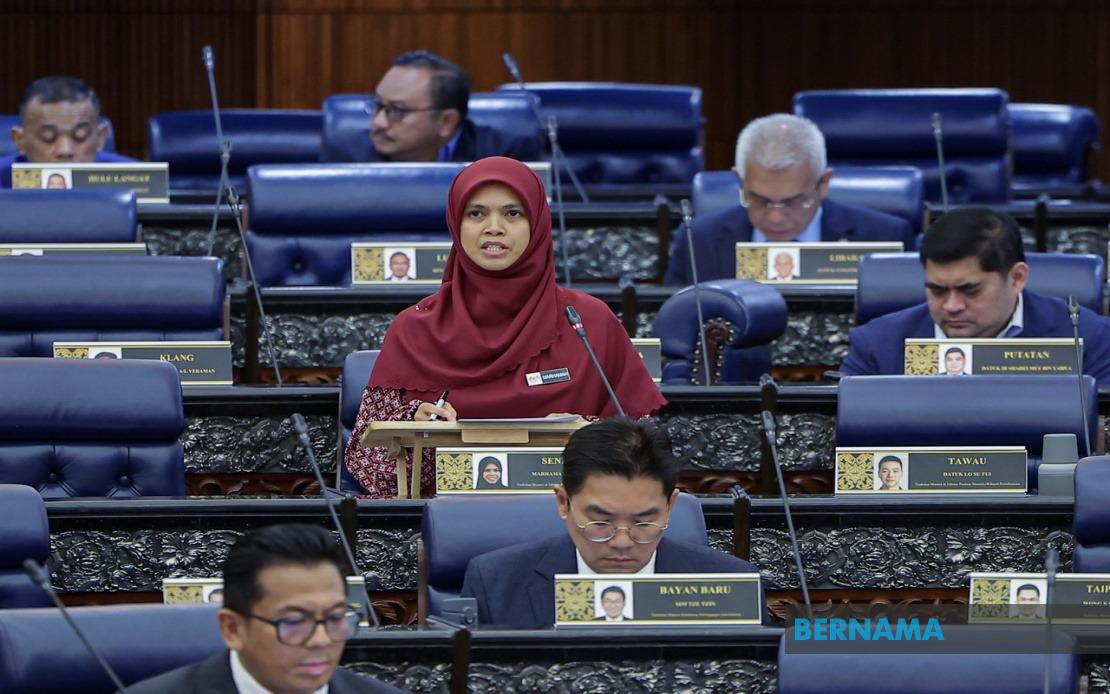
Tabung Haji and the Malaysian government are prepared to examine ways of extending greater financial assistance to pilgrims from the B40 income bracket if expenses associated with the annual haj pilgrimage continue their upward trajectory, according to a parliamentary statement delivered on 22 June. Deputy Minister in the Prime Minister's Department (Religious Affairs) Marhamah Rosli disclosed that while TH maintained its commitment to supporting lower-income prospective pilgrims throughout 2024, the organisation recognises the mounting affordability challenge confronting this vulnerable segment of the population.
The fiscal reality underlying TH's support mechanisms reveals the substantial gap between the full cost of pilgrimage and what low-income families can reasonably contribute. The actual expenditure required per pilgrim this year has reached RM33,300, encompassing airfare, accommodation, sustenance, and logistical arrangements throughout the Islamic holy sites. Under TH's existing assistance framework, B40 pilgrims need only provide RM15,000 from their own resources, with the remaining RM18,300 supplied through institutional support mechanisms—a 55 percent subsidy that represents a significant commitment to accessibility.
Crucially, TH's capacity to fund these subsidies stems entirely from investment returns generated through the organisation's portfolio management of depositors' savings accounts. This dependency on investment performance creates an inherent tension between the ambition to expand aid and the fiduciary responsibility owed to the millions of TH account holders whose contributions form the foundation of the assistance programme. Marhamah emphasised that whilst TH acknowledges the pressing need to boost B40 support, any expansion must balance compassion against prudential stewardship, ensuring that assistance allocation reflects both individual pilgrim circumstances and the collective welfare of all depositors whose long-term savings depend on sound financial management.
The government's willingness to study increased assistance proposals signals recognition that current arrangements may become insufficient if inflationary pressures persist. Global factors including fuel prices, currency fluctuations affecting international travel costs, and accommodation demand in Saudi Arabia during the haj season all contribute to rising total expenditure. For families already struggling to accumulate even RM15,000 for pilgrimage, any further escalation risks rendering the journey beyond reach, contradicting the Islamic principle of making haj accessible to those capable of undertaking it.
Parallel to the financial assistance question, TH is simultaneously restructuring its queue management system to address systemic inequities within the pilgrimage allocation process. The organisation recognises that current mechanisms sometimes disadvantage depositors who have demonstrated sustained financial discipline by consistently saving and accumulating substantial balances. Reform efforts aim to create greater transparency and reward long-term commitment whilst maintaining fairness across the broader applicant pool. This operational enhancement could theoretically reduce circumstances where selected pilgrims subsequently defer their journey due to insufficient accumulated funds, a recurring problem that generates cascading complications throughout TH's scheduling systems.
The scale of demand vastly outstrips Malaysia's capacity to accommodate pilgrims. With over four million individuals currently registered within TH's haj queue system and the nation's annual quota fixed at approximately 31,600 pilgrims, waiting periods for newly enrolled applicants extend across decades in many instances. This severe bottleneck means that newly registered families face the depressing prospect of waiting twenty or more years before their turn arrives, a timeline that renders advance financial planning extraordinarily difficult and creates persistent uncertainty.
TH's situation exemplifies broader challenges confronting Islamic financial institutions managing competing demands across multiple stakeholder groups. The organisation must simultaneously function as a savings bank maintaining competitive returns for account holders, as a pilgrimage facilitator ensuring dignified and safe experiences for participants, and as a social welfare mechanism extending opportunity to economically marginalised populations. These three missions sometimes pull in contradictory directions, requiring careful calibration and trade-off decisions that necessarily disappoint some constituencies.
For Malaysian policymakers, the haj accessibility question carries particular weight given Islam's centrality to national identity and the government's stated commitment to supporting religious observance across all income categories. However, sustainable solutions require moving beyond temporary subsidy increases. Systemic approaches might involve exploring alternative funding mechanisms, negotiating favourable arrangements with Saudi authorities to expand Malaysia's quota, or implementing tiered savings schemes that incentivise early preparation whilst building government contingency reserves for emergency support cases.
The parliamentary exchange highlighted by Marhamah's responses also underscores how pilgrimage affordability intersects with broader economic inequality concerns within Malaysia. The B40 categorisation itself reflects the persistence of significant income stratification, where nearly 40 percent of the population earns insufficient salaries to comfortably accommodate major religious obligations or family needs. Enabling haj participation for lower-income groups thus functions as both a religious accommodation and an implicit acknowledgment of structural economic challenges requiring attention through complementary policy interventions beyond TH's purview.
Marhamah's assertion that Malaysia aspires toward becoming a global leader in haj management and services introduces an ambitious vision extending beyond domestic service delivery. Enhanced reputation and capability in pilgrimage administration could position Malaysian institutions and expertise competitively within the broader Islamic world, creating economic opportunities and soft power advantages. However, achieving this distinction requires demonstrating commitment to accessibility and equity alongside operational excellence—proving that expansion of capacity and quality need not come exclusively at the expense of affordability for the economically vulnerable.
The stated commitment to studying proposals for enhanced B40 assistance represents neither a definitive commitment to immediate expansion nor a rejection of future improvements. Instead, it reflects institutional acknowledgment that the current assistance quantum warrants periodic reassessment as economic conditions evolve. The coming haj seasons will demonstrate whether TH and the government translate this receptiveness into substantive policy adjustments or whether affordability constraints progressively restrict pilgrimage participation among Malaysia's lower-income Muslim majority.

