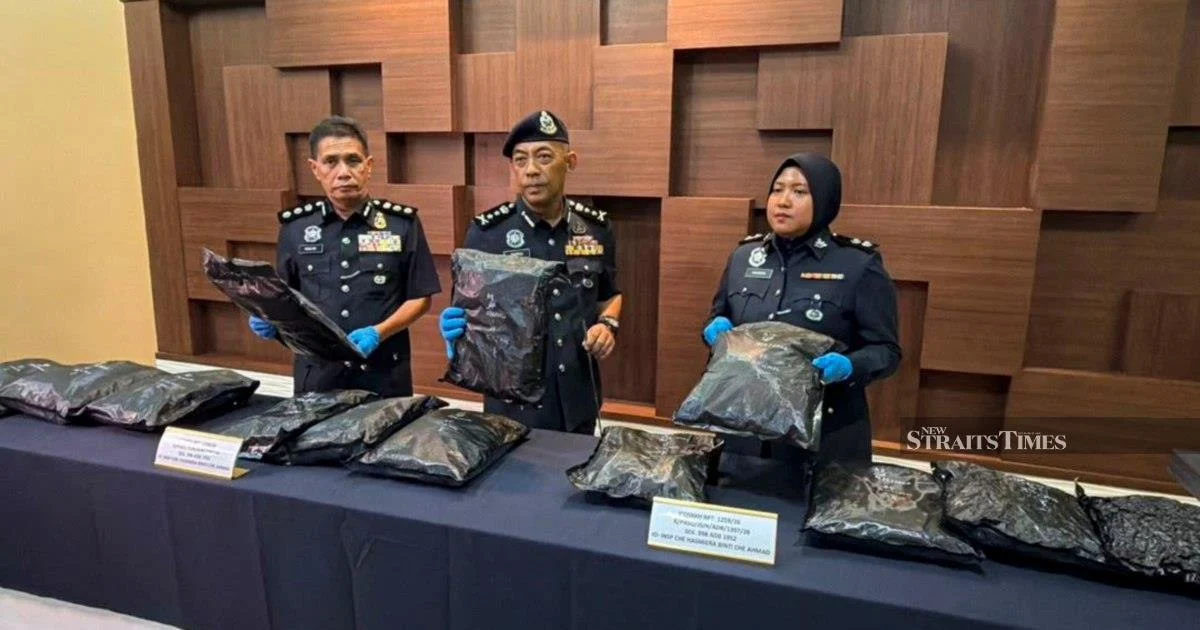
A student enrolled at a private institution of higher learning fell into police custody on Monday after authorities intercepted a significant drug smuggling operation at one of Malaysia's key northern border crossings. The arrested individual was found in possession of 14.63 kilograms of cannabis buds at Bukit Kayu Hitam, a major customs and immigration checkpoint serving the Kedah-Perlis border region. The confiscated substance has an estimated street value of RM1.17 million, making this one of several notable cannabis interception cases documented in the country's northern states in recent months.
The arrest underscores the persistent threat of organised narcotics trafficking through land borders shared with Malaysia's immediate neighbours. Bukit Kayu Hitam serves as a crucial point of entry for both legitimate commerce and illicit contraband, handling thousands of vehicles daily. Border security agencies have intensified screening operations in recent years as transnational drug networks continue to exploit established smuggling corridors. The apprehension of a student, rather than a professional courier, suggests criminal syndicates may be expanding their recruitment strategies to include individuals from seemingly low-risk demographics.
The detained student's status as a private institution enrollee raises questions about the economic motivations driving youth involvement in narcotics trafficking. Financial incentives offered by organised crime networks frequently target university-age individuals facing tuition fees, accommodation costs, or personal expenses. Private higher education in Malaysia can demand substantial fees, and students from lower-income backgrounds may find themselves vulnerable to recruitment by drug suppliers promising substantial one-time payments for single transportation assignments.
Authorities have not publicly disclosed the suspected origin of the cannabis buds, though the Bukit Kayu Hitam checkpoint specifically handles cross-border traffic from a neighbouring country, indicating the shipment likely originated in the north. Southeast Asia has become an increasingly significant production region for cannabis as recreational legalisation spreads in developed nations, creating lucrative export opportunities for traffickers. Domestic demand within Malaysia remains relatively contained compared to methamphetamine and heroin, but organised networks have identified profitable external markets.
The substantial weight of the confiscated material—14.63 kilograms represents a significant commercial quantity rather than personal consumption amounts—indicates this operation formed part of a larger distribution network. Authorities typically prosecute such cases under enhanced trafficking provisions rather than simple possession statutes, with potential penalties including lengthy imprisonment. The RM1.17 million valuation reflects street-level retail prices, suggesting the cannabis was destined for fragmentation and sale through multiple distribution channels.
This interception follows several high-profile drug enforcement operations across northern Malaysia over the preceding twelve months. Kedah and Perlis, positioned directly on international borders, have consistently recorded elevated narcotics trafficking incidents. The Royal Malaysia Police's border security task forces have increased checkpoint inspections and intelligence-led operations targeting known smuggling routes, yet traffickers continue adapting their methods and personnel.
Investigators will focus on dismantling the network behind this shipment, examining financial transaction records, communications, and relationships between the arrested student and handlers. Drug syndicates typically employ compartmentalised structures where individual transporters possess minimal knowledge of broader operation details, complicating the identification of higher-level organisers. Intelligence sharing with neighbouring countries' authorities may reveal patterns linking this seizure to related smuggling enterprises operating across regional borders.
The case reflects broader challenges facing Malaysian narcotics enforcement in an era of increasingly sophisticated trafficking methodology. While authorities celebrate individual seizures, the scale of confiscations relative to estimated total flows suggests substantial quantities evade detection. Border management agencies simultaneously handle legitimate travel and cargo processing, creating operational constraints that determined smugglers exploit through timing, concealment innovation, and personnel cycling.
Beyond immediate criminal proceedings, this arrest highlights the need for enhanced university awareness programmes addressing student vulnerability to organised crime recruitment. Educational institutions could implement risk awareness curriculum targeting the financial desperation that makes trafficking assignments attractive to debt-burdened or income-seeking young people. Coordinated efforts between higher education authorities, student welfare services, and law enforcement might identify at-risk individuals before criminal networks establish contact.
The detained student faces serious criminal liability under Malaysia's Dangerous Drugs Act, with cannabis trafficking at this quantity level carrying mandatory sentences. Prosecution will proceed through the courts at Alor Star, Kedah's state capital, with proceedings likely attracting limited public attention despite the substantial drug value involved. Resolution of this case will inform ongoing border interdiction strategies as enforcement agencies continue calibrating resource allocation between major checkpoints handling tens of thousands of daily crossings.