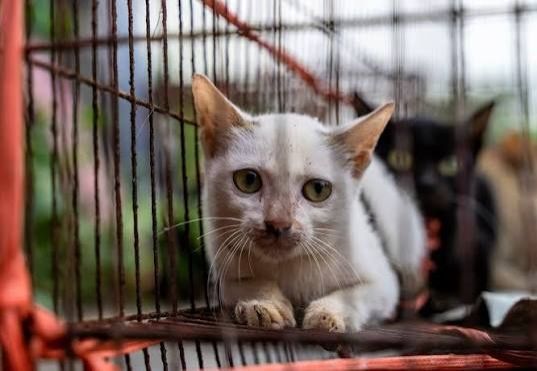
Vietnamese law enforcement has broken up an organized cat-theft operation in Ho Chi Minh City, leading to the recovery of hundreds of animals and the arrest of nine suspects accused of running a sophisticated criminal enterprise. The raid, conducted last week, has resulted in the reunion of at least 40 stolen cats with their owners, marking a significant victory for animal protection advocates in the country who have long campaigned against the illegal trafficking of pets destined for the meat trade.
The scale of the operation uncovered by police underscores the extent of organized animal trafficking in Vietnam. Authorities recovered more than 400 live cats from the gang's holding facilities, along with 80 animals that had already been slaughtered and preserved on ice, indicating an industrial-scale operation. Police also seized an additional 21 cats from a related location, bringing the total rescue to over 500 animals. The nine arrested individuals confessed to systematically luring and trapping cats across southern Vietnam over a three-year period, demonstrating that this was not a casual activity but rather a carefully orchestrated criminal enterprise with established networks and methods.
The operation has sparked renewed attention to the complicated legal landscape surrounding animal consumption in Vietnam. While eating dog and cat meat remains lawful in the country, and many establishments openly sell such products, vendors are technically required to possess certificates documenting the origin of their animals. This regulatory framework exists in theory, but enforcement has historically been weak. The fact that stolen household pets were being funneled into the food supply chain highlights the gap between official requirements and actual practice in Vietnam's informal meat markets, a distinction that has significant implications for both animal welfare and public health.
The Ho Chi Minh City police department's action appears to have been motivated by mounting public complaints about pet thefts throughout the metropolis. Residents had reported increasing numbers of missing cats and dogs, a problem that prompted authorities to investigate and eventually infiltrate the theft ring. The confessions obtained during questioning revealed the systematic nature of the operation, showing that perpetrators did not randomly capture animals but rather targeted domestic cats through coordinated methods refined over years of criminal activity.
The rescue represents a meaningful outcome for animal welfare advocates in Southeast Asia, where organized pet trafficking has become an entrenched problem in several countries. Humane World for Animals, the international organization that announced the reunification, characterized the police operation as "decisive action that has saved the lives of so many animals." The organization's statement emphasized the tangible difference that coordinated law enforcement effort can make when addressing organized animal crime, a message particularly relevant for jurisdictions across the region where similar networks operate with relative impunity.
However, the human cost of the animals' ordeal has been substantial. Approximately 100 of the rescued cats died from the stress, injuries, and poor conditions they endured while held captive by the trafficking gang. These deaths underscore the severe suffering inflicted on animals trapped in such networks, beyond the immediate threat of slaughter. The surviving cats often arrived at rescue facilities traumatized and physically weakened, requiring extensive care and rehabilitation before they could be safely returned to families or rehomed.
The ongoing challenge now centers on the welfare of animals currently retained by authorities as evidence in the criminal prosecution. Around 100 cats remain at the police station, their long-term fate uncertain as the legal process unfolds. The extended detention of these animals raises animal welfare concerns that authorities must balance against the requirements of criminal investigation and prosecution. Karanvir Kukreja, representing Humane World for Animals, highlighted this tension when expressing worry about the conditions of cats held indefinitely in police custody.
To address immediate welfare concerns, the animal protection organization has taken practical steps, donating food supplies and arranging for cooling systems to prevent heat stress during the tropical Vietnamese summer. These interventions represent a necessary partnership between NGOs and authorities, illustrating how outside organizations can fill critical gaps in state resources and expertise. The provision of fans and adequate nutrition for detained animals demonstrates that even within the constraints of an evidence-holding situation, basic welfare standards can be maintained through coordinated effort.
The bust carries broader significance for Southeast Asian law enforcement agencies grappling with organized animal trafficking. Vietnam's successful operation provides a model for investigative techniques and coordination that could be replicated in neighboring countries where similar networks exist. The case also illustrates how public complaints about pet thefts, when taken seriously by authorities, can lead to the dismantling of larger criminal infrastructure. For Malaysian readers, the operation offers insights into the sophistication of transnational animal trafficking networks that may extend across Southeast Asian borders.
The incident has reignited debate within Vietnam about whether the country should follow the lead of other Asian nations in banning or restricting the consumption of dogs and cats. Several Vietnamese cities and provinces have moved toward local bans in recent years, reflecting shifting public sentiment among urban residents who increasingly view pets as family members rather than food sources. This cultural shift, evident in the public outcry that prompted the police investigation, suggests that support for animal protection measures may be growing even in contexts where traditional attitudes about animal consumption remain prevalent.
Looking ahead, animal welfare organizations are calling for stronger legal frameworks that would make pet theft a more serious criminal offense with corresponding penalties. Currently, the nine suspects arrested face charges related to theft and criminal association, but the relatively modest sentencing provisions for such crimes in Vietnam mean that perpetrators can face relatively light punishment even for large-scale operations. Advocates argue that specialized legislation treating organized animal trafficking as a distinct criminal category, similar to provisions in some European countries, would provide more effective deterrence.
The reunification of 40 cats with their families represents the human-interest dimension of this law enforcement success, but it also masks a larger tragedy. With only a fraction of the rescued animals successfully matched with original owners, many cats will face uncertain futures. Animal shelters and rescue organizations across southern Vietnam will likely absorb the bulk of survivors, already straining resources in countries where institutional animal welfare infrastructure remains underdeveloped. The long-term commitment required to care for rescued animals often exceeds the capacity of local organizations, creating ongoing welfare challenges that extend far beyond the initial rescue operation.