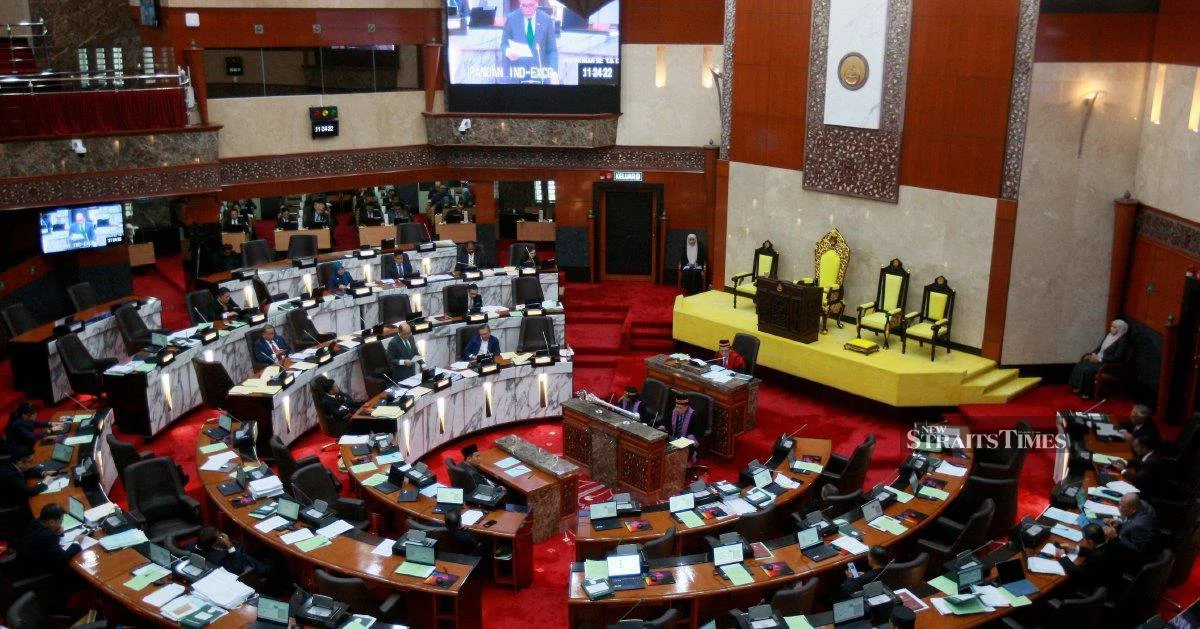
Malaysia's state legislative assemblies face significant governance challenges that demand comprehensive reform, according to findings from the Parliamentary Democracy and Constituency Development Caucus. The report identifies substantial gaps in oversight mechanisms and public transparency across state assemblies nationwide, suggesting that without intervention, these institutions will struggle to maintain public confidence and deliver effective governance.
State assemblies form the backbone of local democratic representation in Malaysia, yet many operate with surprisingly limited public scrutiny compared to their federal counterpart. The problem is particularly acute in constituencies where elected representatives wield considerable influence over development allocations and community programmes. When oversight mechanisms are weak, opportunities emerge for mismanagement, patronage, and decisions made behind closed doors rather than through democratic processes that engage constituents meaningfully.
The caucus findings underscore a fundamental principle of representative democracy: accountability flows directly from transparency. Citizens cannot hold their representatives responsible if they cannot access reliable information about how decisions are made, how resources are allocated, or how public funds are spent. Many state assemblies currently lack standardised systems for publishing proceedings, voting records, or committee reports, creating an information asymmetry that favours incumbent politicians and complicates oversight by the public and media.
Transparency deficits vary significantly across states, reflecting different levels of institutional development and political cultures. Some assemblies maintain reasonably accessible records of debates and committee work, while others provide minimal information to the public. This fragmentation suggests a need for uniform standards—similar to federal parliamentary practices—that would establish baseline requirements for public access to assembly business. Standardised formats would also facilitate comparison and enable civil society organisations to track trends in legislation and spending.
The report's emphasis on stronger oversight mechanisms addresses both internal and external accountability. Internally, state assemblies require more robust committee systems, particularly in areas like finance, public accounts, and constituency development. These committees should possess genuine investigative powers, adequate staffing, and budgets that allow them to examine government performance thoroughly. Currently, many lack the resources or independence to function effectively as meaningful checks on executive power.
External oversight depends critically on media access and freedom of information. Journalists and civil society monitors require timely access to assembly records, budget documents, and official correspondence to serve their watchdog functions. Several states have implemented freedom of information policies, but these remain inconsistent and sometimes circumscribed by overly broad exemptions. A coordinated effort to strengthen information access laws across all states would benefit both transparency and democratic participation.
For Malaysian voters and Southeast Asian observers, these governance issues carry real implications. State assemblies control significant aspects of daily life—from land use decisions to education facility allocation, from local licensing to community development programmes. When these bodies lack transparency, communities cannot effectively advocate for their interests, and local leaders face less pressure to deliver results. This affects urban planning, environmental protection, social services, and economic opportunities in each constituency.
The caucus report implicitly recognises that governance improvement requires systemic rather than cosmetic change. Installing a public-facing website or publishing occasional reports falls short of genuine transparency. Instead, reformers should establish regular schedules for public assembly sessions, create standardised financial disclosure requirements for all representatives, implement asset declaration systems, and ensure that tender processes for government contracts are conducted openly and competitively.
Educating assemblypersons about best practices in governance and public accountability represents another crucial component. Many state legislators arrive without formal training in legislative procedure, budget oversight, or constituent engagement. Professional development programmes—potentially coordinated at the federal level—could improve the quality of scrutiny applied to government spending and policy proposals. Similarly, training for assembly staff and committee members would strengthen institutional capacity.
The challenge extends to enforcement mechanisms. Stronger rules mean little without consequences for non-compliance. States should establish independent bodies—potentially legislative oversight committees with representation from opposition parties—that can investigate complaints about assembly procedure, ethics violations, or transparency failures. Currently, many grievances lack formal redress channels, leaving dissatisfied constituents without recourse.
Implementing these reforms requires political will from state governments themselves, particularly from ruling coalitions that might fear increased scrutiny. However, experience across Malaysia and the broader region demonstrates that transparency and accountability ultimately strengthen rather than weaken democratic institutions. They build public confidence, reduce corruption, and improve policy outcomes by exposing poor decisions to criticism and revision.
The Parliamentary Democracy and Constituency Development Caucus report thus serves as an important catalyst for conversation about state-level governance. Whether state governments respond constructively will depend partly on public pressure. Citizens, civil society organisations, and opposition parties must make transparency and accountability central to their engagement with state politics, demanding concrete commitments to reform rather than accepting incremental improvements.
Moving forward, establishing a coordinated approach—perhaps through the Council of Rulers or federal-state coordination mechanisms—could help states learn from each other while maintaining flexibility for local adaptation. What matters most is momentum toward genuine systemic change that respects democratic principles and empowers constituencies to hold their representatives accountable for decisions affecting their communities and futures.

