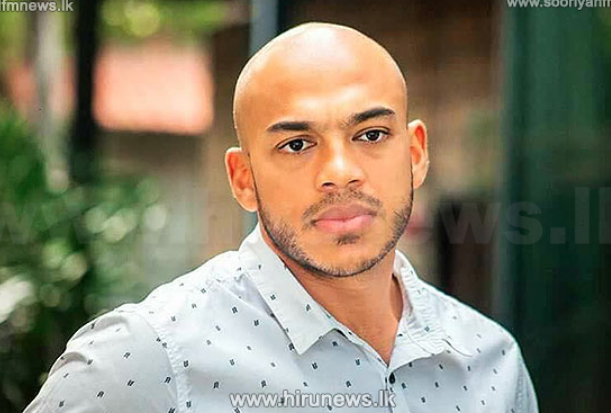
The arrest of Yoshitha Rajapaksa on Wednesday represents a dramatic escalation in Sri Lanka's reckoning with one of the island nation's most influential yet controversial political families. The 38-year-old naval officer, accused of leveraging his family connections to secure unmerited advancement and state-funded training abroad, becomes the latest member of the Rajapaksa clan to face the country's anti-corruption machinery. His detention, announced by the Bribery Commission, signals that no amount of family prestige or past political power offers insulation from investigations now sweeping through the corridors where the dynasty once wielded near-absolute authority.
Yoshitha's alleged misconduct centres on what investigators describe as a calculated exploitation of his privileged position within Sri Lanka's armed forces. Rather than following the meritocratic pathway expected of military cadets, he is accused of ascending through naval ranks despite lacking the prescribed qualifications that would normally prerequisite such advancement. The Bribery Commission's statement describes his trajectory as one marked by aiding and abetting in recruitment violations, followed by the appropriation of government resources to finance officer training in Britain—a sequence of decisions that prosecutors contend could only have been facilitated by his father's position as the nation's chief executive at the time.
Central to the corruption allegations is Yoshitha's attendance at Dartmouth, a prestigious naval officer training establishment in Britain, funded entirely by Sri Lankan government coffers. The optics of his placement proved immediately controversial within military circles and among observers of institutional integrity. Officers and military analysts at the time questioned whether a cadet with genuine merit might have been displaced to accommodate the presidential son, raising uncomfortable questions about whether the nation's defence forces had become an arena where political patronage superseded professional capability. His father Mahinda Rajapaksa, then serving as president, presided over the decision during his 2005-2015 tenure—a period that critics increasingly view as characterized by institutional capture and the normalization of nepotistic privilege.
This arrest does not materialise in isolation but rather represents part of a broader pattern of legal accountability engulfing the entire Rajapaksa constellation. Yoshitha already stood accused in two separate money-laundering investigations and operated under a foreign travel restriction, circumstances that had kept him tethered to Sri Lankan soil while bail conditions previously permitted his continued freedom. The fresh corruption charge, while specifically addressing the recruitment and training irregularities, arrives alongside a separate criminal prosecution examining his unexplained wealth—particularly regarding his acquisition of residential property during his father's presidency. When questioned about the financial sources underpinning this real estate transaction, Yoshitha offered a strikingly implausible explanation: he claimed to have raised funds through the sale of gemstones gifted by his grandmother, a story complicated by the fact that his elderly relative professed ignorance about how she herself had obtained those precious stones in the first place.
Yet another distinct case involves Yoshitha's purchase of a television network, further broadening the investigative scope into his financial activities and the origins of capital deployed in commercial ventures. This multiplicity of separate investigations creates a portrait of alleged systemic financial impropriety, where the Rajapaksa name and presidential access appear to have functioned as a form of alternative currency, translating political proximity into tangible economic advantage. Each case, prosecuted independently, accumulates into a composite indictment of the entire ecosystem of entitlement that surrounded the dynasty during its years in power.
The acceleration of cases against the Rajapaksa family has fundamentally coincided with Sri Lanka's political realignment following President Anura Kumara Dissanayake's 2024 election victory. Dissanayake explicitly campaigned on an anti-corruption mandate, positioning himself as the antidote to the perceived institutional rot and dynastic capture of the Rajapaksa era. His administration has demonstrated willingness to authorize prosecutions that might previously have faced political obstruction, whether through prosecutorial hesitation or executive clemency. This shift represents not merely a change in personnel but a fundamental reconstitution of political priorities, where accountability mechanisms can now function without fear of presidential intervention or family-backed political retaliation.
Mahinda Rajapaksa's younger brother Gotabaya provides perhaps the most striking example of the family's current precarious legal status. Gotabaya ascended to the presidency in 2019, following his own disputed tenure as Defence Secretary during Mahinda's earlier administration. However, his presidency proved catastrophic, collapsing amid the 2022 economic crisis that triggered widespread public uprising. He fled the country, subsequently returning under conditions that his supporters portrayed as politically persecuted. Recently, the authorities imposed a foreign travel ban on Gotabaya, measures he actively contests through court proceedings. Most ominously for him, he faces potential arrest on charges relating to the 2019 Easter Sunday bombings that claimed 279 lives—allegations touching upon the gravest possible criminal liability, far transcending conventional corruption charges.
The broader implications of these prosecutions extend beyond the Rajapaksa family and into questions about institutional resilience in post-conflict Southeast Asian democracies. Sri Lanka's ability to hold former political elites accountable through its judicial system demonstrates that democratic transitions, however fraught, can produce mechanisms capable of investigating even the most powerful figures. For Malaysian observers and policymakers, the Sri Lankan experience offers both cautionary and exemplary dimensions: cautionary in illustrating how single families can come to dominate state institutions, and exemplary in showing that sustained political change can eventually enable accountability mechanisms to function independently of short-term political pressures.