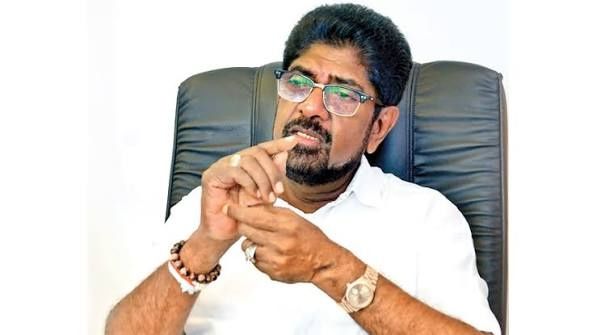
A former Sri Lankan government minister has been taken into custody by the nation's anti-corruption authorities following allegations that he orchestrated the removal of a centuries-old ceremonial stone from the palace of the island's last Sinhala monarch. Keheliya Rambukwella was detained on Tuesday by the Commission to Investigate Allegations of Bribery or Corruption (CIABOC) in connection with the disappearance of the moonstone, a carved circular granite artefact that functioned as part of the symbolic entrance to the palace of Veera Parakrama Narendrasinghe, who ruled until 1739. The theft occurred in December 2022, yet authorities only recently moved to formally charge Rambukwella with involvement in the crime.
The moonstone represents far more than a decorative object in Sri Lankan cultural memory. Such stones, which traditionally served as symbolic threshold markers in ancient and medieval royal architecture, carry profound significance for understanding the island's architectural heritage and its connection to historical kingship. The theft of such an artefact from a site of national historical importance triggered wider concerns about the vulnerability of Sri Lanka's cultural assets during a period of profound institutional instability. By removing the stone, those involved essentially dismantled a tangible link to the island's pre-colonial past, making the case emblematic of crimes affecting both state resources and national patrimony.
Beyond the moonstone theft itself, the anti-corruption commission has levelled additional charges against Rambukwella that paint a picture of systematic misconduct spanning multiple portfolios. The former minister allegedly obstructed police investigations at the time of the stone's removal, a charge frequently deployed in cases where officials attempt to shield accomplices or derail evidence gathering. More significantly, prosecutors assert that Rambukwella unlawfully deployed state funds to recruit six individuals for work related to his own private business ventures—a clear breach of the boundary between public office and personal economic interest. These parallel allegations suggest a pattern of conduct in which Rambukwella allegedly exploited his ministerial position to circumvent legal restrictions and pursue private gain.
The arrest occurs against the backdrop of a separate and more serious criminal proceeding already underway in court, one that probes his tenure as health minister during Sri Lanka's catastrophic economic collapse. During his time overseeing the health portfolio, Rambukwella allegedly authorised the state procurement of medicines that proved to be counterfeit or useless. Most dramatically, police investigators determined that a life-saving cancer medication purchased under his watch was in fact merely water, a revelation that underscores both the recklessness of the transaction and the vulnerability of patients who depended on these supplies. This medicine scandal touches upon a dimension of corruption that transcends mere financial impropriety—it speaks to the willingness of officials to permit potentially lethal medical fraud that could have endangered thousands.
The circumstances surrounding these pharmaceutical purchases became possible only because of Sri Lanka's acute economic crisis in 2022. When the nation defaulted on its US$46 billion in external debt in April 2022 and formally declared bankruptcy, the ensuing medicine shortage created conditions in which desperation supplanted proper procurement protocols. Hospitals and health officials faced genuine pressure to source medicines from any available supplier, creating a chaotic environment where fraudulent vendors could exploit system vulnerabilities. Rambukwella's tenure as health minister coincided precisely with this period of maximum pressure and minimum institutional oversight, yet the charges suggest he either neglected basic due diligence in vetting suppliers or actively participated in schemes to acquire substandard products.
The scope of the health ministry scandal extends beyond Rambukwella alone. Multiple senior officials within the ministry have been indicted in connection with the drug procurement debacle, indicating a systemic rather than isolated failure of governance. This pattern of culpability across the institutional hierarchy suggests that the problems stemmed not merely from individual bad actors but from collapsed internal controls and accountability mechanisms. The cascade of arrests and indictments reflects an anti-corruption effort attempting to hold accountable those at various levels who participated in or enabled the schemes.
Rambukwella's detention arrives as Sri Lanka continues its precarious recovery from economic devastation. The nation's bankruptcy and subsequent International Monetary Fund assistance programme have placed intense scrutiny on official conduct and resource management. Transparency and accountability have become touchstones for both domestic legitimacy and international creditor confidence. By prosecuting high-profile figures like Rambukwella, the CIABOC may be attempting to demonstrate institutional seriousness about rooting out corruption, though observers will likely watch whether such prosecutions extend equally to officials across the political spectrum or remain selective.
The intertwining of the moonstone theft and the health ministry scandals illustrates how corruption in crisis-struck nations often manifests across multiple dimensions simultaneously. When state institutions weaken, the erosion of oversight affects not only the handling of public money but also the protection of national cultural assets and the integrity of essential services. Rambukwella's multiple alleged offences encapsulate this comprehensive breakdown—the theft of historical property, the misuse of public funds, the obstruction of investigations, and the authorisation of fraudulent medicine purchases. Taken together, these allegations depict a minister who allegedly viewed his position as a platform for personal enrichment and the circumvention of law rather than as a custodian of public trust.

