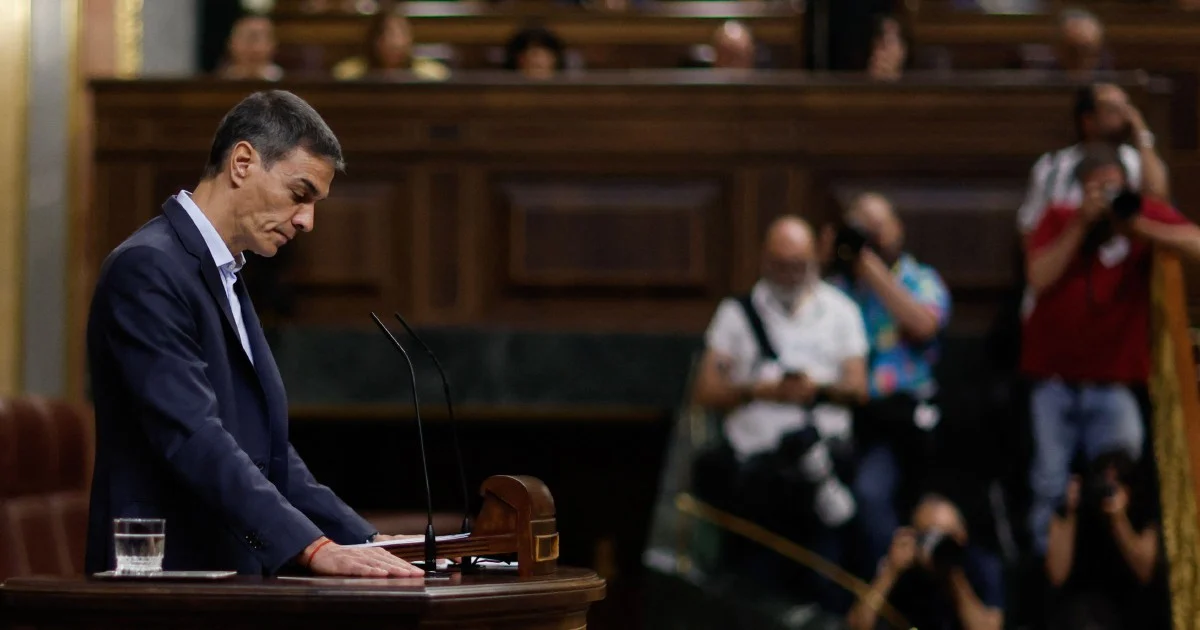
Spanish Prime Minister Pedro Sanchez has rejected characterisations of "widespread corruption" within his Socialist party following the imprisonment of a former senior aide, a development that threatens to destabilise his government as it navigates an already complex political landscape. The jailing of the ex-aide marks a significant turning point in a major financial scandal that has cast a shadow over Sanchez's administration at a critical moment.
The scandal's emergence comes at a particularly sensitive time for Spanish politics. Sanchez's government commands only a fragile parliamentary coalition, relying on support from multiple parties to maintain its legislative majority. Any sustained perception of institutional corruption could erode his political capital and make it substantially harder to advance his agenda, especially as he faces competing demands from regional independence movements and other parties that hold his political fate in their hands.
The imprisoned aide occupied a position of considerable trust within the Socialist party hierarchy. His conviction and incarceration represent an embarrassment that the party leadership cannot easily dismiss, particularly given the specificity of the corruption allegations involved. The case has attracted intense media scrutiny both within Spain and internationally, amplifying its political consequences.
Sanchez's categorical denial of systemic corruption reflects a defensive posture that is familiar in European politics when scandal strikes high-ranking officials. His strategy appears designed to isolate the misconduct as an aberration attributable to individual behaviour rather than institutional failure. However, such claims ring hollow to critics who point to the pattern of allegations as evidence of deeper problems within party structures and governance arrangements.
The timing of this scandal carries broader significance for Southeast Asian observers watching European governance challenges. Spain's experience demonstrates how even established democracies with strong constitutional frameworks can experience credibility crises when senior officials face corruption charges. The incident underscores the universal vulnerability of political institutions to graft and the political consequences that follow exposure.
For regional governments, the Spanish case offers a cautionary lesson about the damage that high-profile corruption among senior aides can inflict on executive authority and parliamentary stability. The mechanism by which such scandals propagate—through media coverage, opposition parliamentary tactics, and coalitional instability—mirrors patterns familiar throughout Asia and globally. Malaysia, in particular, has recent experience with how corruption scandals involving top officials can force governments to respond with both defensive rhetoric and substantive policy changes.
The relationship between Sanchez's government and its coalition partners will likely determine whether this scandal evolves into an existential political threat or remains a manageable embarrassment. Coalition members have significant leverage to demand accountability measures or policy concessions in exchange for continued support. This dynamic creates pressure on Sanchez to be seen as taking the matter seriously, even while maintaining that systemic corruption does not characterise his administration.
The Socialist party faces a credibility challenge that extends beyond immediate parliamentary politics. Public trust in institutions erodes slowly during scandals and, depending on how the investigation unfolds and what additional details emerge, this case could have ramifications for electoral support in future elections. Spanish voters' willingness to forgive or forget misconduct among ruling party elites will depend significantly on how transparently the government handles ongoing inquiries and whether prosecutions proceed impartially.
International dimensions of this scandal deserve attention as well. Spain's standing within the European Union and broader international community depends partly on perceptions of good governance and rule of law. Corruption allegations against senior officials in a major EU member state inevitably attract scrutiny from other capitals and international observers monitoring democratic standards. The way Spain's judicial system handles the investigation and any subsequent trials will either reinforce or undermine confidence in Spanish institutions.
The distinction Sanchez draws between individual culpability and institutional corruption, while rhetorically useful, will likely satisfy neither his political opponents nor segments of the public already sceptical of party elites. His opponents will seize on the scandal to demand broader anti-corruption measures, government-wide audits, and stronger oversight mechanisms. Whether Sanchez responds with substantive reforms or primarily relies on messaging will shape how this episode reverberates through Spain's political system.
As investigations continue and the judicial process unfolds, Spanish politics will operate under the shadow of this scandal. Coalition partners may use the situation to demand policy concessions, media attention will remain focused on emerging details, and opposition parties will persistently raise questions about governance standards. For Sanchez, navigating these pressures while maintaining parliamentary majorities and defending his government's legitimacy represents a complex political challenge that will preoccupy Spanish governance in coming months.

