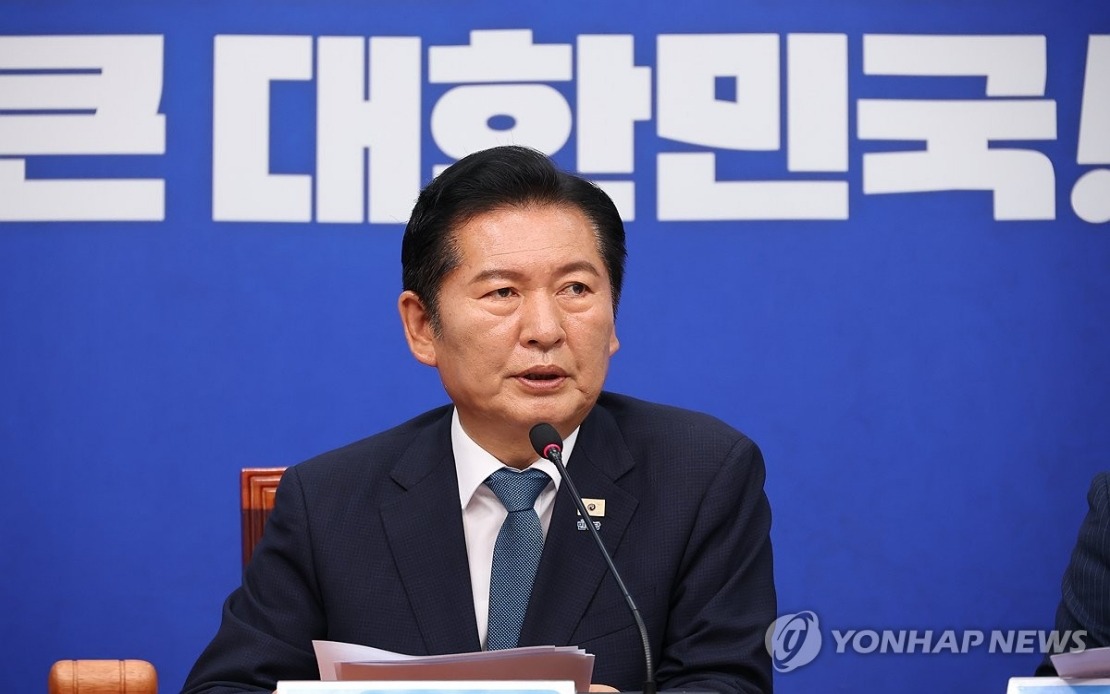
Jung Chung-rae, a prominent lawmaker within South Korea's ruling Democratic Party, formally stepped down from his role as party chairman on Wednesday, a decision that political observers interpret as a calculated manoeuvre to enable his candidacy in the party's forthcoming national convention scheduled for mid-August. The resignation was announced during a session of the party's supreme council at the National Assembly in Seoul, marking a pivotal moment in the Democratic Party's internal power dynamics.
In his resignation statement, Jung reflected on the emotional toll of his tenure, describing the considerable strain of balancing competing interests both within and beyond party structures. He emphasised his commitment to supporting President Lee Jae Myung's administration throughout his time as chairman, articulating a vision of unified coordination between the ruling party apparatus, government machinery, and the presidential office. This framing suggests Jung sought to position himself as a steadfast ally of the president despite the factional complexities that have marked his leadership.
Jung's departure reflects deeper divisions within the Democratic Party that have surfaced during his tenure. Certain pro-Lee faction members have publicly criticised his leadership style, arguing that he has prioritised the interests of his own support base at the expense of working collaboratively with the president on substantive policy matters. These tensions highlight the inherent difficulty of managing consensus within a ruling party comprising multiple ideological currents and competing centres of power. Jung's acknowledgement that he endured both internal resistance and external pressure without complaint underscores the precarious position party leaders occupy when attempting to balance presidential interests with grassroots party sentiment.
The leadership race itself promises to be intensely competitive, with Jung facing two formidable rivals. Prime Minister Kim Min-seok, who enjoys strong backing from President Lee and functions as a key political ally within the administration, represents the presidential faction's preferred candidate. Song Young-gil, a former Democratic Party leader with his own substantial political infrastructure and credentials, adds further complexity to the contest. According to reports transmitted through DP lawmaker Park Jie-won during a radio interview with CBS, Song has already signalled his intention to join the race and has tentatively explored the possibility of unifying his campaign with Kim, a potential alignment that could significantly reshape the electoral dynamics.
The timing of Jung's resignation allows him to assume the procedurally neutral status necessary for a fair contest while circumventing regulations that might otherwise restrict an incumbent chairman's candidacy. DP floor leader Han Byung-do will assume the role of acting party leader, providing interim management of party operations until the convention proceeds on August 17. This transition preserves institutional continuity while creating space for the leadership candidates to campaign without administrative encumbrance.
For Malaysian observers of East Asian politics, this South Korean development illuminates broader patterns of factional management within ruling parties across the region. The Democratic Party's internal struggles echo dynamics frequently encountered in Malaysia's own political landscape, where dominant parties must reconcile presidential or prime ministerial authority with decentralised power bases and competing factions. The public airing of these tensions, while sometimes uncomfortable, reflects the Democratic Party's relative institutional maturity and tolerance for internal debate, contrasting sharply with more tightly controlled party structures elsewhere in Asia.
The contested convention also reflects uncertainty about the Democratic Party's electoral prospects and internal morale. With factional divisions increasingly visible to the broader public, party unity during the crucial runup to future general elections appears vulnerable. The outcome of the August convention will likely determine not only who leads the party but also the strategic direction it pursues on key policy questions and its relationship with the presidential administration. Should Kim and Song succeed in unifying their candidacy against Jung, the result could reshape power balances within the party and strengthen Lee's control over the party apparatus.
Regionally, South Korea's Democratic Party leadership contest takes place within a broader context of political fluidity across East Asia. Rising factional tensions within ruling coalitions, the emergence of competing power centres, and generational shifts in political leadership represent common challenges. Malaysia, with its own experience of managing complex coalition politics and factional pressures, might observe lessons from how Seoul's Democratic Party navigates these pressures while maintaining institutional stability and democratic norms.
The August convention will provide clarity on the Democratic Party's internal alignment and reveal which faction commands the greater organisational capacity and grassroots support. Jung's willingness to resign despite the advantages of incumbency suggests confidence in his ability to mobilise support among party members. Conversely, the potential alliance between Kim and Song indicates that portions of the party establishment believe consolidating behind the presidential faction offers the optimal path forward. The convention's outcome will substantially influence the Democratic Party's cohesion heading into future electoral contests and shape the balance of power between presidential authority and party structures in South Korea's political system.

