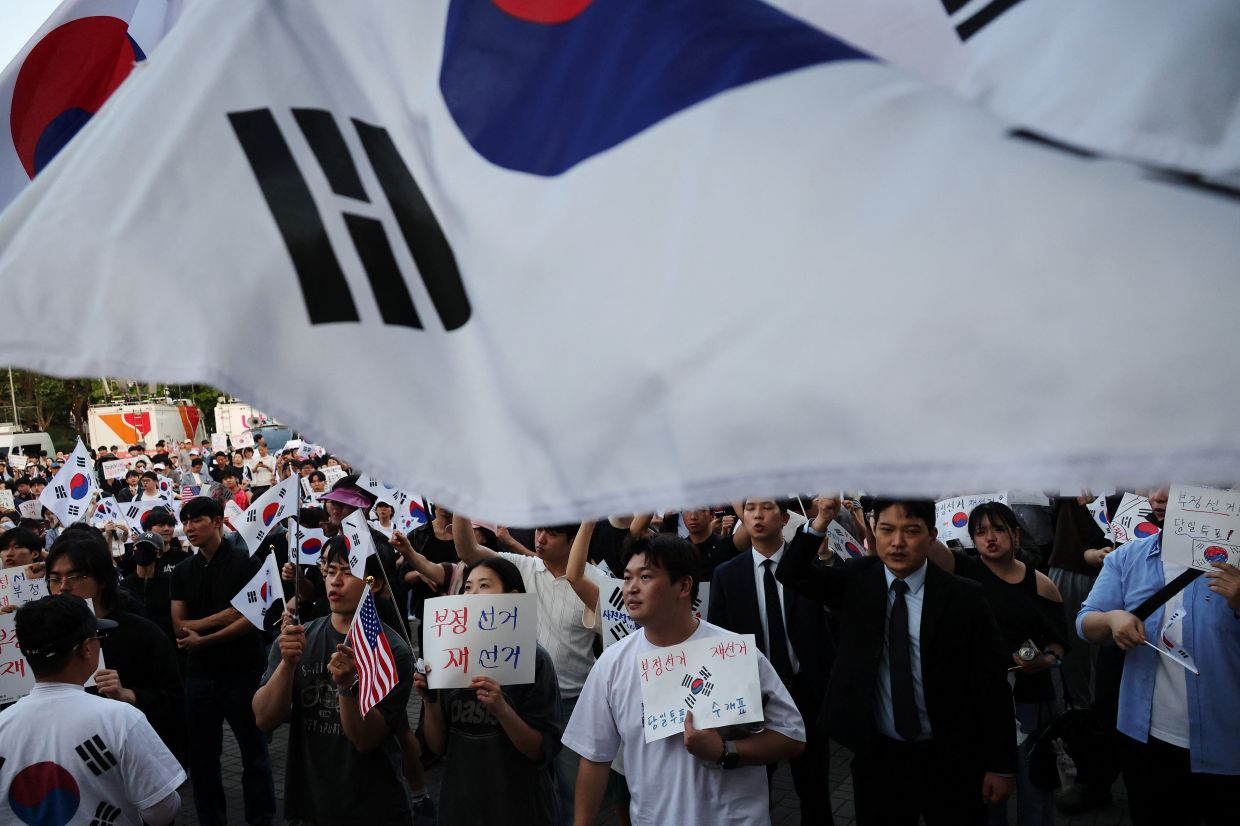
South Korea faces mounting tensions as President Lee Jae Myung attempts to navigate the fallout from voting irregularities that have sparked sustained public demonstrations. Speaking via social media on June 15, Lee appealed to protesters to exercise restraint and avoid obstructing the rights of ordinary citizens, even as he acknowledged the legitimate grievances underlying the unrest. The delicate balancing act reflects a deeper challenge for the administration: validating public anger over genuine administrative failures while containing efforts by some groups to weaponise the controversy into claims of systematic election fraud.
The crisis emerged from the June 3 local elections, which were marred by reports of ballot paper shortages and management failures that forced temporary suspensions or delays at numerous polling stations. These operational breakdowns struck at the heart of democratic processes and understandably alarmed voters concerned about the integrity of their participation. However, the legitimate frustrations have evolved into something more contentious, with some groups making unsubstantiated accusations of deliberate election rigging—a distinction Lee emphasised repeatedly in his remarks. The controversy has extended beyond political discourse into concrete disruptions, with demonstrations blocking access to Olympic Park facilities in southern Seoul, where the handball arena functioned as a vote-counting centre.
Lee's intervention directly addressed the spillover effects of protests on institutional operations and public services. Sports organisations maintaining offices within Olympic Park have experienced significant work disruptions as demonstrators blocked facility entrances, creating cascading problems for administrative functions essential to South Korean athletes' international participation. Such collateral damage represents the friction point where legitimate protest risks crossing into infringement of others' rights—precisely the boundary Lee sought to delineate. The President acknowledged that he had directed police to investigate both those who obstructed public access to facilities and any persons who conspired in such actions, signalling the administration's determination to prevent protest from degrading into lawlessness.
The National Election Commission's handling of voting procedures triggered immediate criticism from Lee, who characterised the operational failures as a serious breach of voter rights and a fundamental assault on democratic principles. Speaking from the Vatican during a video meeting with senior aides, Lee stated unequivocally that ballot shortages and voting disruptions represented an unconscionable infringement of the cornerstone right upon which all democratic systems depend. His acknowledgement of these failures represented a significant concession, effectively validating public anger whilst simultaneously creating political space to distinguish between justified criticism of administrative incompetence and unfounded allegations of orchestrated fraud.
Yet Lee drew a sharp line between censuring the NEC's poor management and entertaining conspiracy narratives about election manipulation. He characterised those advancing rigging claims as "forces" exploiting legitimate concerns to promote what he termed "absurd conspiracy theories." This rhetorical strategy allowed Lee to position himself as defending democracy against both the original administrative failure and subsequent attempts to transform operational mishaps into evidence of systemic corruption. The distinction matters significantly for regional observers, as it reflects broader patterns seen across Asia where electoral controversies risk metastasising into deeper institutional crises if not carefully managed.
Allegations regarding the conduct of those spreading election fraud claims painted a troubling picture of increasingly aggressive protest behaviour. Lee cited instances in which demonstrators had threatened police officers and citizens, conducted "incomprehensible searches and inspections," and obstructed official duties. These descriptions suggest that portions of the protest movement have transgressed from expression of legitimate democratic grievance into harassment and intimidation tactics that themselves threaten civil order and public safety. By itemising such conduct, Lee sought to establish that accountability must flow in multiple directions—toward the NEC for administrative failures and toward those engaging in unlawful protest activity.
The President's call for transparent investigation represented an attempt to rechannel public energy toward constructive institutional responses rather than confrontational street demonstrations. He urged the National Election Commission to cooperate fully with parliamentary investigations potentially beginning within days, and pressed prosecutors and police to accelerate their fact-finding efforts without favouritism or institutional protection for those responsible. This dual-track approach—simultaneous accountability measures coupled with appeals for public restraint—aims to demonstrate that legitimate grievances will be addressed through institutional mechanisms rather than requiring sustained protest pressure.
Lee's remarks from the Vatican carried additional symbolic weight, positioning the South Korean leadership as focused on institutional stability whilst engaged in international diplomacy. The decision to address the controversy from abroad whilst presiding over a video meeting underscored the administration's determination to normalise operations despite domestic turbulence. This approach contrasts with alternatives that might have involved the President returning to Seoul to address the crisis directly, a choice that could have inflamed tensions or suggested capitulation to protest pressure.
For Malaysia and Southeast Asian observers, the South Korean situation illuminates the precarious equilibrium between validating legitimate electoral concerns and preventing such concerns from morphing into destabilising institutional conflicts. South Korea's mature democratic institutions have proven capable of absorbing significant controversy whilst maintaining functional governance, yet the trajectory of this particular crisis demonstrates how quickly electoral disputes can escalate. The region has witnessed instances where ballot irregularities or voter access issues have been leveraged into broader challenges to governmental legitimacy, making Lee's attempts to compartmentalise the controversy instructive for other democracies navigating similar pressures.
The path forward depends substantially on whether institutional investigations into the NEC's failures produce credible accountability measures that satisfy public concern without validating conspiracy narratives. Lee's insistence on speed and transparency in fact-finding suggests recognition that prolonged uncertainty could intensify both legitimate grievance and conspiratorial interpretations. The President's characterisation of the moment as requiring "responsible action" to address "righteous anger" acknowledged that dismissing public concern wholesale would prove counterproductive, yet his firm rejection of rigging claims established boundaries beyond which the administration would not accommodate protest demands.
Ultimately, Lee's intervention represented an effort to reset the terms of public debate toward administrative reform whilst containing the political damage to democratic institutions themselves. Whether this strategy succeeds depends on whether subsequent investigations produce convincing findings and whether protest movements accept institutional channels as legitimate venues for accountability. The coming weeks, as parliamentary investigations potentially commence and prosecutors' findings emerge, will reveal whether Lee's attempt to distinguish between justified criticism and unfounded conspiracy theories can hold, or whether the controversy continues to spiral into deeper institutional contestation that threatens governance capacity across the region's most developed democracy.