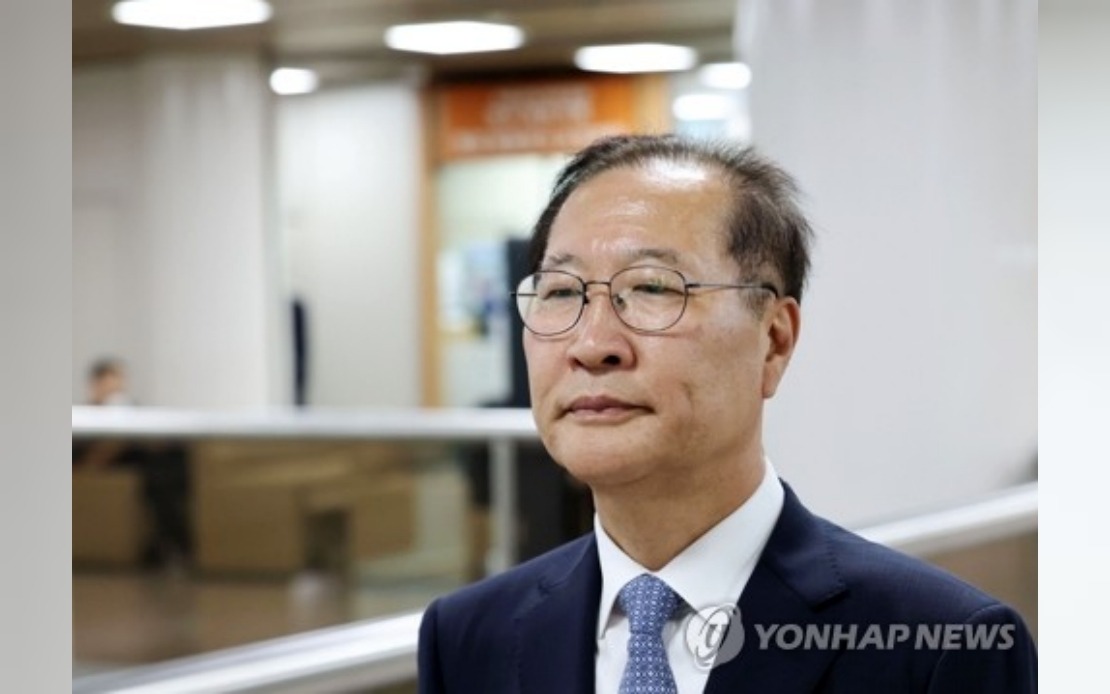
South Korea's former Justice Minister Park Sung-jae was convicted and sentenced to 25 years in prison on Monday by the Seoul Central District Court for his central role in the failed insurrection attempt linked to ex-President Yoon Suk Yeol's controversial martial law declaration. The sentence surpassed the 20-year term recommended by the special counsel investigating the matter, signalling the court's assessment of the severity of his actions during the political crisis that shook the nation in December 2024.
The conviction carries profound implications for South Korea's governance framework and democratic institutions. Park's case exemplifies how high-ranking officials became entangled in what prosecutors characterised as an unconstitutional power grab. The court immediately remanded Park into custody, demonstrating concerns about flight risk and potential evidence tampering—a measure reflecting the gravity of insurrection charges in South Korean jurisprudence.
Particularly damning was the court's finding that Park weaponised his ministerial authority to facilitate the martial law operation. He convened a meeting of senior justice ministry officials shortly after Yoon's December 3 declaration, ostensibly to orchestrate several coordinated actions: dispatching prosecutors to a martial law command structure, assessing prison capacity for anticipated mass arrests of political opponents, and positioning officials to implement travel restrictions against key figures. This methodical mobilisation of state apparatus demonstrated calculated complicity rather than passive involvement.
The judicial reasoning proved unforgiving. Judges determined that Park had consciously abandoned his constitutional obligation to protect democratic governance when he recognised the martial law initiative's momentum. Instead of fulfilling his duty as guardian of justice institutions, he elected to become an active participant in what the court explicitly characterised as an insurrection. This reasoning established a significant precedent regarding ministerial accountability during constitutional crises, one that will resonate across Southeast Asia's democracies grappling with similar institutional vulnerabilities.
Park joins a growing cohort of Yoon's cabinet members facing serious convictions related to the martial law episode. Former Prime Minister Han Duck-soo and former Defence Minister Kim Yong-hyun have already received insurrection convictions, indicating a systematic dismantling of the political leadership that enabled the constitutional breach. The pattern suggests that multiple senior officials collaborated across ministerial boundaries to execute the scheme, rather than acting as isolated agents.
The most senior figure implicated remains Yoon himself, who received a life sentence in February for orchestrating the martial law declaration. Yoon's ongoing appeal against this judgment represents the centrepiece of South Korea's political reckoning, with the outcome potentially reshaping how the country addresses presidential overreach and emergency power doctrine. The appellate process will test whether South Korean courts maintain their commitment to constitutional limits on executive authority.
Additionally, the court dismissed supplementary charges against Park involving anti-corruption violations. These stemmed from allegations that he issued improper directives to subordinates at the behest of Yoon's wife, Kim Keon Hee, who sought assistance investigating prosecutors probing corruption allegations against her in May 2024. The dismissal turned on jurisdictional grounds rather than exoneration, as the special counsel's mandate did not encompass those particular matters. This technical determination, however, leaves unresolved questions about the intersection of presidential family interests and prosecutorial independence.
Park's legal team immediately signalled their intention to appeal, characterising the verdict as disconnected from factual evidence and legal principle. This reflexive appeal—while routine in South Korean practice—appears positioned as a holding action rather than a substantive challenge, given the compelling evidence regarding Park's ministerial actions during the critical December period. The defence strategy may instead focus on appellate courts moderating the sentence rather than overturning conviction entirely.
Conversely, the special counsel's office indicated it would not appeal, instead emphasising that the judgment successfully articulated the defining duty of a justice minister: preventing unconstitutional declarations and defending constitutional order. This prosecutorial restraint reflects confidence in the conviction and a desire to preserve institutional credibility by accepting verdicts that advance the stated investigative mission. The posture suggests the special counsel team considers the case an exemplary demonstration of accountability mechanisms functioning as designed.
For Malaysian observers, Park's conviction offers instructive lessons regarding institutional resilience and ministerial accountability. Southeast Asian democracies, including Malaysia, face periodic questions about whether courts and prosecutorial institutions can withstand political pressure during constitutional crises. South Korea's willingness to convict senior cabinet officials, including the martial law architect himself, demonstrates that institutional mechanisms can operate independently when political will aligns with constitutional principle—though such outcomes remain far from guaranteed in all regional contexts.
The economic dimensions warrant consideration as well. South Korea's financial markets have largely stabilised despite the political turmoil, suggesting investor confidence that institutional checks ultimately function. Malaysia's own experience with governance transitions demonstrates the market sensitivity to perceived institutional decay. The Park conviction signals that rigorous accountability can coexist with economic stability, a reassuring precedent for developing democracies balancing justice with growth imperatives.
Looking forward, South Korea's handling of the martial law crisis will influence how other nations approach presidential overreach and emergency governance. The consistent conviction of officials from the highest ranks to ministerial level suggests that South Korean institutions ultimately prioritise constitutional preservation over factional loyalty. As regional autocratic pressures intensify, this commitment to accountability mechanisms—imperfect though they remain—distinguishes South Korea's approach to governance crises and provides a counterweight to more permissive institutional cultures elsewhere in Asia.

