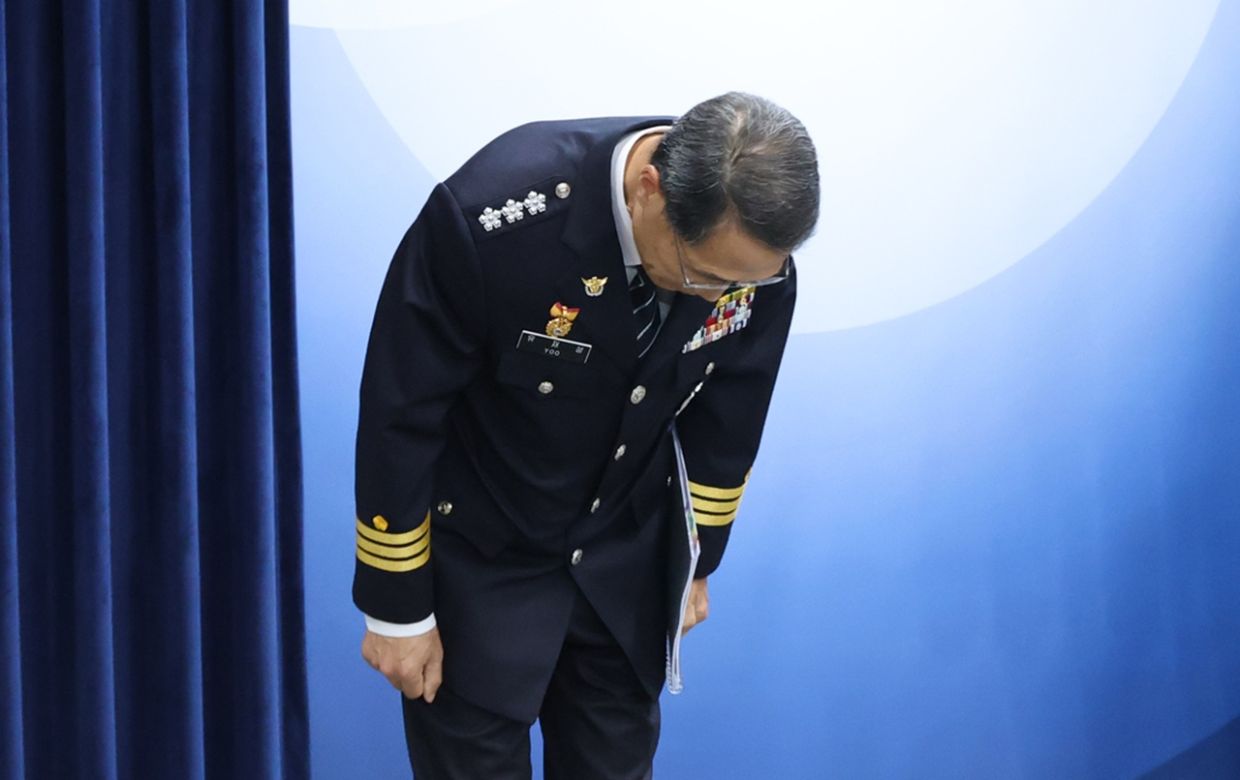
South Korea's police force faces a critical moment as Acting National Police Agency Commissioner General Yoo Jae-sung outlined an ambitious reform agenda in response to deepening institutional distrust. The announcement came amid public outcry over the handling of a case involving suspect Jang Yoon-gi, arrested for the alleged May killing of a teenage girl in Gwangju. The scandal has exposed troubling questions about investigative integrity and whether family connections within the police establishment can compromise the pursuit of justice, issues that resonate far beyond Korean borders as regional law enforcement agencies grapple with similar integrity concerns.
The central controversy centres on allegations that police officers leaked sensitive investigative details to Jang's father, himself a serving police officer, while simultaneously failing to preserve crucial evidence in the case. Such lapses—if substantiated—would represent not merely procedural oversights but a fundamental breach of public trust at a moment when police legitimacy is already under strain. For Malaysian and Southeast Asian observers, the case underscores how institutional nepotism and informal power networks can undermine formal investigative protocols, a challenge that transcends national borders and demands constant vigilance from oversight bodies.
During a formal briefing at Seoul's Government Complex, Yoo framed the crisis as an opportunity for systemic transformation rather than isolated misconduct. His pledge to pursue reform with "a deep sense of urgency" and his commitment to "regain public trust" signal recognition that the scandal threatens the police agency's broader legitimacy. However, such rhetoric must be tested against concrete implementation. The commissioner also notably declared his willingness to step down, stating he would "faithfully carry out his duties without clinging to his position," a gesture that underscores the political pressure surrounding the scandal.
The proposed reform package introduces multiple accountability mechanisms designed to address structural vulnerabilities that the Jang case exposed. A dedicated investigative reform task force, to be established by late July, will comprise seven to ten members with external experts comprising more than half the panel. This outsourcing of oversight reflects a broader global trend toward bringing civilian expertise into police accountability structures, a model gaining traction across Southeast Asia as governments seek to rebuild institutional credibility following high-profile failures.
Simultaneously, an internal affairs investigation unit operating under the National Office of Investigation will begin scrutinising serious duty-related crimes committed by officers at all ranks. The absence of rank-based immunity represents a significant conceptual shift, signalling that even senior officials can face investigation—a principle that appears straightforward but has proven difficult to implement consistently across many jurisdictions. This parallel with Malaysian discussions about police accountability demonstrates how systemic reform requires not merely new units but genuine cultural change regarding who can be questioned and how.
Perhaps most significantly, the police are advancing plans for a civilian oversight body under the Korean National Police Commission, comprising approximately 100 civilian investigators tasked with examining alleged human rights violations and misconduct in police operations. Yoo acknowledged that establishing this body requires amendments to the Police Act, with relevant legislative proposals already submitted to the National Assembly. He emphasised that the investigative body must have genuine authority, specifically noting that "its findings can lead to recommendations for personnel or disciplinary action." Without such consequential power, civilian oversight bodies risk becoming toothless forums.
The reform agenda extends to operational procedures, particularly regarding investigations involving socially vulnerable populations. The task force will examine how police handle cases affecting such groups, recognising that investigative shortcomings often disproportionately harm marginalised communities. Personnel reforms targeting "improper ties between officers and local communities" address the networking dynamics that apparently enabled the alleged information leak to Jang's father. These measures acknowledge that formal rules prove insufficient without breaking down informal power structures that circumvent official channels.
Yoo also announced plans to expand the police rotation system, which currently applies to superintendent-level officers and some senior inspectors. Expanding nationwide rotations to lower ranks aims to prevent officers from embedding themselves within particular communities where personal relationships might compromise impartiality. However, practical obstacles loom: the system depends on providing official residences to transferred officers, a costly provision that becomes exponentially more expensive when extended to lower ranks. Yoo indicated the agency would seek a "reasonable plan" balancing reform ambitions against fiscal constraints and officer acceptance—a tension that reflects the genuine difficulty of transforming established institutions.
The commissioner acknowledged that applying rotations across all ranks presents genuine implementation challenges, suggesting the police will adopt a phased approach, prioritising measures that can be "introduced promptly" while tasking the reform body with working through longer-term complexities. This gradualist stance, while pragmatic, also reflects bureaucratic caution that critics may view as insufficient given the scandal's severity. The willingness to hear from rank-and-file officers before finalising rotation policies suggests recognition that officer buy-in matters for implementation success, though it also raises questions about whether institutional resistance could dilute reform ambitions.
Regarding Jang's father specifically, Yoo stated the police would await findings from a special investigation team before concluding their internal inspection and determining follow-up measures. This measured approach avoids prejudging the outcome, but it also means accountability conclusions may take considerable time—a delay that could frustrate public demands for swift consequences. The decision reflects procedural propriety but highlights the tension between rapid public satisfaction and thorough investigative processes.
For Malaysian and broader Southeast Asian audiences, the Korean police scandal and reform response offer instructive lessons. The case demonstrates how family connections within security institutions can compromise investigations, a concern that transcends national contexts. South Korea's multi-layered reform approach—combining external oversight, civilian investigation units, internal affairs scrutiny, and personnel rotation—represents an ambitious attempt to address systemic vulnerabilities. Whether these reforms achieve their stated aims depends on implementation rigour and whether they successfully dismantle informal networks that often operate beneath the surface of formal procedures. The coming months will reveal whether South Korea's police establishment can genuinely transform institutional culture or whether structural constraints and resistance will limit reform's practical impact.

