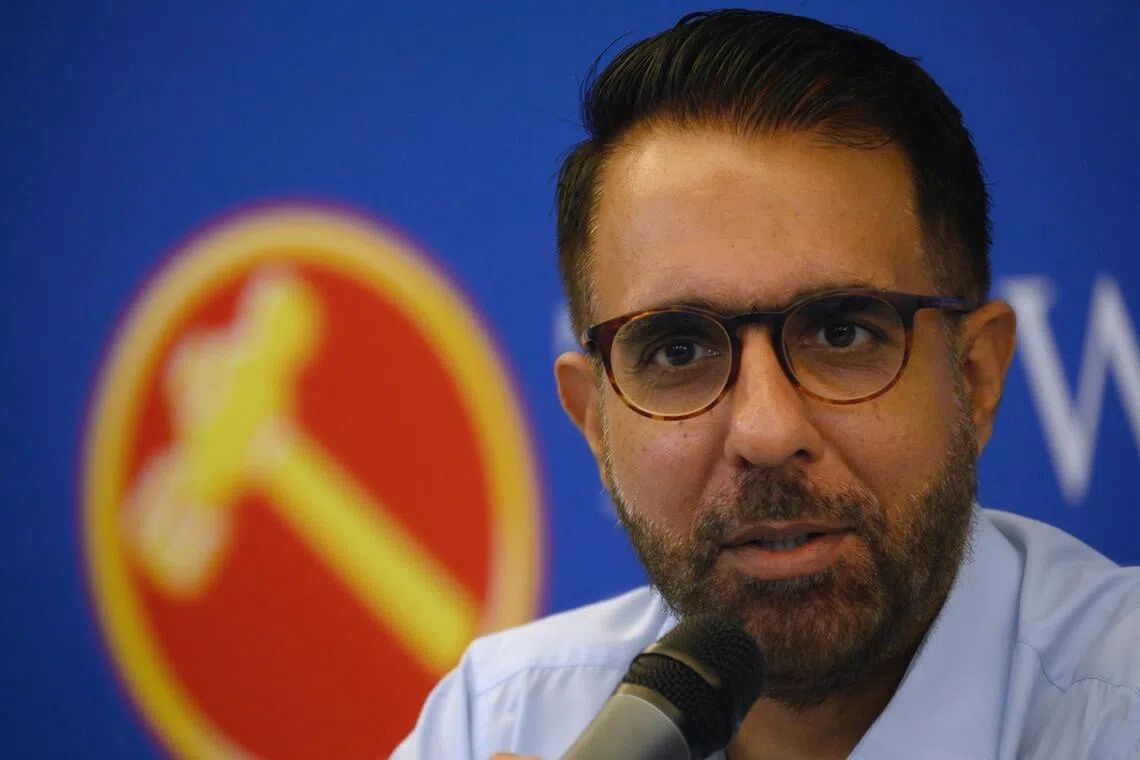
Singapore's Workers' Party faces a watershed moment on June 28 when its cadre members will gather to decide the fate of secretary-general Pritam Singh, amid a gathering storm of internal discontent that threatens to reshape the opposition's leadership structure. A coalition of more than 25 party veterans and current office-holders has triggered an extraordinary challenge to Singh's eight-year tenure, signalling the first genuine threat to his position since he assumed the role, according to party insiders who declined public attribution due to disciplinary concerns.
The catalyst for this rebellion stems from a December 2025 High Court judgment upholding Singh's conviction for deliberately misleading a parliamentary committee investigating the behaviour of former Sengkang GRC MP Raeesah Khan. The court's confirmation of his guilt precipitated a formal letter of reprimand from the party, which in turn emboldened those already questioning his stewardship. The accumulation of these disciplinary actions has crystallized opposition within the party ranks, particularly among senior figures and former office-holders who view Singh's continued leadership as incompatible with the Workers' Party's foundational claim to represent an alternative distinguished by integrity and trustworthiness.
The challenge to Singh centres fundamentally on his handling of Khan's parliamentary falsehood from August 2021. Critics within the party contend that Singh failed to ensure Khan immediately retracted a fabricated anecdote, instead allowing the deception to persist until her confession some three months later. During this interval, Singh was found by Parliament's committee of privileges to have effectively guided Khan in sustaining her dishonesty. For cadres who have built the party's political brand on ethical differentiation from the ruling establishment, this episode represents a catastrophic breach of the principles underlying their appeal to voters.
While no challenger has publicly declared candidacy, the search for a credible alternative has intensified considerably. Potential contenders are understood to include Aljunied GRC MP Gerald Giam and Hougang MP Dennis Tan, along with Sengkang GRC representatives He Ting Ru and Jamus Lim, the latter two having served on the disciplinary panel that found Singh accountable for constitutional violations. The decision to nominate a challenger remains tactically uncertain, with party insiders suggesting that whether a candidate emerges for the biennial ordinary cadres' conference will depend substantially on the outcome of the special conference convened to examine Singh's conduct and provide him opportunity to resign voluntarily.
The June 28 proceedings will unfold in two distinct phases. The special conference, requested by the 25 aggrieved cadres, will scrutinize Singh's actions preceding his conviction and explicitly call upon him to step down, with a secret ballot to decide his future should he decline. Subsequently, the ordinary cadres' conference will conduct the regular leadership election in which Singh must secure a simple majority to retain the secretary-general position. Party rules specify that he remains eligible to contest even if he loses the first vote, creating a scenario where his political fate could remain unresolved even after June 28.
The influence of former party chief Low Thia Khiang looms heavily over these proceedings, despite his stated intention to remain neutral. Low, who guided the Workers' Party from 2001 to 2018 and engineered its historic 2011 general election breakthrough in Aljunied GRC, retains substantial authority within the cadre membership. Party insiders report that Low voted against Singh during the central executive committee's deliberations on the disciplinary panel findings, a signal that has sparked speculation about potential endorsement of an alternative candidate. The tactical significance of Low's alignment cannot be overstated: cadres familiar with the party's internal dynamics estimate that between 30 and 35 votes could coalesce around a Low-backed challenger, potentially sufficient to dislodge Singh.
The current crisis echoes an earlier succession struggle at the 2016 cadre elections, when former Aljunied GRC MP Chen Show Mao mounted an unsuccessful challenge to Low himself, backed by many of the same veteran cadres now mobilizing against Singh. That attempted transition ultimately fortified Low's position through a demonstration of cadre confidence. Whether history repeats itself, or whether the accumulated grievances against Singh prove decisive, remains contingent upon Low's willingness to actively champion an alternative. The former chief's individual decision possesses disproportionate weight in determining whether discontent among the cadre base translates into effective organisational pressure.
Beyond the conviction itself, Singh has incurred secondary criticism for his management of the party's electoral strategy and its parliamentary standing. The Workers' Party's failure to gain ground in the 2025 general election disappointed cadres who anticipated victory in an additional constituency, particularly given what they regarded as a formidable roster of candidates. Singh's tactical decision to withdraw from Marine Parade-Braddell Heights GRC on Nomination Day compounded this dissatisfaction. More significantly, his recent removal as Leader of the Opposition by Prime Minister Lawrence Wong in January 2026 has reduced the party's parliamentary visibility, a loss Singh might have mitigated by permitting another elected MP to assume the role, yet the party opted instead to maintain solidarity with its embattled leader.
These decisions have prompted private questioning among cadres about whether Singh's continued leadership serves the wider opposition cause or instead constrains it. The party's deliberate rejection of PM Wong's invitation to nominate a replacement Leader of the Opposition signified a choice to prioritize organizational cohesion over parliamentary influence, a calculation that has generated buyer's remorse among some members. This strategic dimension adds another layer to the leadership contest, extending the debate beyond personal integrity into questions about whether the party's political trajectory remains optimal under Singh's direction.
The structure of the cadre voting system, with approximately 120 members entitled to participate, means the contest will essentially be decided by organizational intensity and persuasion among a relatively compact elite. Cadres emphasize that the situation remains genuinely fluid, with the possibility of dramatic shifts even as the June 28 date approaches. The informal nature of nomination procedures—any cadre in good standing may run or nominate another—creates openness that could permit last-minute entries should circumstances evolve. The June 28 special conference's tone and outcomes will substantially influence whether quiet dissent hardens into explicit organizational challenge.
For Malaysian and broader Southeast Asian observers, the Workers' Party crisis illuminates the tensions within opposition politics when personal rectitude collides with institutional loyalty. The question of whether an opposition party can maintain its moral differentiation while retaining a leader found guilty of dishonesty strikes at fundamental questions about how alternative political movements sustain their legitimacy. Singapore's opposition has historically positioned itself as offering voters a contrast in trustworthiness and ethical governance; the Workers' Party's internal struggle over Singh represents a critical test of whether that claim can survive its leadership's personal accountability failures.

