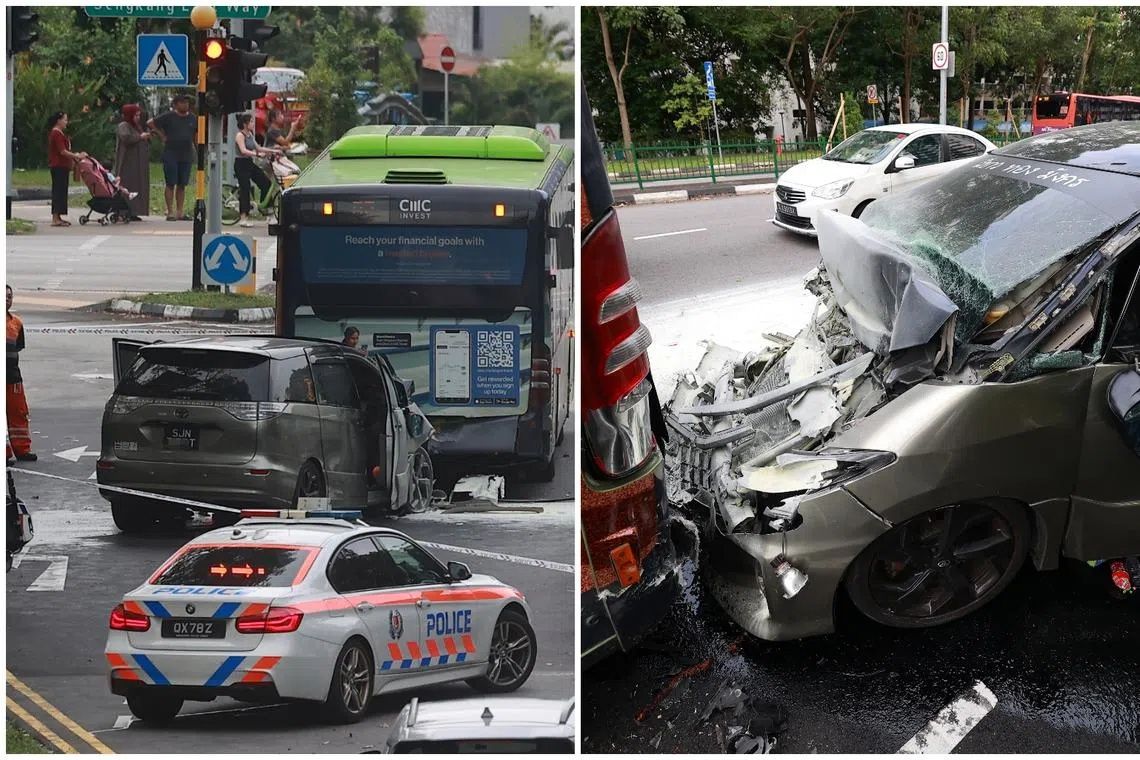
Singapore's emergency medicine specialists have raised alarm over a troubling pattern of road accidents involving drivers impaired by drugs and novel substances, particularly etomidate-infused vaporisers marketed as Kpods. The situation came into sharp focus when three men were charged with driving under the influence within a single 12-day period in June, each case discovered only after collision with other vehicles or objects. The incidents underscore a public safety challenge that extends beyond traditional drug enforcement to encompass emerging designer substances being consumed through modern delivery methods.
Etomidate, an anaesthetic compound increasingly encountered in electronic vaporisers, has emerged as the primary substance driving drug-related traffic incidents. Unlike methamphetamine or Ice, which have longer been associated with substance abuse, etomidate's presence in Kpods represents a relatively new hazard that appears to have caught both drivers and enforcement authorities somewhat unaware. The substance's effects on driving capability mirror those of alcohol intoxication, according to medical professionals treating the consequences of these collisions, yet the mechanism of impairment and detection protocols remain less established in public consciousness.
Dr Jonathan Tang, a clinical toxicologist at the National University Hospital's Emergency Medicine Department, has treated multiple victims of traffic accidents where etomidate-laced vapes played a role. He emphasises that the substance significantly degrades the cognitive and physical functions essential for safe vehicle operation. Users experience delayed reaction times, compromised hazard perception, and reduced vehicle control—the same trilogy of impairments that alcohol produces in drivers. Tang's clinical observations extend beyond the immediate driving performance deficits to include psychiatric complications that further jeopardise road safety, noting that etomidate use has been associated with depressed mood, heightened aggression, impulsivity, and suicidal ideation, all of which compound the danger when such individuals occupy a driver's seat.
The scale of the problem became apparent when Singapore's Coordinating Minister for National Security K. Shanmugam disclosed parliamentary statistics in February. Between 2023 and 2025, traffic police documented 38 accidents involving drug or etomidate use, with a staggering 19 proving fatal. Among the fatal cases, nine deaths resulted from etomidate-related driving, while ten involved traditional drugs. The trajectory has accelerated sharply in 2025 alone, with 29 of the 38 recorded incidents occurring within that single year, demonstrating an exponential increase in the prevalence and consequences of substance-impaired driving on Singapore's roads.
One fatal case illustrates the catastrophic human cost. In May 2025, a vehicle collided with a bus in Punggol with a 28-year-old woman passenger. The driver, operating under etomidate's influence, lost control of the vehicle with lethal results. Subsequent police searches of the vehicle uncovered 42 vaporisers and more than 1,200 pods, some containing etomidate, revealing the driver's substantial consumption of the substance. Toxicological examination confirmed etomidate in both the driver's and the deceased passenger's blood, establishing the causal link between impairment and tragedy. This single incident exemplifies how substance-impaired driving creates cascading harm—the driver faces serious criminal charges, the passenger's family grieves an unnecessary death, and the bus occupants experienced trauma and potential injury.
Three specific cases prosecuted in June reveal the diversity of circumstances law enforcement now encounters. Mohamed Firdouz Mohamed Akram, charged with causing injuries while driving dangerously in Kallang after consuming Ice, abandoned his vehicle and fled the scene, demonstrating the impaired judgment that accompanies methamphetamine use. Police recovered drugs, vaporisers, and weapons from his vehicle. Puah Zhe Cong faced charges for causing one death and two injuries while operating a vehicle under etomidate's influence, the most severe outcome documented in the recent enforcement wave. Sivakandesh crashed his Mercedes-Benz into a rubbish chute after consuming methamphetamine, striking bollards and a parked vehicle before halting, with his vehicle's registration plates subsequently removed—behaviour consistent with drug-induced disorientation and poor judgment.
Singapore's legal framework provides meaningful penalties for drug-driving offences, though only if violators are detected and prosecuted. First-time offenders face up to one year imprisonment, fines to S$10,000, or both. Repeat offenders confront up to two years' incarceration and S$20,000 in fines. Yet these sanctions address only cases where accidents occur and substances are subsequently identified. The detection protocol, initiated when traffic police suspect impairment following accidents, involves mandatory blood testing and assessment for drug or etomidate use. This reactive approach means that many impaired drivers operating without incident detection escape legal consequences, creating an ongoing risk to the broader motoring public.
The broader context of Singapore's road safety crisis lends urgency to substance-impaired driving concerns. Overall traffic fatalities reached a 10-year high in 2025, with 149 deaths recorded compared to 141 in 2016, representing an 5.7% increase over a decade. The jump from 142 deaths in 2024 to 149 in 2025, and the corresponding increase in injured persons from 9,342 to 9,955, suggests multiple factors converging to undermine road safety. Drug-related incidents account for a material portion of this deterioration, particularly given that substance-impaired driving accidents occur disproportionately within smaller geographic areas and specific time periods, indicating clusters of high-risk behaviour rather than randomly distributed incidents.
For Malaysian and Southeast Asian perspectives, Singapore's emerging etomidate crisis carries particular relevance. Cross-border substance trafficking networks often supply regional markets simultaneously, and designer drugs circulating in Singapore typically appear across neighbouring jurisdictions within months. Malaysia's own traffic safety statistics demonstrate similar challenges, with drugs and alcohol contributing to significant accident rates. The mechanism through which etomidate reaches street-level consumers—incorporation into vaporiser products marketed as recreational items—presents enforcement and public awareness difficulties across the region. Malaysian authorities monitoring pharmaceutical diversions and illicit substance distribution would benefit from Singapore's documentation of etomidate's traffic safety consequences.
Public education and enforcement strategy present dual challenges in addressing drug-impaired driving. Drivers familiar with traditional substance abuse messaging may be unaware that vaporiser products contain potent anaesthetics affecting driving capability. The emergence of etomidate-laced Kpods suggests that substance manufacturers are deliberately concealing dangerous compounds within products that appear recreational and portable, evading detection through their design. Traffic police have responded by implementing enhanced screening protocols at accident scenes, yet this remains a detection mechanism activated only after collisions occur. Expanding roadside screening capabilities, educating drivers about emerging substances in vaporised forms, and targeting distribution networks before products reach consumers represent complementary approaches that Singapore and regional jurisdictions are beginning to explore.
The implications extend to vehicle manufacturers, technology providers, and harm reduction strategists. Some accidents involved drivers operating vehicles while deeply impaired, raising questions about whether emerging vehicle safety systems—autonomous emergency braking, lane-keeping assistance, impairment detection technologies—might prevent collisions when driver incapacity is profound. Insurance companies may adjust premiums and claims practices as substance-related accidents become quantifiable in underwriting data. Medical systems face increasing treatment burdens for trauma victims whose injuries stem from entirely preventable, substance-related incidents. The social cost extends far beyond court proceedings and hospital admissions to encompass lost productivity, family disruption, and the intangible impact of premature death and disability.
Moving forward, Singapore's approach to drug-impaired driving will likely evolve toward more proactive detection, broader public awareness of emerging substances, and potentially stricter licensing consequences for drivers linked to impaired driving incidents. The disclosure of parliamentary statistics suggesting 29 accidents in 2025 alone compared to substantially lower numbers in prior years indicates that officials recognise both the severity and the acceleration of the problem. Multi-agency coordination between traffic police, health authorities, pharmaceutical regulation bodies, and public health communicators will be essential to interrupt the cycle through which dangerous substances reach drivers and subsequently endanger families, pedestrians, and communities. For Southeast Asian readers, Singapore's experience provides a preview of challenges likely emerging across the region and the importance of early intervention before drug-impaired driving becomes as normalised and prevalent as alcohol-related offences have historically been.

