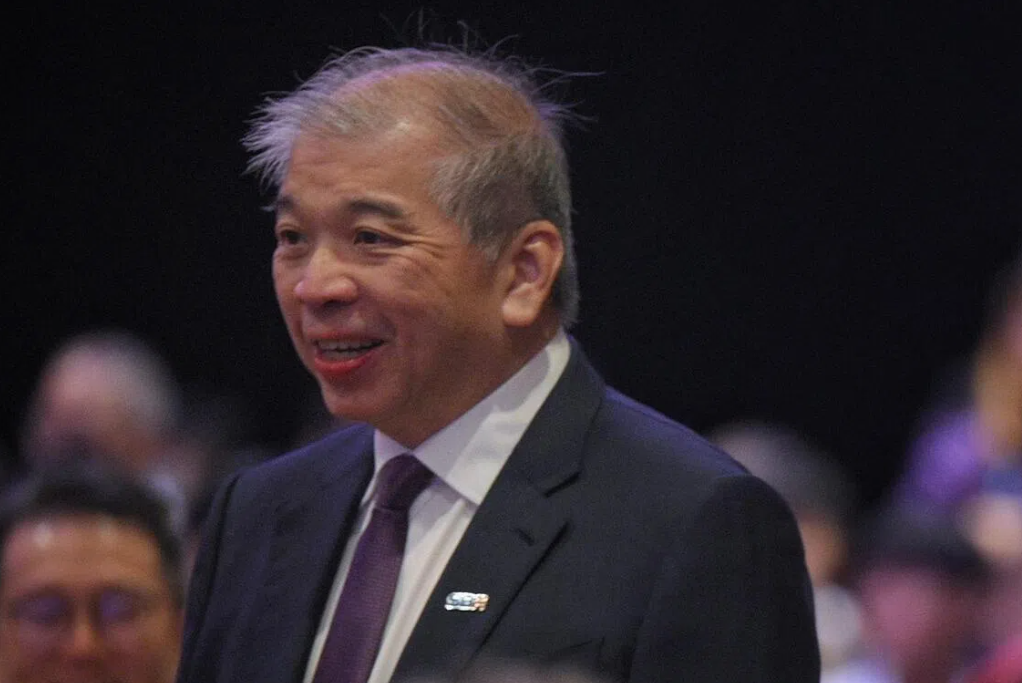
A major legal crisis has ensnared prominent Singaporean shipping magnate Teo Siong Seng, who now faces civil litigation in the United States over allegations that he participated in a sweeping price-fixing conspiracy within the global container shipping industry. Two separate class-action lawsuits filed in California's Northern District Court have added significant civil liability exposure to the criminal charges already levelled against the 71-year-old executive and his peers, escalating the stakes in what prosecutors describe as a coordinated scheme to manipulate a market worth hundreds of billions of dollars annually.
The legal assault on the alleged cartel has broadened considerably beyond the criminal prosecution initiated by the US Department of Justice. American manufacturing and logistics companies—specifically C.A. Spalding Company and Daybreak Express—launched their civil actions on June 2 and June 9 respectively, seeking to recover substantial financial losses they claim to have sustained as victims of artificially inflated container prices over several years. These private lawsuits represent the commercial sector's attempt to obtain compensation alongside the government's criminal enforcement efforts, potentially exposing the defendants to far steeper financial penalties than criminal convictions alone would impose.
At the heart of the allegations lies a sophisticated market manipulation scheme involving five major container manufacturing corporations that collectively dominated approximately 95 percent of global standard dry container production. The indictment, initially filed on January 22 and publicly revealed on May 19, identified China International Marine Containers, Shanghai Universal Logistics Equipment, CXIC Group Containers, Singamas Container Holdings—where Teo serves as chief executive—and two unnamed manufacturers as the central conspirators. The scope of this cartel's reach extends across multiple continents and has affected supply chains that depend on containerised shipping, making the case highly consequential for international trade.
Prosecutors allege that senior executives orchestrated an elaborate scheme to restrict container production artificially, preventing the normal functioning of competitive market forces. The conspirators purportedly coordinated to limit the number of shifts and operating hours on production lines, creating artificial scarcity that drove prices skyward. Most remarkably, court documents reveal the installation of 87 surveillance cameras across 49 production lines at various factories specifically to monitor compliance with these agreed-upon output restrictions, demonstrating the premeditated nature of the scheme and the lengths to which participants went to enforce their cartel arrangement.
The economic impact of this manipulation proved staggering. Between 2019 and 2021, the price of a standard 20-foot shipping container more than doubled, climbing from approximately US$1,600 to US$3,500. This dramatic escalation reverberated throughout global supply chains, imposing enormous costs on manufacturers, retailers, and logistics providers worldwide who had no choice but to accept whatever container prices the cartel dictated. For developing economies and smaller businesses lacking negotiating power, these inflated costs squeezed profit margins and contributed to broader inflationary pressures during a period already marked by pandemic-related supply chain disruptions.
The financial windfall generated by the conspiracy flowed directly to the cartel members' bottom lines. China International Marine Containers' container manufacturing division saw profits surge from approximately 137 million yuan in 2019 to nearly 2 billion yuan in 2020, then to an extraordinary 11.3 billion yuan by 2021—a transformation reflecting the artificial pricing power the cartel had successfully established. Singamas Container Holdings experienced an even more dramatic reversal, pivoting from a US$110 million operating loss in 2019 to US$186.8 million in profits just two years later, a swing that would have been impossible without the coordinated price elevation the cartel maintained.
The civil lawsuits introduce the possibility of treble damages—compensation calculated at three times the actual financial losses suffered by plaintiffs—should the defendants be found liable. This provision, embedded in US antitrust law to deter corporate wrongdoing and penalise violators beyond their actual gains, could expose the named executives and their companies to liabilities in the billions of dollars range. The prospect of tripled damages creates powerful incentives for settlement negotiations and fundamentally reshapes the legal calculus for all defendants involved.
Teo Siong Seng and four other executives from the mainland Chinese firms have been formally summoned to respond to the California lawsuits within 21 days of service, with failure to respond risking default judgments against them. The other named individuals include Mai Boliang, who held senior positions at CIMC; CIMC vice-president Huang Tianhua; Wan Yongbo of CIMC's operations division; Li Qianmin of Shanghai Universal Logistics Equipment; and CXIC Group Containers' chief executive Zhang Yuqiang. Additionally, Vick Ma, a marketing director at Singamas, has been named as a defendant while awaiting extradition to the United States following his arrest in France in April.
Teo has maintained silence regarding the civil litigation, declining to comment when approached by journalists. However, his response to the criminal allegations has been to withdraw from public-facing roles across Singapore's business establishment and government advisory structures. The executive has taken leave from his position as executive chairman of Pacific International Lines, the shipping concern where he previously wielded considerable influence. Beyond the shipping sector, he has stepped back from the Singapore Business Federation, where he served as chairman, the Singapore Economic Resilience Taskforce, the board of Enterprise Singapore, and his role as pro-chancellor at the National University of Singapore.
Teo's departure from the SBF proved particularly notable given the timing and circumstances. He had only recently assumed the chairmanship on May 20, 2025, after his predecessor Lim Ming Yan stepped down ahead of schedule to focus on his new appointment heading Changi Airport Group. Despite the brevity of his tenure, Teo announced on May 28 that he would not seek re-election when his term concludes on June 24, effectively ensuring his departure from this prominent business leadership position. This decision represents a marked contrast to his previous extensive tenure as SBF chairman from 2014 to 2020, when he completed three consecutive two-year terms as a respected figure within Singapore's corporate hierarchy.
In his sole public statement since the allegations surfaced, Teo explained his withdrawal from these positions in measured terms, stating that he had proactively chosen to take leaves of absence to afford himself adequate time to address the legal matters while prioritising the interests of the organisations involved. This carefully worded statement neither admitted nor denied the allegations, instead framing his absence as a responsible step to protect the institutions and enterprises affected by his legal entanglement. The contrast between Teo's previous prominence in Singapore's business and government advisory networks and his current legal jeopardy underscores how significantly the container cartel allegations have disrupted the careers and reputations of even the highest-ranking executives involved.