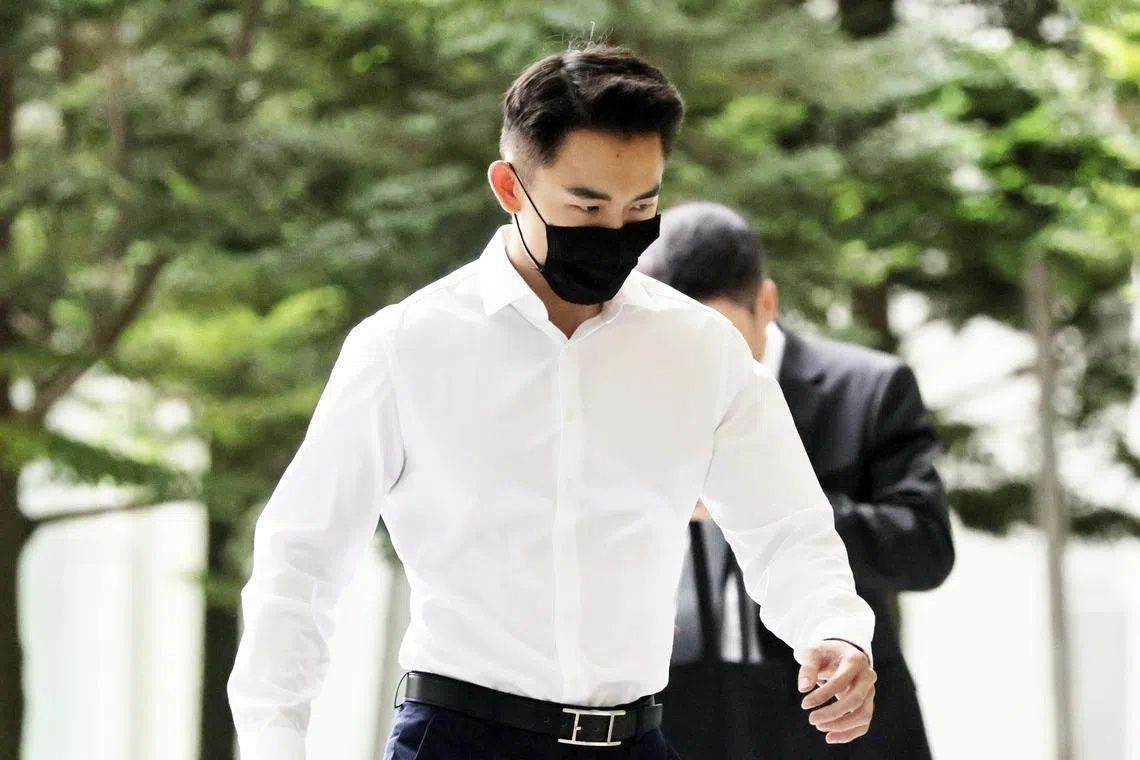
A 36-year-old physician in Singapore has been convicted of consuming the synthetic drug MDMA following a high-profile police operation at a luxury beachfront resort last year. Rayson Lee Rui Sheng was among 49 men detained during a raid at a private villa gathering held at the Sofitel Singapore Sentosa on the morning of August 9, 2023. The conviction, handed down on June 30, marks the conclusion of a contested legal battle in which the defendant maintained he had been unknowingly exposed to controlled substances.
The case centres on events that unfolded when Lee attended what he claimed was an acquaintance's birthday celebration. Court records indicate that Lee arrived at the villa around 8 o'clock in the evening on August 8, 2023, after first visiting a nightclub in Clarke Quay where he met 29-year-old Tan Li Ming. Both men subsequently travelled to the Sentosa venue in the early morning hours, where they encountered a larger gathering than either had anticipated. Upon arriving, Lee stated he accepted three drinks from individuals he did not recognise, a decision that would become central to the prosecution's case.
Authorities responded swiftly after receiving intelligence about the gathering. Police arrived shortly after 5.30 a.m. and discovered substances suspected to be controlled drugs within the villa. The Central Narcotics Bureau subsequently took charge of the investigation, discovering ecstasy, ketamine, and related drug paraphernalia scattered throughout the premises. The scale of the operation was significant, with nearly five dozen men aged between 21 and 46 taken into custody that morning, underscoring the extent of the gathering that had taken place.
Biomedical analysis proved crucial to the prosecution's case. Urine samples collected from both Lee and Tan tested positive for MDMA through the Health Sciences Authority, while hair follicle testing revealed traces of both ecstasy and ketamine, substances that persist in hair for extended periods and indicate consumption patterns over time. The pair's legal representatives, represented by lawyer Tania Chin, did not challenge the laboratory findings but instead pursued a defence strategy centred on the allegation that their beverages had been adulterated without their knowledge or consent.
The defence narrative presented to District Judge A Sangeetha relied heavily on claims of victimisation. Tan asserted that he had observed a group of unknown individuals in a pantry area extracting liquid from a bottle using a syringe and injecting the substance into plastic cups. He further claimed that after drinking from one such cup, he noticed white residue at the bottom. When questioned about the substance, Tan alleged an unidentified person told him it was "G-water," a colloquial reference to gamma-hydroxybutyrate, a drug known for its incapacitating effects. Lee similarly maintained that he had consumed drinks provided by strangers without observing any suspicious activity, pills, or drug use at the venue.
However, the judicial assessment proved unfavourable to both defendants' testimonies. Judge Sangeetha found their accounts fundamentally lacking in credibility, particularly noting that the men continued consuming additional drinks despite claiming to have become suspicious of their beverages. The judge's reasoning extended beyond the immediate circumstances of the alleged spiking. Hair sample analysis demonstrating prior drug consumption proved particularly damaging to their defence, as it suggested familiarity with substance use rather than unwitting exposure. The judge explicitly remarked that "neither man was a stranger to drug use," implying a pattern inconsistent with the narrative of innocent victimisation.
The prosecution's position, articulated by Deputy Public Prosecutors Jocelyn Teo and Dhiraj G Chainani, systematically dismantled the defence arguments. The prosecutors noted that despite the defendants' elaborate accounts, they provided no identifiable individuals who had allegedly spiked their drinks—a significant evidentiary gap if their claims were genuine. The defence strategy of presenting hypothetical scenarios and unexplored possibilities was characterised as lacking substance, particularly given that basic details about perpetrators should have been accessible if the spiking had actually occurred. The prosecutors characterised false claims about unidentified foreign nationals as calculated distractions from the core evidence.
A particularly damning aspect of the court's reasoning concerned the defence assertion about unseized plastic cups that might contain drug residue. The prosecutors argued that even if such cups tested positive—which they suggested was speculative—this would merely confirm consumption of drug-laced beverages rather than establishing that such consumption was unknowing. This logical framework effectively closed a potential avenue of exculpatory evidence. The pair's inability to produce concrete details about the alleged perpetrators undermined their fundamental assertion of being unwitting victims.
The case reflects broader concerns about drug use in Singapore's leisure venues and the authorities' commitment to enforcement. The August 2023 operation at Sentosa, one of the nation's premier tourist destinations, demonstrated the reach of drug activity even in upscale hospitality settings. The involvement of a medical professional raises questions about substance abuse patterns among educated professionals in urban centres, a phenomenon that parallels observations from other developed economies in Southeast Asia and beyond.
Lee's additional disclosures during trial provided further context suggesting familiarity with drug consumption. He acknowledged having "popped a pill" on two separate occasions during a visit to Thailand in June 2023, just weeks before the Sentosa incident. This admission, while intended perhaps to contextualise his presence at the party, actually corroborated the prosecution's characterisation of him as someone with established involvement in drug use rather than a naive victim of circumstance.
The convictions carry significant consequences within Singapore's stringent drug control framework. Both Lee and Tan were each found guilty of a single count of drug consumption, offences that typically result in substantial penalties including fines and potential imprisonment. The conviction is particularly consequential for Lee given his professional standing as a medical practitioner, with licensing implications likely to follow the criminal judgment.
For regional observers, the case underscores Singapore's uncompromising approach to drug enforcement and the challenges facing even sophisticated defence strategies when confronted with biological evidence and credibility assessments. The conviction demonstrates that claims of drink spiking, while occasionally legitimate, face a high evidentiary burden in jurisdictions with rigorous standards of proof, particularly when hair analysis and prior use patterns are considered. The case serves as a cautionary narrative about the risks of attending unvetted social gatherings in an environment with aggressive narcotics enforcement.

