Singapore's security apparatus has intensified action against domestic extremism, issuing Internal Security Act orders against two citizens whose radicalisation stems from the ongoing Israeli-Palestinian conflict and exposure to online extremist communities. The cases of Cyrus Dzulqarnain Al-Shahriar, a 19-year-old student, and Tarmizi Mohd Taha, a 30-year-old customer service officer, bring to eight the number of Singaporeans detained or restricted under the ISA since Hamas' October 2023 assault on Israel, signalling a sustained security concern among Southeast Asian nations monitoring how global conflicts fuel local extremism.
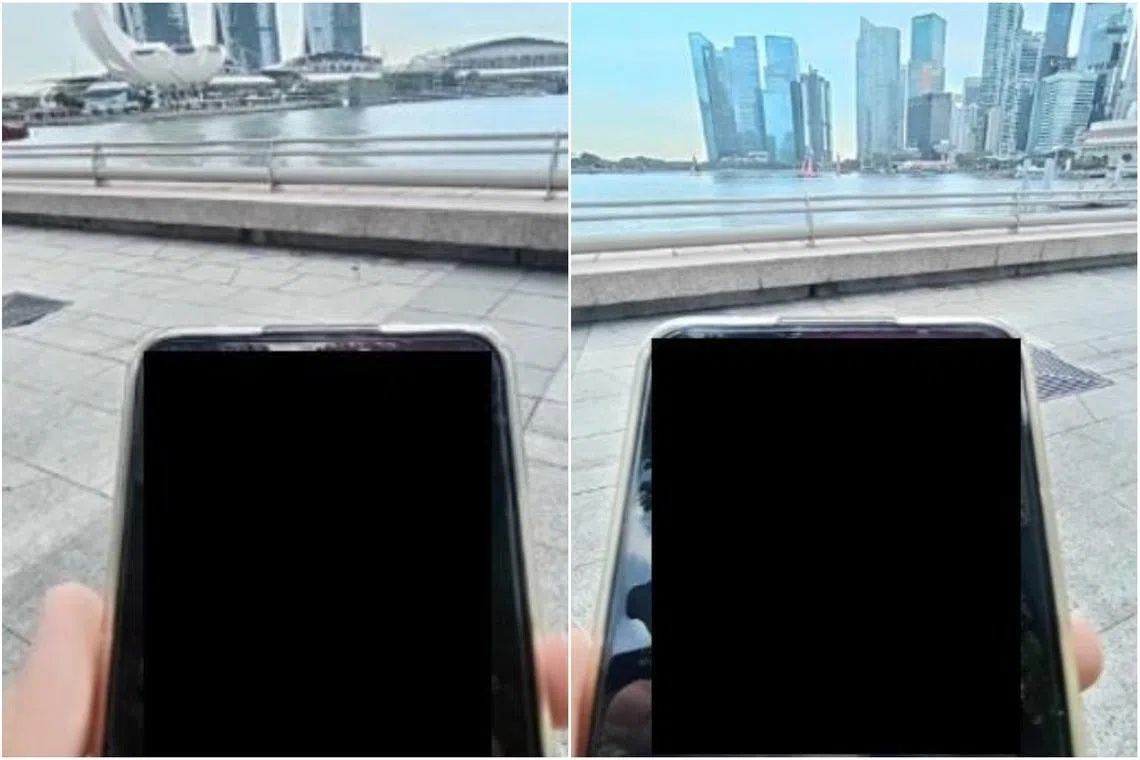
Cyrus received a restriction order after the Internal Security Department discovered his social media activity promoting anti-Semitic views and Hamas narratives, including photographs taken at Marina Bay Sands bearing insignia from an online extremist group. A member of the public reported his inflammatory posts, triggering the investigation that would expose a complex pattern of radicalisation spanning multiple extremist movements. Unlike traditional cases involving adherence to a single ideological framework, Cyrus exemplifies what security analysts term "composite violent extremism"—a troubling phenomenon wherein individuals synthesise disparate, sometimes contradictory extremist belief systems into a personalised worldview justifying violence.
Tarmizi's case presents a different but equally alarming trajectory. The former logistics assistant during his national service tenure with the Singapore Police Force admitted willingness to execute attacks within Singapore if directed by Hamas, viewing such actions as pathways to martyrdom. His readiness to weaponise professional skills and institutional knowledge against his own society underscores how radicalisation penetrates beyond ideological rhetoric into operational planning. Though unrelated in their recruitment and indoctrination, both men's extremist awakening traces directly to the Hamas-Israel conflict, demonstrating how distant geopolitical events cascade into security threats across the Indo-Pacific region.
Cyrus's descent into extremism began innocuously in 2022 when he joined online Islamic study groups seeking religious knowledge. However, exposure to anti-Western and anti-LGBTQ content redirected his journey toward violent ideological frameworks. Following the October 2023 Hamas attacks, algorithmic amplification of pro-Hamas content pushed him further into extremist territories, where he began celebrating civilian deaths as acts of religious struggle. By 2024, he contemplated travelling to Gaza to fight alongside Hamas fighters, abandoning the plan only due to financial constraints and personal fear rather than ideological recalibration—a distinction critical for understanding how proximity and opportunity shape violent extremism.
The sophistication of Cyrus's radicalisation intensified dramatically in early 2025 when he discovered an obscure online Islamist extremist cell subscribing to violent accelerationist ideology. This particular faction combined theological extremism with pseudo-revolutionary rhetoric, teaching that orchestrating chaos through violence would dismantle what they termed the "world order" dominated by Western powers and Zionist interests. Cyrus's conscious decision to photograph extremist propaganda before Marina Bay Sands and publicly post these images represented a threshold moment—moving from passive consumption to active participation in what the group branded "digital jihad." His pledge of allegiance through social media symbolism transformed him from observer to operative.
The psychological architecture of Cyrus's worldview reveals how extremist communities exploit identity vulnerabilities in youth. His subsequent immersion in incel forums—communities of men identifying as involuntarily celibate and harbouring profound resentment toward women and society—demonstrates the predatory nature of modern extremist recruitment ecosystems. These online spaces provided linguistic tools (degrading terminology like "foid") and conceptual frameworks for channelling personal grievances into violent ideation. His fantasies of committing mass violence in schools targeting LGBTQ individuals and couples reflect a synthesis of misogynistic incel ideology with Islamist extremism—precisely the type of hybrid threat that challenges conventional counterterrorism frameworks.
The reference point of Elliot Rodger, the 2014 California mass shooter whose attack killed six and wounded fourteen, illustrates how radicalisation narratives transcend geographical and ideological boundaries. Cyrus's attraction to Rodger's story and incel mythology shows how extremist online spaces curate violent role models across seemingly unrelated movements, binding isolated individuals through shared fantasies of destruction. This composite ideological architecture—what security analysts increasingly term "salad bar extremism"—poses particular challenges for detection and prevention because individuals may lack consistency in stated beliefs while maintaining unwavering commitment to violence.
The Internal Security Department's assessment that Cyrus's violent ideations remained at the level of fantasy rather than operational planning provides limited reassurance. Security officials emphasised that restraint from preparatory action does not diminish the threat posed by someone actively promoting terrorist organisations, inciting violence against specific groups online, and psychologically rehearsing mass casualty scenarios. His failure to discuss extremist views with family or schoolmates suggests operational security awareness—understanding the importance of compartmentalisation, a trait increasingly observed among digitally native extremists coordinating across encrypted platforms.
Tarmizi's case demonstrates how radicalisation can target individuals with institutional access and technical capabilities. His service in the Singapore Police Force positioned him as a potential insider threat, and his enthusiasm for placing his logistics expertise at Hamas's disposal reveals how extremist recruiters systematically identify and approach individuals with security sector experience or specialised skills. This pattern has alarmed security services across Southeast Asia, where multiple nations have documented cases of military or law enforcement personnel developing sympathies for designated terrorist organisations.
The timing of both cases in mid-2025, appearing to reference events six months into that year, suggests an accelerating recruitment cycle capitalising on the prolonged Gaza conflict. The Internal Security Department's characterisation of composite violent extremism as representing "growing diversity" among domestic threats indicates that traditional counter-radicalisation approaches may require fundamental restructuring. When individuals construct personalised hybrid belief systems, standard deradicalisation programmes premised on addressing specific ideological commitments may prove insufficient.
For Malaysia and other Southeast Asian nations monitoring Singapore's security developments, these cases carry significant implications. The region's large Muslim populations and geographic proximity to global conflict zones create susceptibility to similar radicalisation patterns. Malaysian authorities have documented their own cases involving online extremist networks, particularly those exploiting religious education platforms for recruitment. The specific threat of composite violent extremism—where individuals blend Palestinian solidarity narratives with incel ideology, anti-Semitic conspiracy theories, and violent accelerationism—represents a generational security challenge requiring intelligence coordination and youth engagement strategies that conventional approaches may not address.
The rehabilitation regime that Cyrus will undergo assumes ideological deprogramming remains possible despite the hybrid nature of his beliefs. Singapore's Internal Security Department has invested substantially in rehabilitation frameworks, but the efficacy of such programmes against composite extremism remains unproven. The absence of a single coherent ideological framework may complicate rehabilitation, as counsellors address fragmented belief systems rather than unified theological positions. Both cases underscore a critical reality for Southeast Asian security establishments: the intersection of global conflicts, algorithmic amplification, and psychological vulnerability among youth creates domestic extremist threats that transcend traditional categorisations and demand innovative preventive approaches.

