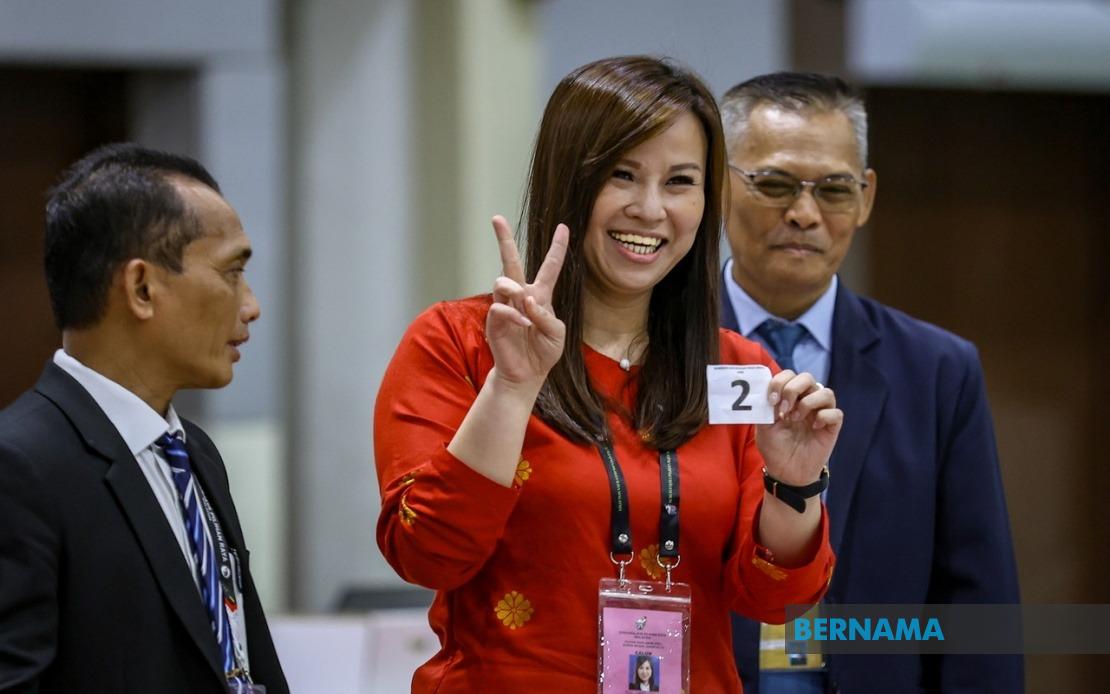
The Permas state seat in Johor has emerged as a competitive battleground, with Pakatan Harapan fielding Sharon Teo to challenge the incumbent administration ahead of the 16th Johor state election scheduled for July 11. Teo's campaign strategy places particular emphasis on two core issues that she says have dominated conversations during her grassroots canvassing: the deteriorating condition of local roads and gaps in public welfare support. As the chief of the Johor Amanah Women's Youth wing, she brings a mobilisation base within the broader PH coalition and positions herself as responsive to constituent concerns.
Road quality represents the centrepiece of Teo's policy platform, and she frames this not merely as a comfort issue but as a fundamental public safety matter. Poor road conditions in suburban constituencies like Permas—which encompasses areas within the larger Pasir Gudang parliamentary seat—create hazards for daily commuters and affect economic activity. The focus on infrastructure resonates particularly in Johor, where rapid urbanisation across the Klang Valley fringe and around the southern metropolis has often outpaced maintenance of secondary and tertiary road networks. Teo's emphasis signals an attempt to appeal to working families and small businesses whose operations depend on adequate transport connectivity.
Teo brings relevant experience to her candidacy. She previously worked as a staff aide within the Pulai parliamentary constituency under the late Amanah deputy president Salahuddin Ayub, providing her with exposure to constituent service operations and coalition governance at the federal level. This background distinguishes her from a purely local organiser and suggests familiarity with PH's administrative practices, an asset if the coalition aims to expand its Johor footprint. Her campaign materials remain under development; she indicated that a detailed manifesto outlining her full vision for Permas residents will be released soon, suggesting her team is still crystallising policy positions.
Defending the seat is Baharudin Mohamed Taib of Barisan Nasional, who secured the Permas mandate in the 2022 Johor election. Baharudin acknowledged the competitive nature of the contest, noting that each of his three opponents brings distinct strengths to the race. His cautious tone reflects the evolving electoral dynamics in Johor, where BN's dominance has faced sustained pressure from PH and, increasingly, from Perikatan Nasional. He indicated that rather than launching a personalised manifesto, his campaign will be anchored to BN's broader state and national platforms, a strategy that ties his fortunes to the coalition's overall performance and messaging.
The Permas contest has expanded into a four-way race, complicating the electoral mathematics and fragmenting voter choice. Alongside Teo and Baharudin, T. Vela represents Perikatan Nasional and Dr Zamil Najwah contests for Parti Bersama Malaysia. The presence of four serious candidates suggests that no single faction enjoys overwhelming support, creating opportunities for split outcomes depending on turnout patterns and voter mobilisation. Perikatan's entry reflects its bid to capture disaffected BN voters and those seeking an alternative to PH, whilst Parti Bersama Malaysia's participation indicates grassroots interest in new political vehicles, though it remains largely unproven in electoral terms.
Permas itself is a medium-sized constituency by Malaysian standards, with 113,963 eligible voters registered for this state election. The seat's location within the Pasir Gudang parliamentary constituency anchors it within Johor's industrial and commercial heartland, an area characterised by mixed residential and manufacturing zones, port-related employment, and growing service sectors. The constituency's voter profile likely encompasses salaried workers, small traders, and middle-income households—demographics typically sensitive to cost-of-living concerns, infrastructure quality, and governance effectiveness. These factors make Teo's welfare and road-safety messaging potentially resonant with the Permas electorate.
The July 11 polling date comes against a backdrop of broader Malaysian political realignment. The Johor state election represents a significant electoral test for both PH, seeking to consolidate its 2022 federal gains at the state level, and BN, fighting to maintain traditional strongholds in the peninsular heartland. Early voting is scheduled for July 7, allowing voters unable to participate on election day to cast ballots earlier. The compressed campaign period—nominations occurred on June 27—means candidates must rapidly build name recognition and communicate priorities through intensified ground operations and media engagement.
For Johor voters, the Permas contest encapsulates broader choices about development priorities and governance direction. Teo's focus on roads and welfare reflects PH's emphasis on tangible service delivery and safety, positioning the coalition as responsive to practical, daily-life concerns rather than ideological abstractions. Baharudin's anchoring to BN platforms appeals to voters valuing continuity and established governance networks. The presence of Perikatan and Parti Bersama Malaysia splinters the anti-PH and anti-BN vote, potentially determining the final outcome depending on vote distribution.
The outcome in Permas will carry implications for the broader Johor election. As a moderately sized constituency without historical patterns of overwhelming dominance by any single party, results here could indicate broader momentum shifts across the state. A PH victory would suggest the coalition's appeal extends beyond urban pockets to suburban constituencies, whilst a BN hold would demonstrate the party's resilience in defending established support bases. Either outcome will shape the composition of the Johor state assembly and influence the formation of government following July 11.

