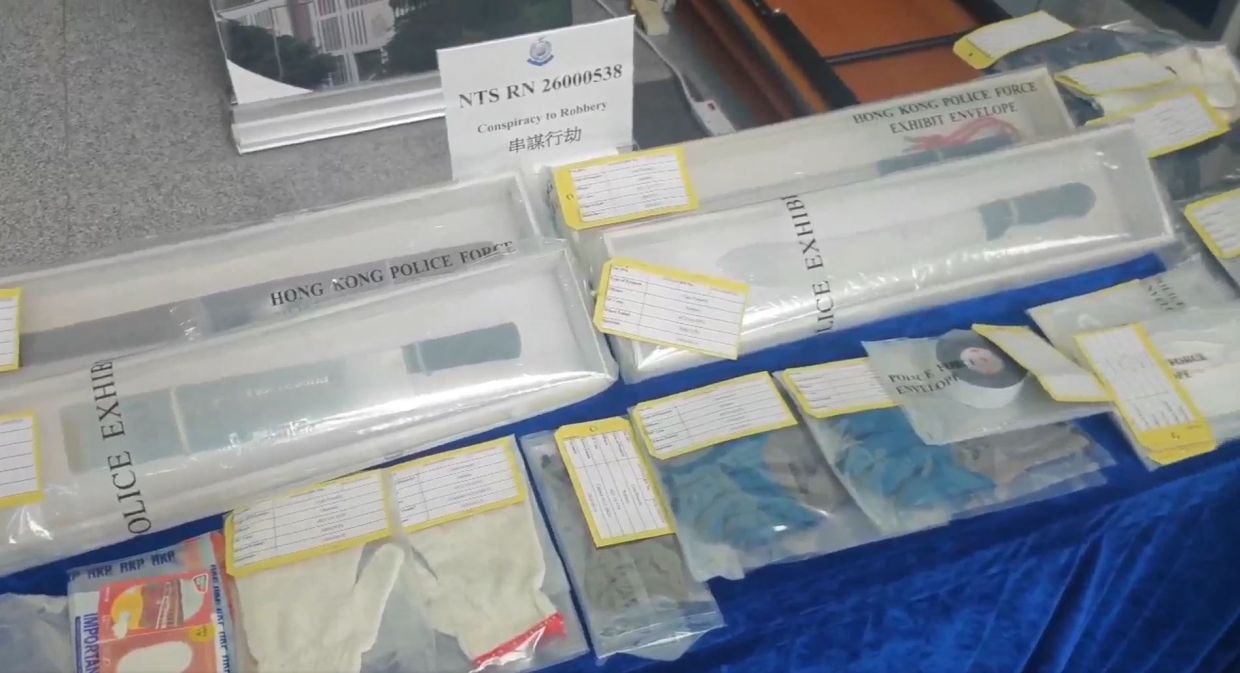
Hong Kong authorities have moved swiftly to dismantle a criminal network behind a brazen daylight robbery at the city's airport, arresting seven individuals within 12 hours of the incident. Police announced the arrests on Saturday, June 20, following the attack on Thursday, June 18, when a man carrying six gold bars worth HK$7 million was ambushed in the Hong Kong International Airport car park and left wounded.
The four men and three women in custody, aged between 20 and 39, face allegations of conspiracy to commit robbery and abetting criminals. Among those detained, several have documented affiliations with triad organisations, underscoring the involvement of organised crime elements in the carefully orchestrated operation. However, authorities have acknowledged that additional suspects remain at large and may have already crossed into the Chinese mainland, prompting police to engage mainland law enforcement agencies for assistance in tracking and apprehending the fugitives.
The attack unfolded with alarming violence when the victim, who had travelled from Bali, Indonesia, where he had been sourcing precious metals, arrived at Hong Kong International Airport early Thursday morning. He was transporting the gold bars in his backpack destined for a businessman based on mainland China. As he made his way through the airport car park 3 towards his parked vehicle, three assailants wearing masks materialised and launched a sudden assault, wielding knives as weapons. The attackers inflicted stab wounds to his left hand and foot before seizing his backpack and escaping in a seven-seater vehicle with their illicit cargo.
Investigators have since recovered critical evidence linking the suspects to the crime. Police located the vehicle used in the getaway and retrieved the knives deployed during the attack in the Tsuen Wan district, strengthening the evidentiary chain against those in custody. The victim was transported to Princess Margaret Hospital where he remains in stable condition, indicating that despite the severity of the assault, his injuries were not life-threatening.
What distinguishes this robbery from common street crime is the apparent sophistication and intelligence gathering behind the operation. Police have indicated that this was not a random crime of opportunity but rather a meticulously planned theft. Investigators believe an "insider" may have been instrumental in providing the criminals with crucial operational details. The assailants demonstrated precise knowledge of the victim's flight arrival time and, critically, the exact location of his parked vehicle within the expansive airport complex. Such information would be unavailable without assistance from someone with access to travel manifests or airport operations.
The involvement of triad-connected individuals and the apparent coordination between elements acting within Hong Kong and those suspected to have fled across the border points to a more sophisticated criminal infrastructure than typical street robbery gangs. The rapid escalation of violence—stabbing rather than simply overpowering the victim—suggests a degree of ruthlessness often associated with organised crime operations protecting their commercial interests. The targeting of precious metals being transported for a mainland client also indicates the perpetrators may have been operating within networks that facilitate cross-border smuggling and wealth transfer.
For Hong Kong's security apparatus, the speed of response demonstrates effective coordination and investigative capability. The completion of initial arrests within 12 hours reflects both intelligence gathering and systematic police work. However, the escape of additional suspects across the border raises questions about information leakage and suggests the criminal network may have anticipated police action. The decision to seek mainland assistance rather than attempting independent interdiction indicates Hong Kong police's pragmatic recognition that transnational crimes require cross-border cooperation to prevent offenders from exploiting jurisdictional boundaries.
This incident also raises broader security questions for Hong Kong International Airport, one of Asia's busiest aviation hubs. The brazen nature of the attack in the car park suggests potential gaps in surveillance or security protocols, particularly regarding the protection of high-value cargo transporters. Airports remain attractive targets for organised crime because they concentrate valuable goods, international travellers, and individuals conducting legitimate cross-border commerce in spaces that criminals can exploit.
The case underscores the persistent challenge posed by organised crime in Hong Kong, even as the city's police force pursues active enforcement. The continued involvement of triad members in commercial crimes—particularly those involving precious metals and cross-border transactions—reflects the enduring profitability and appeal of such activities within criminal hierarchies. The ability of suspects to rapidly flee to mainland China also reflects the operational advantages offered by Hong Kong's proximity to the mainland and the complexity of enforcement cooperation across the Hong Kong-Mainland boundary.
For Malaysia and the broader Southeast Asian region, the incident serves as a reminder that organised crime networks operating in Hong Kong frequently have tentacles extending throughout Asia, particularly in commercial hubs and financial centres. The targeting of a businessman transporting precious metals suggests networks engaged in commodity smuggling and value transfer that likely operate across multiple jurisdictions. Malaysian authorities and businesses involved in cross-border commerce should remain vigilant regarding similar threats.

