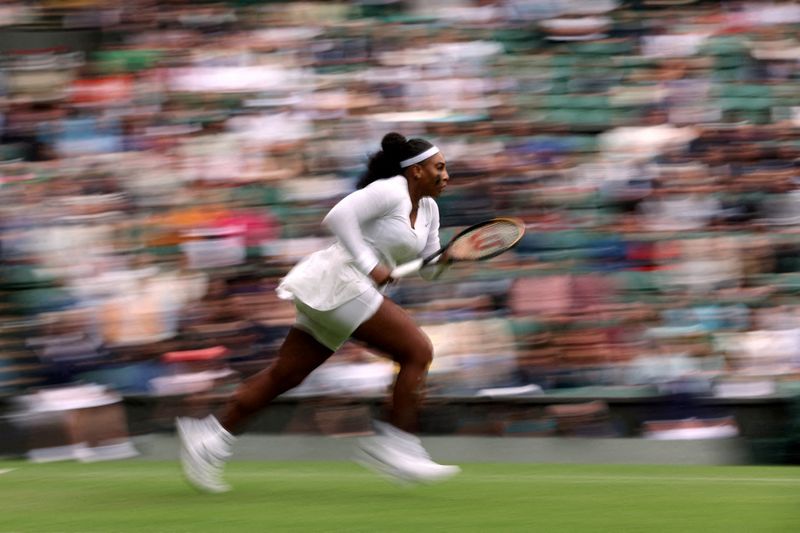
Serena Williams is making a triumphant return to Wimbledon next week, and the narrative around the women's championship has shifted entirely. The American legend's comeback—marking her first competitive singles appearance since the 2022 U.S. Open—has overshadowed what would otherwise be a captivating open tournament featuring multiple contenders and a genuinely unpredictable draw. At 44 years old, Williams has secured one of the eight available wildcards to compete at the All England Club, where she last claimed the singles crown a decade ago for her seventh title at the grass-court venue.
The field itself boasts compelling storylines independent of Williams' presence. World number one Aryna Sabalenka arrives seeking redemption after an unexpectedly early French Open exit at the quarter-final stage, having been forced to recover from a crushing collapse where she lost the final ten games of her match against Roland Garros. For the Belarusian powerhouse, capturing her first Wimbledon title would signal her capacity to succeed on grass and cement her dominance across multiple surfaces. However, recent evidence suggests she may struggle under pressure on unfamiliar terrain; her Berlin preparation included another dramatic meltdown when she surrendered the deciding set 6-0 to Jessica Pegula, raising questions about her mental fortitude on grass.
Poland's Iga Swiatek presents another formidable obstacle for potential challengers. Should she secure back-to-back Wimbledon titles, she would match a feat that has eluded the women's game since Williams accomplished it in 2016. Swiatek's consistency across Grand Slam events and her proven grasscourt credentials make her a genuine threat, though the unpredictability of the modern women's draw means no player has dominated consecutive championships despite the talent available. The fragmentation of success across the tour reflects the exceptional depth now present throughout the top ranks.
Among the rising generation, Russian prodigy Mirra Andreeva has arrived with remarkable momentum after becoming the youngest French Open champion in three and a half decades at just 19 years old. Her fearless, aggressive approach to the game will be tested on the unique demands of Wimbledon's playing surface, where the ball's trajectory and pace present entirely different challenges from clay. If Andreeva can adapt her baseline-driven game to the slick grass courts, she possesses the weaponry to advance surprisingly deep into the tournament.
American Coco Gauff continues her quest to finally master grasscourt tennis, an enduring puzzle that has prevented her from converting her considerable talent into Wimbledon success despite multiple attempts. Elena Rybakina, the defending champion, arrives with her distinctive power game that can overwhelm opponents through sheer striking force, while British favorite Emma Raducanu will carry the weight of home expectations as she pursues what would be the nation's first women's singles champion since 1977. The quality and diversity of these contenders suggests a genuinely open tournament.
Yet the moment Williams walks onto Centre Court, every other storyline becomes secondary. The 23-time Grand Slam singles champion commands attention not merely through past accomplishments but through the sheer improbability of her comeback at 44. Her absence from competitive singles play lasted four years, a gap that would typically mark retirement in professional sports. That she is returning at Wimbledon—perhaps the most demanding grasscourt environment and a venue where she previously reigned supreme—speaks to a level of confidence and preparation that few athletes possess.
The groundwork for Williams' return has been meticulously laid. She rejoined the anti-doping pool the previous December, signaling her serious intent, and has undergone a physical transformation that included losing approximately 20 pounds through weight-loss medications. Training under coach Rennae Stubbs, Williams has rebuilt her competitive fitness and match sharpness through doubles competition, most recently at Queen's Club alongside Victoria Mboko. During that warm-up event, her legendary 120-mile-per-hour serve—arguably the most destructive weapon in women's tennis history—demonstrated undiminished potency, as did her baseline power, suggesting the physical attributes that defined her career remain formidable.
Yet singles competition presents an entirely different proposition from doubles. The demands of maintaining focus and execution across multiple sets, navigating different opponents' strategies, and sustaining physical intensity separate occasional matches from the rigorous tournament format. Former American world number one Andy Roddick offered perspective on the audacity of Williams' approach, noting that most players returning from multi-year absences would schedule several tune-up events before attempting a Grand Slam. Williams' decision to jump directly into Wimbledon reflects confidence bordering on the extraordinary, though fellow American Grand Slam champion Lindsay Davenport acknowledged the considerable difficulty Williams faces. Speaking to the BBC, Davenport emphasized that grasscourt tennis is unforgiving, with the ball traveling quickly and low across the court, demanding explosive movement and precise timing.
If Williams demonstrates the ability to win even a single match, she would likely become the oldest woman to achieve this at Wimbledon since Martina Navratilova managed it at age 47 in 2004. The television ratings and global social media engagement generated by her participation will dwarf typical early-round coverage, guaranteeing massive audiences regardless of results. This attention represents both opportunity and risk; Williams' presence could revitalize broader interest in women's tennis while simultaneously creating unrealistic expectations about her performance.
Perhaps most intriguingly, a potential clash between Williams and Sabalenka would place the world number one in an impossible position. Sabalenka's emotional approach to competition, evident in her celebrated displays of joy and frustration on court, could be severely tested against an opponent carrying four years of pent-up competitive hunger. As one analyst noted, Sabalenka possesses no upside in such a matchup—defeating a comeback player would generate criticism about beating an aging returner, while losing would undermine her status as the tour's top-ranked player.
The broader tennis landscape has shifted dramatically since Williams last competed regularly. Eight different first-time Wimbledon champions have emerged since her 2016 victory, reflecting the sport's transformation toward more distributed excellence rather than individual dominance. Players like Osaka, Sabalenka, Swiatek, Gauff, Rybakina, and Barty have won multiple Grand Slam titles yet none has established the overwhelming superiority that characterized Williams' peak years. The last six major championships have been claimed by six different players, rendering the women's draw genuinely unpredictable.
For Malaysian and Southeast Asian audiences, Williams' comeback carries broader significance beyond her individual achievement. Her return demonstrates that elite athletes can extend their competitive windows through modern medical support, fitness innovation, and psychological resilience. Additionally, her presence elevates the global profile of women's tennis, expanding sponsorship opportunities and media coverage that benefit all female competitors, including rising talents from the region. Williams' narrative of reinvention and comeback aspiration resonates across cultures, offering an inspiring counterpoint to conventional retirement expectations while raising the stakes for every other player seeking Wimbledon glory.

