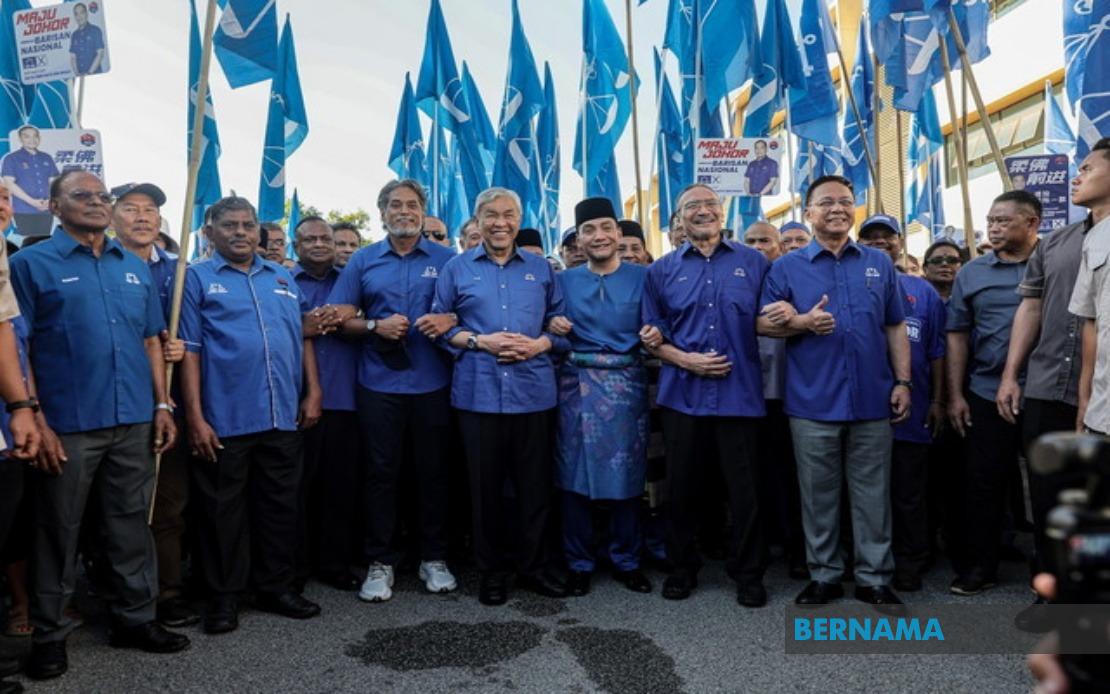
Johor Barisan Nasional chairman Onn Hafiz Ghazi formally entered the race for the state election on Thursday morning, submitting his nomination documents at the Muafakat Hall in Simpang Renggam District Council at 9.10 am. The submission of papers by the incumbent Machap assemblyman marked a significant moment in the coalition's campaign preparations, underscored by the presence of several heavyweight figures from UMNO's upper echelons.
The backing extended to Onn Hafiz reflects the party's commitment to securing the Machap seat and maintaining momentum in the broader state contest. His nomination filing attracted considerable party hierarchy support, demonstrating the prominence accorded to his candidacy within UMNO's internal calculations. The deliberate assembly of senior leaders signalled confidence in his electoral prospects and served as a public display of unity among top party voices heading into the campaign season.
UMNO president Datuk Seri Dr Ahmad Zahid Hamidi's attendance carried particular symbolic weight, as his presence validated the candidacy at the highest institutional level. Alongside him came Sembrong MP Datuk Seri Hishammuddin Tun Hussein, whose parliamentary constituency neighbours the state constituency, underscoring regional party coordination. Former minister Khairy Jamaluddin's participation added another dimension, reflecting efforts to mobilise support across different factional alignments within the party. The presence of these figures suggested a coordinated strategy to project strength and cohesion in the electoral contest.
Former Johor Menteri Besar Datuk Seri Hasni Mohammad also joined the proceedings to lend his backing. His attendance carried historical weight, as his previous tenure in the state's top administrative position provided institutional continuity and demonstrated recognition of Onn Hafiz's leadership standing. Such cross-generational participation in nomination ceremonies has become customary practice in Malaysian electoral politics, serving to reinforce candidate legitimacy through hierarchical endorsement.
The nomination centre itself became a focal point for grassroots mobilisation, with party supporters assembling in the vicinity to demonstrate their commitment to the electoral process. The visual presentation of party colours, banners, and flags transformed the venue into a carnival of political expression, a common feature of Malaysian electoral campaigns. These gatherings serve multiple functions: they energise party workers, project public enthusiasm to media observers, and create a sense of collective momentum that may influence voter perceptions.
The Machap constituency represents an important holding for Barisan Nasional in Johor state politics, and its incumbent's formal entry into the race signals the coalition's determination to retain this seat. Onn Hafiz's dual position as both Machap assemblyman and Johor BN chairman places him at the intersection of state-level and party-level politics, making his re-election campaign symbolically significant for coalition credibility. His nomination sets the pattern for subsequent filings by other candidates, establishing the tone for the broader electoral contest.
The 16th Johor state election represents a crucial political moment for both the ruling coalition and opposition parties seeking to influence state governance. The concentration of senior party leadership around Onn Hafiz's nomination suggests that UMNO views the state contest as a vehicle for demonstrating continued electoral viability following various political developments at the national level. The assembly of these figures communicates to party members, potential supporters, and rival coalitions that the party remains institutionally organised and committed to competitive electoral contests.
Nomination day procedures in Malaysian elections serve as important occasions for parties to showcase their organisational capacity and internal solidarity. The turnout of senior figures at Simpang Renggam reflected careful orchestration designed to generate positive media coverage and signal strength to the electorate. Such ceremonial aspects of electoral politics, while sometimes dismissed as theatre, carry genuine significance in shaping public perception of party viability and leadership confidence.
The timing and choreography of nomination submissions often reveal strategic calculations about which seats demand prioritised attention and resource allocation. By assembling such a prominent delegation for Onn Hafiz's filing, UMNO signalled that the Machap seat requires and merits concentrated party effort. This approach underscores how electoral contests in Malaysia operate as nested competitions where individual constituency races intersect with state-wide and national political narratives.
As the 16th Johor state election campaign enters its formal phase, the nomination proceedings at Simpang Renggam provide an early indicator of how major political actors intend to compete for voter support. The visible unity among UMNO's leadership hierarchy, demonstrated through their collective presence, projects a message of institutional coherence heading into the campaign period. The extent to which such public displays of unity translate into electoral success will become apparent only when votes are counted.

