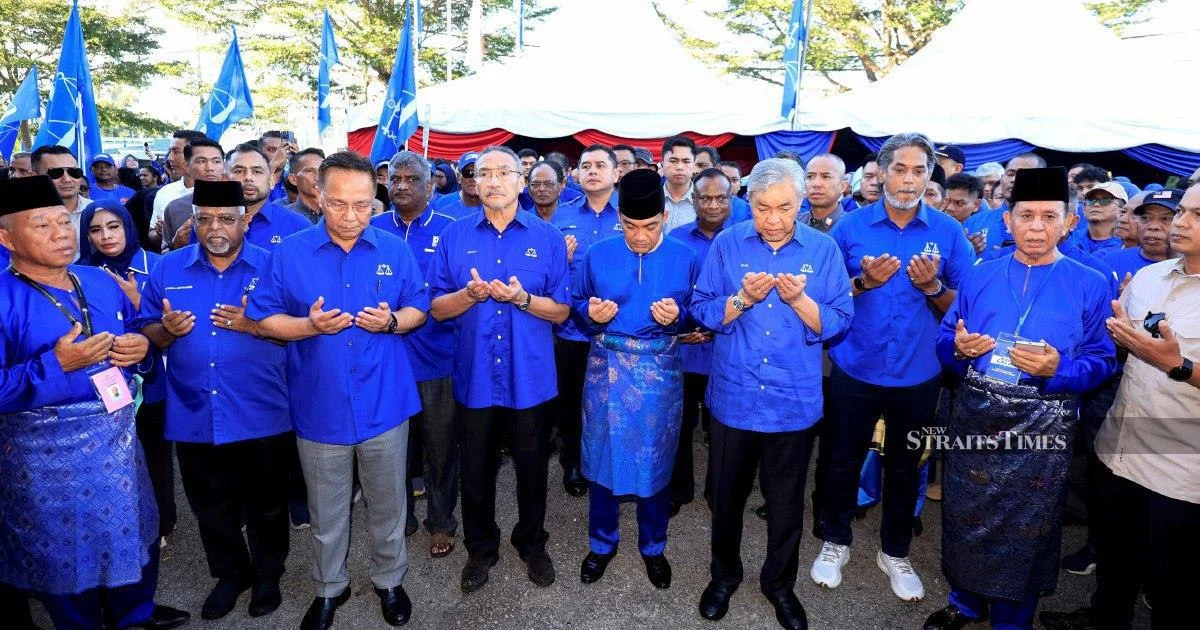
The arrival of multiple senior Barisan Nasional figures at the Simpang Renggam District Council headquarters underscored the coalition's determination to consolidate support around Datuk Onn Hafiz Ghazi during the Johor state election campaign. The coordinated show of presence by party heavyweights reflected a deliberate strategy to project unity and momentum as voting approaches, with the gathering designed to amplify Onn Hafiz's profile among voters in the district.
The concentration of high-ranking BN delegates in Simpang Renggam carried symbolic weight beyond the immediate electoral calculus. By assembling multiple leadership figures in a single location, the coalition sought to communicate that Onn Hafiz enjoys the backing of the party machinery at the highest levels. Such demonstrations of solidarity often serve to reassure grassroots party members and wavering voters that the candidate commands institutional support, a critical factor in Malaysian electoral contests where party machinery and endorsements significantly influence voter behaviour.
Simpang Renggam has historically represented a strategic battleground in Johor politics, making the choice of venue meaningful for the campaign. The district's demographic composition and voting patterns have long warranted attention from contenders seeking to build winning coalitions across the state. By concentrating leadership presence in this particular location, BN signalled that it views the area as central to its electoral ambitions, justifying the investment of senior party figures' time and political capital.
Onn Hafiz's position within Johor politics carries particular significance given the state's outsized influence in national political calculations. Johor, as Malaysia's second-most populous state and a traditional BN stronghold, remains crucial to the coalition's broader political fortunes. The backing of multiple party leaders therefore extends beyond Johor-specific concerns, potentially reflecting party concerns about maintaining influence in a state that has sometimes proved unpredictable in recent electoral cycles.
The timing of the leadership gathering during the active campaign phase suggested BN recognises the need to maintain visible momentum. Electoral campaigns in Malaysia often hinge on demonstrations of strength and unity, with voters frequently responding to visible shows of support from party hierarchies. The presence of multiple heavyweights indicated that BN intends to sustain high-profile campaign activity rather than relying solely on grassroots organisation.
For Onn Hafiz personally, the convergence of party leadership provided both practical and symbolic advantages. Practically, such visits generate media attention and create opportunities for broader messaging beyond the candidate's own platform. Symbolically, they position him as a figure of significance within party ranks, potentially influencing both intra-party dynamics and voter perceptions of his electability and importance.
The coalition's emphasis on united backing reflects awareness that Johor's political environment has become more competitive in recent years. While BN traditionally dominated the state, electoral trends have occasionally challenged this assumption. By projecting cohesion and concentrated leadership support, the coalition attempts to reassert its claim as the natural governing force in Johor and to discourage voter defection to rival camps.
For Malaysian voters observing the campaign, such displays of political theatre convey important information about party expectations and confidence levels. The decision to deploy multiple senior figures suggests BN considers this contest significant enough to warrant such investment, even as other candidates in other constituencies might receive more limited organisational support. This calibration of resources often signals party strategists' assessment of relative electoral difficulty and opportunity.
The gathering also illuminates the current state of BN's internal cohesion. Malaysian politics frequently features tensions between component parties and factions within those parties. Public displays of unified support from heavyweights can serve as reassurance that internal disagreements, if they exist, remain subordinate to the coalition's electoral objectives. For party members and supporters, such messages matter substantially in determining whether to commit energy and resources to campaign activities.
Beyond the immediate electoral context, the Simpang Renggam event contributed to the broader narrative BN seeks to project about its capabilities and vision for Johor. By concentrating leadership presence and support around particular candidates, the coalition attempts to frame the election as a choice between established, institutional stability and alternative arrangements. This messaging, repeated across multiple campaign events and constituencies, shapes the broader electoral environment within which voters make their decisions.
Looking forward, such campaign activities typically intensify as voting day approaches. The deployment of senior figures early in the campaign cycle suggests BN intends to maintain visible leadership presence throughout the race. Whether such efforts translate into electoral success ultimately depends on how voters respond to the broader BN platform, the appeal of rival candidates and coalitions, and the specific issues dominating discussion in individual constituencies and across the state.

