Residents of Selangor are being urged to exercise caution following reports of fraudulent short message service communications purporting to offer details about the KitaSelangor Voucher initiative. The Selangor State Secretary's Office released a statement cautioning the public against clicking links in unsolicited messages from unauthorised sources, as scammers are leveraging the popularity of the assistance programme to perpetrate online fraud.
The timing of this warning is critical, as anticipation for the KitaSelangor Voucher has grown among low-income families across the state. State authorities emphasise that the public should seek information exclusively through official government channels and websites rather than responding to unrequested communications. The reminder reflects broader concerns about digital fraud targeting benefit programmes, a trend that has accelerated across Southeast Asia as financial assistance schemes become more prevalent during periods of economic uncertainty.
Official notifications to eligible beneficiaries will commence on June 23, rolled out in stages to allow recipients to authenticate their personal information and proceed with their applications via the dedicated KitaSelangor Voucher Portal. Prior to this date, on June 22, the state government will issue a formal public announcement with comprehensive details about the programme. This structured timeline is designed to prevent confusion and reduce vulnerability to fraudulent schemes that exploit the gap between public anticipation and actual programme commencement.
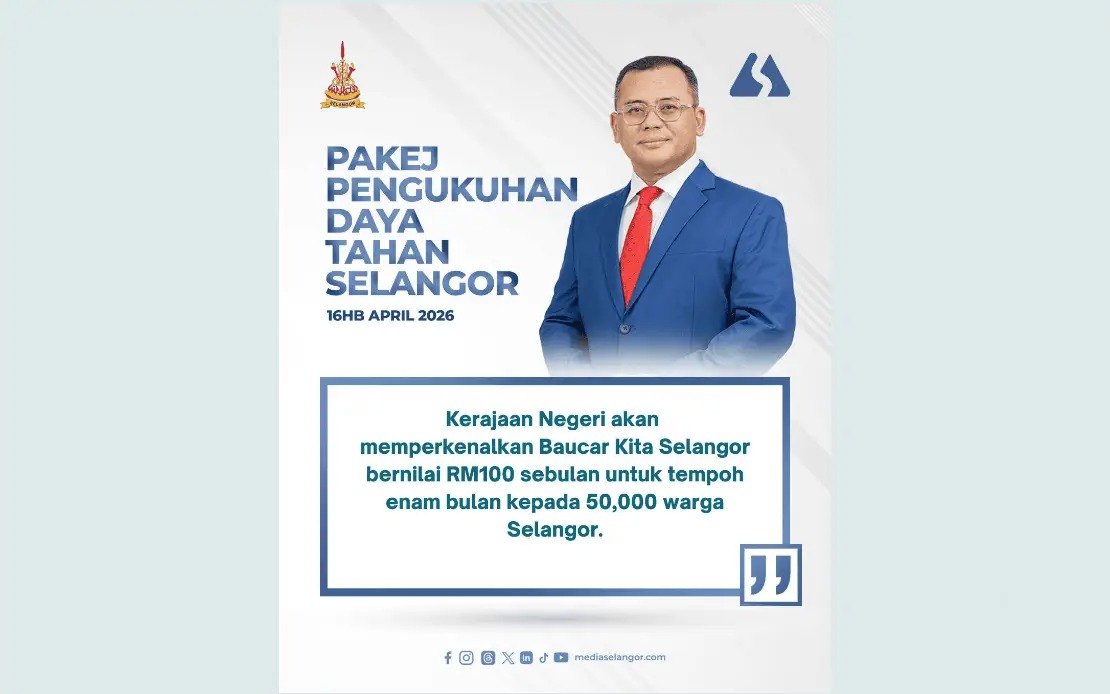
The KitaSelangor Voucher represents a targeted financial intervention aimed at households experiencing severe economic hardship. Approximately 50,000 low-income families have been identified as eligible recipients under Selangor Menteri Besar Datuk Seri Amirudin Shari's initiative. Each qualifying household will receive monthly cash assistance of RM100 distributed across a six-month period, translating to total aid of RM600 per family. This initiative is scheduled to commence on June 30 and forms a component of the broader RM140 million Selangor Resilience Strengthening Package Phase 1, which was formally unveiled in April as a comprehensive response to escalating economic pressures facing state residents.
The programme's beneficiary criteria have been carefully structured to concentrate resources where need is greatest. Eligible groups include households registered within the eKasih poverty database, individuals who have experienced retrenchment or job loss, vulnerable populations officially recognised by the Social Welfare Department (JKM), and single mothers who satisfy specified qualification thresholds. This evidence-based targeting approach draws on data aggregated from multiple government agencies, ensuring that assistance reaches families facing the most acute financial distress rather than being distributed broadly across the population.
The economic rationale underlying this assistance package reflects persistent challenges confronting Malaysian households. Rising living costs, lingering supply chain disruptions stemming from global crises, and broader economic uncertainty have compressed household budgets, particularly for low-income families with limited financial buffers. The KitaSelangor Voucher directly addresses these pressures by providing immediate monetary relief during a critical period. For Malaysian readers, this initiative exemplifies how state governments are deploying direct cash transfers as a policy tool to sustain consumption and prevent deeper economic deterioration among vulnerable populations.
The emergence of fraud schemes targeting this programme underscores a troubling pattern whereby criminal syndicates rapidly adapt to exploit new government initiatives. Fraudsters monitor programme announcements and capitalise on public enthusiasm to distribute phishing links and malicious messages designed to harvest personal financial information or redirect unsuspecting recipients to fake application portals. Such schemes can result in identity theft, unauthorised financial transactions, and loss of savings for victims who believe they are legitimately applying for assistance.
Authorities have therefore established clear protocols to distinguish legitimate communications from fraudulent ones. When the state government contacts eligible beneficiaries beginning June 23, these official messages will direct recipients to the verified KitaSelangor Voucher Portal for application submission. The provision of an official application platform—accessible through confirmed government websites—serves as a critical safeguard. Residents should independently verify any programme details by visiting the Selangor State Government's main website rather than following links provided in unsolicited messages.
For Malaysian consumers navigating an increasingly complex digital landscape, this warning offers valuable practical guidance applicable beyond this specific programme. The principle of obtaining sensitive information through official channels rather than responding to push notifications applies universally to banking services, government benefits, and tax-related communications. Scammers routinely impersonate government agencies because the authority and legitimacy associated with official institutions make victims more likely to disclose sensitive data or complete transactions.
The Selangor government's proactive communication strategy—issuing fraud warnings before the programme formally launches—demonstrates a commitment to protecting beneficiaries. However, the persistence of such scams also reflects the broader challenge facing digital economies throughout Southeast Asia, where rapid digitalisation of government services has created opportunities for criminals to operate alongside legitimate processes. As Malaysia transitions toward greater reliance on digital platforms for service delivery, building public digital literacy and establishing robust reporting mechanisms for suspected fraud becomes increasingly vital.
Residents who receive suspicious messages claiming to be from the state government regarding KitaSelangor Voucher should refrain from clicking embedded links, providing personal information, or transferring funds. Instead, they should report such communications to relevant authorities and await the official June 22 announcement and subsequent notifications beginning June 23. By maintaining vigilance and adhering to official channels, eligible families can access the assistance intended for them while protecting their personal and financial security.