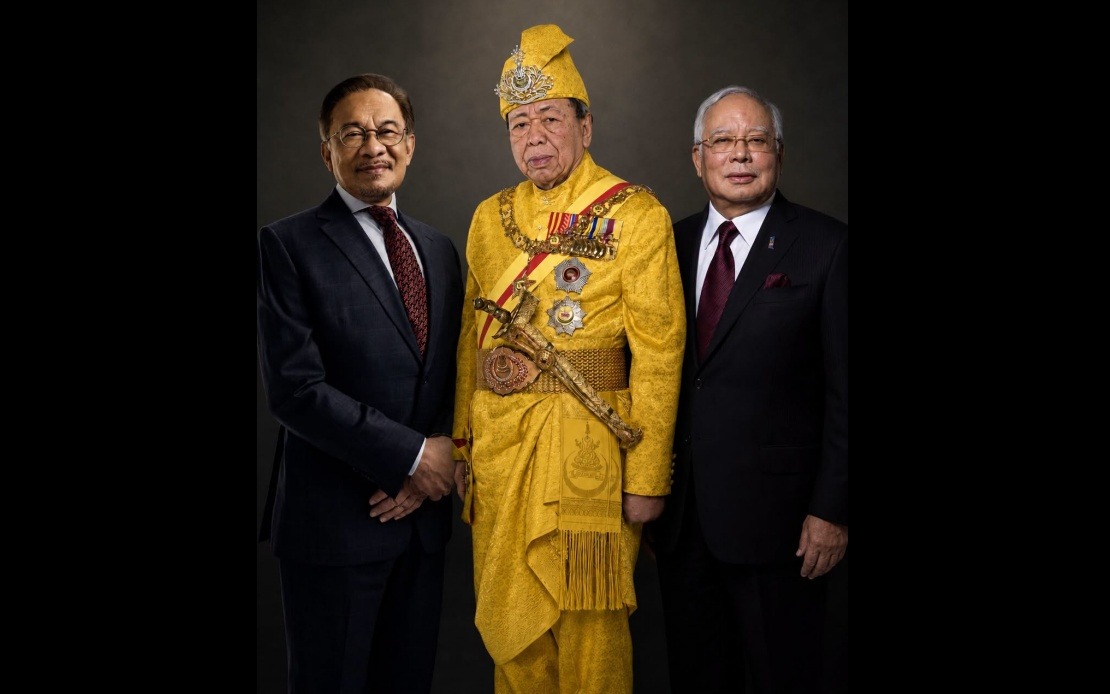
Sultan Sharafuddin Idris Shah, the reigning monarch of Selangor, has publicly commended Prime Minister Datuk Seri Anwar Ibrahim for successfully bringing the Shah Alam Line LRT3 project to completion. The new rapid transit line began its commercial operations on Monday, marking a significant milestone in addressing decades of traffic congestion that have plagued the Klang Valley region. In an official statement released on Monday, the Sultan acknowledged Anwar's decisive leadership both as Prime Minister and Finance Minister since 2022, when he assumed office amid challenging economic circumstances.
The Sultan's gratitude extended specifically to Anwar's decision to reinstate five railway stations that had been axed from the original project plan, reflecting a commitment to comprehensive public transportation rather than minimalist infrastructure. Beyond station restoration, the Prime Minister had championed the development of affordable housing developments adjacent to LRT3 stations, a policy intention that underscores efforts to create integrated transit-oriented communities across the greater Kuala Lumpur metropolitan area. Sultan Sharafuddin emphasized his expectation that no further impediments should emerge from any quarter regarding this vital project, effectively directing stakeholders to clear any remaining bureaucratic hurdles.
The genesis of the LRT3 initiative lay in grassroots concerns brought to the palace over many years. Residents, particularly homemakers managing household logistics, had repeatedly voiced frustrations about their breadwinners arriving home late due to severe traffic gridlock during peak hours. These personal testimonies resonated sufficiently with the Selangor palace that it prompted official engagement with the federal government on infrastructure solutions. The geographical challenge was acute: Klang, a major industrial and port hub south of Kuala Lumpur, relied on merely two bridges crossing the Klang River, a capacity entirely inadequate for modern traffic volumes.
The Sultan also acknowledged the role of former Prime Minister Datuk Seri Najib Tun Razak, whose administration heeded the palace's appeal to construct a dedicated rail connection binding Klang, Shah Alam, and the capital. Najib's government had offered immediate relief through the 2018 cancellation of toll plazas at Batu Tiga and Sungai Rasau, demonstrating recognition of the acute congestion problem. However, the project encountered multiple severe disruptions. Following the 2018 change of government, construction was delayed for more than 18 months while new administrations recalibrated priorities and funding structures. Subsequently, the global COVID-19 pandemic imposed a further 19-month suspension from 2019 through 2021, extending the timeline considerably.
These interruptions necessitated difficult trade-offs that reduced the project's original ambitions. Engineers scaled back station facilities to contain costs, the number of train coaches per unit decreased from initial specifications, and crucially, five proposed stations along the route were cancelled outright. These compromises reflected fiscal constraints and the need to ensure timely delivery of at least a functional core network. Yet Sultan Sharafuddin was emphatic that the LRT3, despite its reduced scope, remained fundamentally a people-centric infrastructure initiative rather than a vanity megaproject designed for political prestige or ceremonial grandeur.
The Sultan articulated a clear vision for the line's purpose: reducing chronic traffic congestion while furnishing commuters with a rapid, comfortable, and safer alternative to private vehicles. For workers and students traversing between Klang, Shah Alam, and central Kuala Lumpur daily, the LRT3 promises to reclaim hours previously squandered in traffic jams. This human-centered framing—emphasizing convenience, safety, and dignity in commuting—differentiated the Sultan's remarks from purely economic or developmental rhetoric often employed in government announcements.
Responsibility for ongoing service quality will rest substantially with Prasarana Malaysia Bhd, the national public transport operator. The Sultan explicitly urged the company to maintain rigorous maintenance standards to ensure the LRT3 network operates smoothly and reliably throughout its operational lifespan. This injunction reflected awareness that infrastructure excellence depends not merely on opening ceremonies but on consistent operational performance over years and decades. Prasarana's track record with the existing Klang Valley rapid transit network will significantly influence public confidence in the new line.
Perhaps most notably, Sultan Sharafuddin articulated a measured political philosophy regarding the project's attribution. He deliberately rejected the notion that any single individual or political party deserved sole credit, instead characterizing the LRT3 as a product of sustained planning, institutional commitment, and inter-governmental cooperation across multiple administrations. This stance subtly deflated potential partisan claims while affirming the project's transcendence of electoral cycles. The Sultan's perspective underscores how infrastructure development, when well-executed, represents continuity of national purpose rather than the achievement of transient political actors.
The completion of the Shah Alam Line carries implications beyond the Klang Valley. For policymakers and planners throughout Southeast Asia grappling with metropolitan congestion, the Selangor experience demonstrates both the value and complexity of long-gestation transit projects. Malaysian readers, particularly those in the region, can expect measurable relief in commute times, reduced vehicular emissions, and opportunities for property development and commercial activity clustering around stations. The LRT3 effectively extends Kuala Lumpur's integrated rapid transit network southwestward, knitting together three major urban centers into a more functionally unified metropolitan economy.
Looking forward, the Sultan expressed confidence that the LRT3 would catalyze broader economic development across the corridor. Enhanced connectivity between Kuala Lumpur, Petaling Jaya, Shah Alam, and Klang—acknowledged as strategic growth centers within Malaysia's national development framework—should attract investment and facilitate business expansion. Improved transportation linkages typically correlate with property appreciation, commercial clustering, and wage opportunities, benefiting residents across economic strata. The psychological impact of functioning public transit, demonstrated through reliable daily service, may also gradually shift mobility preferences away from private vehicle dependence, addressing broader sustainability concerns.
Sultan Sharafuddin's measured yet appreciative statement reflects the delicate balance required when a constitutional monarch engages with elected leadership on major public policy. By commending specific decisions—the station reinstatement and affordable housing proposal—while simultaneously refusing partisan credit attribution, the Sultan positioned himself as guardian of the public interest transcending partisan divisions. For Malaysian observers, this demonstrated both respect for democratic governance and careful stewardship of the institution's political neutrality, a model increasingly relevant as Southeast Asian nations navigate tensions between traditional authority and democratic accountability in an era demanding rapid infrastructure modernization.

