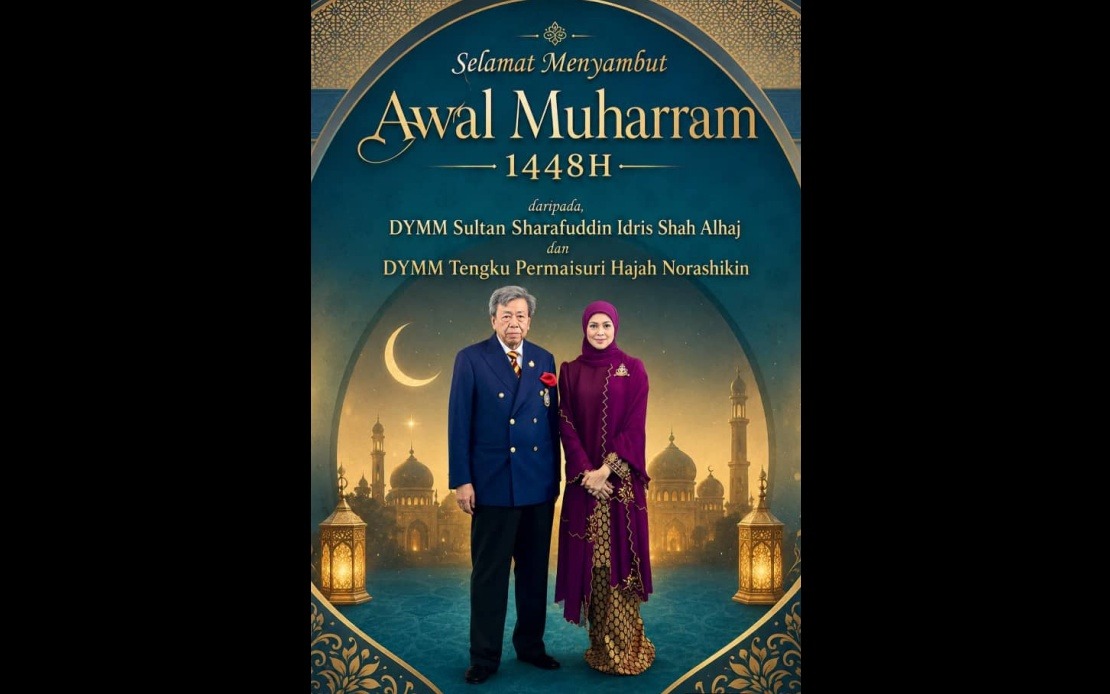
Sultan Sharafuddin Idris Shah of Selangor has renewed his call for the Muslim community to forge stronger bonds in addressing contemporary challenges as the nation observes Maal Hijrah 1448H. The occasion, marking the commencement of the Islamic calendar, offers a meaningful moment for reflection on the deeper significance of the Hijrah beyond its literal historical meaning. Rather than simply commemorating Prophet Muhammad's migration from Mecca to Medina, the Sultan emphasised that this annual milestone symbolises profound transformation and the consolidation of the Islamic ummah's collective resolve.
Drawing upon the wisdom passed down by his late father, Sultan Salahuddin Abdul Aziz Shah, the Selangor ruler articulated a vision for constructive engagement within Muslim communities. The Sultan's message centred on the imperative of addressing internal disagreements and divergent perspectives through channels marked by restraint, good judgment and mutual courtesy. This approach stands in sharp contrast to the polarisation increasingly evident in public discourse across Malaysia and the broader region, where social media amplifies contentious issues and transforms private grievances into spectacles of division.
The Sultan articulated a nuanced framework for handling disputes, one that privileges wisdom and decorum as essential virtues in navigating differences. When corrections must be offered or concerns raised, he stressed that these communications should occur within an atmosphere of respect and constructive intent. The emphasis on conducting such conversations privately rather than through public platforms reflects a sophisticated understanding of how internal discord, when weaponised through mass communication, can undermine the broader community's standing and cohesion. This perspective carries particular relevance in Malaysia's multireligious context, where Muslim unity directly influences interfaith relations and national stability.
Central to the Sultan's message is the warning against allowing disagreements to spill into the public sphere in ways that compromise the ummah's credibility and strength. Issues susceptible to amicable resolution within closed-door discussions should remain there, he argued, rather than being transformed into open conflicts that expose vulnerabilities to external scrutiny and potential exploitation. This principle extends beyond abstract ethics to encompass practical strategic considerations: when communities appear fractured and quarrelsome, rival actors—whether domestic political opponents or external actors—gain opportunities to exploit those divisions for their own advantage.
The ruler painted a cautionary picture of the consequences when internal disputes metastaasise into public battles. Beyond the immediate damage to community relations, such conflicts create power vacuums and opportunities that adversaries can readily exploit. When divisions are permitted to deepen and harden into permanent factional lines, no constituent group ultimately achieves genuine victory because the collective strength of the entire community has been irreversibly diminished. This perspective reflects historical understanding of how sectarian and factional disputes have historically weakened Muslim societies and left them vulnerable to external pressures and interventions.
During Maal Hijrah, the Sultan urged Muslims to reconnect with the foundational principles that should guide community life: the strengthening of bonds of brotherhood, the cultivation of mutual forbearance, and the subordination of personal or partisan interests to the greater good of religion, nation and society. These exhortations take on added weight in Malaysia, where the Muslim majority bears responsibility for maintaining the social contract that underpins religious freedom and intercommunal harmony. The Sultan's framing suggests that genuine unity requires ongoing cultivation and conscious recommitment rather than being assumed as automatic or permanent.
The timing of these remarks at the beginning of the Islamic year carries symbolic weight, positioning the new year as an opportunity for collective renewal and recalibration of priorities. The Sultan's hope that the period ahead would bring blessings, peace and material prosperity reflects a conviction that spiritual renewal and ethical recommitment have tangible consequences for social and economic outcomes. In the Malaysian context, where religious authority commands considerable respect, such pronouncements from respected traditional leaders carry influence beyond purely spiritual domains, extending into the realms of politics, civil society and social cohesion.
The Sultan's emphasis on resolving matters through mutual respect and shared commitment to finding optimal solutions represents an implicit critique of winner-take-all approaches to communal disagreements. This stance gains particular significance given Malaysia's recent political turbulence, characterised by frequent coalition shifts, defections and confrontational rhetoric. By advocating for approaches grounded in dialogue and compromise rather than victory at any cost, the Sultan models an alternative paradigm that other leaders might usefully emulate.
The broader implications of these remarks extend throughout Southeast Asia's Muslim-majority regions, where tensions between competing visions of Islam, governance and modernisation periodically generate public conflict. The Sultan's articulation of a vision emphasising internal harmony and strategic restraint in airing disputes offers a countervailing voice to more divisive religious and political rhetoric. His framing respects differences while insisting that such differences need not translate into mutual delegitimisation or public warfare. As Malaysia navigates questions of religious identity, pluralism and national direction in coming years, such steady counsel for wisdom and unity from traditional authorities becomes ever more precious.