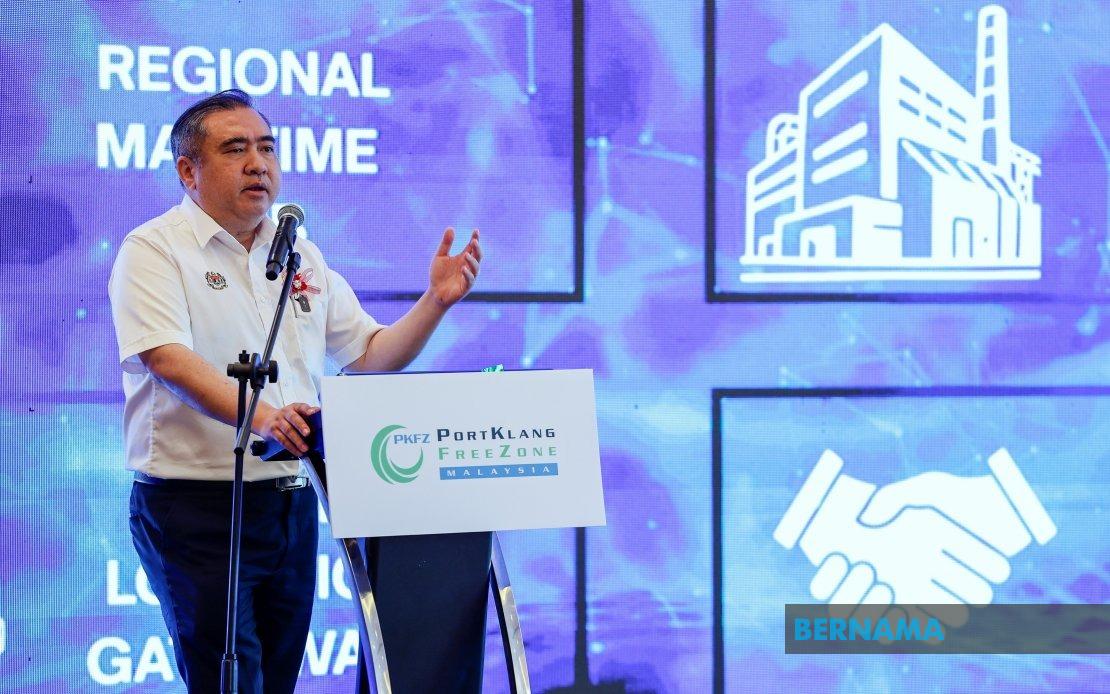
The Selangor State Government is in the final stages of untangling a critical land ownership dispute that threatens to delay the Port Klang Third Terminal, a multibillion-ringgit infrastructure project intended to cement Malaysia's standing as a regional shipping hub. Transport Minister Anthony Loke revealed that the state administration and the federal Transport Ministry are jointly coordinating with private sector partners to resolve the land complications before construction can commence, with officials hopeful that groundbreaking could occur within the calendar year if negotiations conclude swiftly.
The third terminal represents a cornerstone initiative within Malaysia's broader strategy to expand port capacity and reinforce its competitive advantage in Southeast Asian maritime logistics. Located on Carey Island in Kuala Langat, the facility is envisioned as a transformative addition to Port Klang's existing infrastructure, promising enhanced throughput and modern cargo-handling capabilities for the region's trade-dependent economies. The government has structured the development through a Build-Operate-Transfer concession model, allowing private enterprise to drive implementation while the state retains long-term ownership and control.
The land complexity stems from fragmented ownership across multiple entities. Selangor Menteri Besar Datuk Seri Amirudin Shari previously disclosed that the project requires approximately 1,699.68 hectares across Pulau Carey, comprising 1,011.71 hectares of submerged seabed managed by the Selangor State Development Corporation (PKNS) and 687.96 hectares of terrestrial coastal land held by Yayasan Selangor. This division of stewardship between state-controlled corporations and charitable foundations has necessitated intricate negotiations to harmonise competing claims and secure unified title for development purposes.
Look emphasised that resolving this foundational issue must precede any substantive construction activity, reflecting the regulatory rigour demanded by major infrastructure projects in Malaysia. The minister's cautionary stance, despite earlier government optimism about an imminent start, underscores the practical complexities that frequently encumber large-scale port expansion programmes. His comments followed a series of high-profile facility inaugurations at Port Klang Free Zone, including the Wisma Golden Horse Q Centre labour quarters and newly expanded rubber manufacturing facilities, collectively representing RM566 million in fresh private investment.
Prime Minister Datuk Seri Anwar Ibrahim has previously instructed all relevant agencies to accelerate progress on the third terminal, signalling political commitment at the highest echelon. This directive reflects the government's recognition that Port Klang's expansion is integral to Malaysia's post-pandemic economic recovery and its objective to recapture market share from competing regional ports in Singapore, Thailand, and Indonesia. The third terminal would substantially increase container handling capacity and modernise facilities with automation technologies increasingly expected by global shipping lines.
The transport sector's labour shortage also featured prominently in Loke's remarks, revealing parallel initiatives designed to address skilled manpower deficits across maritime and logistics operations. A memorandum of understanding signed between Port Klang Free Zone and the Armed Forces Ex-Servicemen's Affairs Corporation (Perhebat) aims to channel retired military personnel into port and logistics roles, capitalising on their discipline and training. Deputy Prime Minister Datuk Seri Dr Ahmad Zahid Hamidi witnessed the agreement, indicating whole-of-government endorsement of workforce development strategies.
Complementary to this employment initiative, the government previously announced a targeted licensing programme enabling military retirees to obtain Class E heavy vehicle certificates, addressing a chronic shortage of qualified truck drivers within Malaysia's haulage sector. This multi-pronged approach recognises that infrastructure expansion is meaningless without corresponding human capital development. The convergence of port expansion, facility upgrading, and workforce initiatives suggests a holistic reimagining of Malaysia's logistics competitiveness.
For Malaysian businesses dependent on port services, the third terminal's eventual completion carries profound implications. Container shipping costs, currently elevated by regional capacity constraints and port congestion, should moderate once the facility becomes operational, lowering logistics expenses for exporters and importers. Manufacturing clusters throughout Selangor and the Klang Valley would particularly benefit from improved cargo throughput and shorter vessel turnaround times, potentially enhancing the region's attractiveness for foreign direct investment in manufacturing and distribution hubs.
The project's strategic importance extends beyond Selangor's borders to influence national competitiveness. Malaysia's position as a transhipment hub depends fundamentally on port infrastructure that matches or exceeds global standards. Neighbouring competitors have invested aggressively in port modernisation, with Singapore's PSA terminals and Thai ports continuously upgrading their facilities. A third terminal at Port Klang, once operational, would reinforce Malaysia's market position and validate years of strategic planning by transport planners and port authorities.
Industry observers note that resolving the land issue may catalyse broader infrastructure investments throughout the Klang Valley region. The surrounding area, designated for industrial and logistics development, could attract complementary investments in warehousing, container freight stations, and specialised manufacturing facilities. These ancillary developments would amplify the direct benefits of the third terminal itself, creating a cluster effect that strengthens the entire region's supply chain ecosystem.
The timeline for resolving the land dispute remains uncertain, though ministerial statements suggest negotiations are advancing constructively. Given the political stakes and economic importance, both federal and state authorities appear motivated to reach consensus swiftly. Nonetheless, maritime industry participants and export-dependent manufacturers await concrete confirmation of a construction start date before adjusting long-term logistics planning.