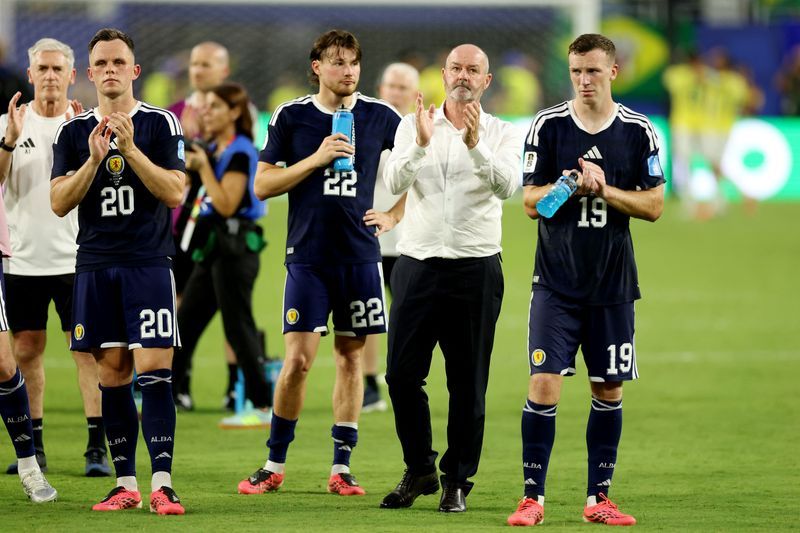
Scotland's return to the World Cup stage for the first time in 28 years appears destined to end in disappointment following their comprehensive 3-0 defeat to Brazil in Miami on Wednesday. Coach Steve Clarke offered little hope of his side mounting an unlikely recovery in the remaining group matches, effectively acknowledging that the Scots have squandered a golden opportunity on football's biggest stage. Despite technically retaining a mathematical chance to progress as one of eight third-placed teams across the 12 groups, Clarke's assessment suggests Scotland will struggle to finish among the best-performing third-place finishers, with several other nations still to complete their fixtures and the current trajectory pointing towards elimination.
The Scotland manager was remarkably candid in his post-match analysis, characterising the loss as fair and fundamentally self-inflicted through poor defensive organisation and repeated lapses in concentration. Rather than deflecting blame to circumstances or opponent quality, Clarke emphasised that Brazil's clinical finishing was made possible by mistakes his own players created, particularly in the opening phases of the match when they gifted the South Americans opportunities that were converted with ruthless precision. His frustration was palpable as he detailed how the defeat could have been avoided through better tactical discipline and execution, suggesting that the performance fell significantly below what he knows his squad is capable of delivering.
While Clarke acknowledged that goalkeeper Angus Gunn produced several important saves to prevent an even more damaging scoreline, and that Scotland created isolated moments of attacking promise, the overall assessment was one of profound underperformance. The disconnect between what Clarke knows his players can achieve and what unfolded against Brazil highlighted the pressure and perhaps anxiety that accompanied their return to international football's premier tournament. For a nation starved of World Cup football since France in 1998, the expectation and emotional investment were substantial, making the manner of this defeat particularly difficult to process.
The Scotland manager was careful to avoid criticism of individual players, instead directing his disappointment toward the collective standard of performance. Clarke noted that his squad had demonstrated their quality throughout their qualification campaign and in their previous tournament engagements, making Wednesday's display all the more puzzling and frustrating. He emphasised that underperforming relative to known capabilities represented a missed opportunity, particularly given the lengthy period since Scotland had qualified for a World Cup and the significant effort required to reach this tournament.
Beyond the immediate disappointment of the result, Clarke used the occasion to articulate deeper concerns about the structural development of Scottish football. His observations regarding the physicality, power, and technical proficiency displayed by both Morocco and Brazil suggested that Scotland's domestic game may not be adequately preparing players to compete at the highest international level. These remarks point to systemic challenges in youth development and player pathway structures that will require significant investment and reform to address. The contrast between Scotland's capabilities and those of leading footballing nations became stark when measured against the tournament's elite performers.
The coach's emphasis on producing young players capable of gracing the world stage implies Scotland must fundamentally reshape how it identifies, develops, and nurtures talent from grassroots level through to professional football. The current generation of players who qualified for Qatar, while commendable in their achievement, may represent a ceiling for what the existing development infrastructure can produce. For Malaysian and Southeast Asian observers, this mirrors ongoing conversations in the region about how smaller footballing nations can improve their competitive standing through better youth systems and investment in player development pathways.
Clark's comments also reflected his understanding of the emotional journey Scotland's supporters had undertaken, with the nation's famous Tartan Army creating a vibrant presence in the United States throughout the tournament. He acknowledged their contribution as outstanding ambassadors for their country while gently reminding them of what had made their presence at the World Cup possible in the first place. This balancing act between celebrating fan passion and maintaining focus on the players' responsibility to perform demonstrated Clarke's awareness of the complex relationship between supporter expectations and on-field execution.
The manager's perspective on fan involvement carried an implicit message about perspective and gratitude: Scotland's presence in Qatar represented a genuine achievement given their 28-year absence from the competition, and the players deserved recognition for delivering that experience rather than censure for failing to progress beyond the group stage. Clarke's reference to supporters traditionally watching the World Cup from home underscored just how significant the qualification itself had been for a football nation with limited recent tournament experience. Yet this sentiment stood in tension with the clear underperformance against Brazil, creating an uncomfortable paradox for Clarke to navigate publicly.
With minimal mathematical hope of progression and several superior third-place finishers likely to emerge from the remaining fixtures, Scotland now faces the prospect of returning home with a single point from three matches. This outcome will inevitably spark significant discussion about tactical approaches, selection decisions, and whether Clarke's team selections and strategic setup maximised their chances against elite opposition. The debate within Scottish football circles will extend beyond this tournament to questions about the viability of their development philosophy and whether structural changes are necessary to prevent similar disappointments in future competitions.
For regional context, Scotland's struggles highlight a pattern familiar to nations outside Europe's traditional footballing elite: the gap between developing nations and World Cup regulars remains substantial, requiring not just individual talent but systematic, long-term investment in infrastructure, coaching, and playing philosophy. As Southeast Asian nations similarly pursue World Cup qualification and competitive improvement, Scotland's experience offers cautionary lessons about the comprehensive nature of the challenge and the multiple dimensions requiring simultaneous attention.

