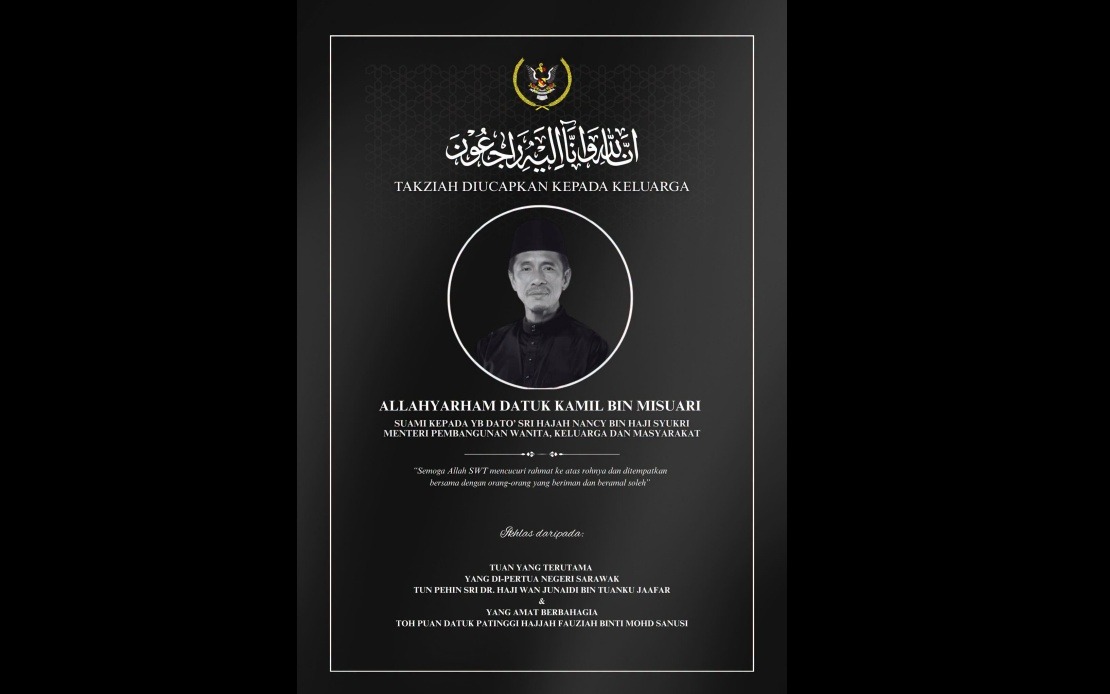
Tun Dr Wan Junaidi Tuanku Jaafar, the Yang Dipertua Negeri Sarawak, has conveyed his sympathy to Women, Family and Community Development Minister Datuk Seri Nancy Shukri following the passing of her husband, Datuk Kamil Misuari, who died at a Kuala Lumpur hospital on June 18. The gesture reflects the customary protocol observed among Malaysia's political and ceremonial leadership when prominent public figures experience personal loss.
Through an official statement released by Astana Sarawak, the state governor and his wife, Toh Puan Fauziah Mohd Sanusi, invoked Islamic prayers for the deceased. They sought blessings upon Kamil's soul, hoping that his virtuous deeds would be recognised and that he would be granted a place among the righteous in the hereafter. Such expressions represent the intersection of Malaysia's constitutional monarchy with Islamic faith, particularly significant in a Muslim-majority nation where religious observances accompany official condolences.
Beyond the spiritual dimension, the gubernatorial statement extended practical expressions of support toward the bereaved family. Wan Junaidi and his wife prayed that Nancy Shukri and her immediate family would find the emotional fortitude necessary to navigate their period of grief. These sentiments underscore the communal approach to mourning that characterises Malaysian political culture, where institutional leaders actively participate in acknowledging personal tragedies affecting their peers.
Kamil Misuari was 65 years old at the time of his death. He had been married to Nancy for nearly four decades, having entered matrimony in 1985. The couple was blessed with three children, establishing a family unit that has been interwoven with Nancy's rise through Malaysia's political hierarchy. His death marks the conclusion of a long partnership that coincided with his wife's progression from backbench politics to ministerial office.
The timing of the announcement through Nancy's ministry office reflects the dual nature of her position—balancing personal tragedy with public responsibility. As the minister overseeing women, family, and community development portfolios, her personal experience of loss carries particular resonance, as these ministries frequently address matters related to family welfare, social support systems, and community resilience during difficult periods.
According to official protocols, Kamil's remains were scheduled to be transported from Kuala Lumpur to Kuching the following day. This logistics arrangement acknowledges Nancy's Sarawak roots and the family's decision to conduct final rites in their home state. The choice of Samariang Muslim Cemetery as the burial site indicates the family's commitment to traditional Islamic funeral practices and their connection to the Kuching community.
The death of a spouse represents a significant life transition for any individual, but the implications are particularly noteworthy when that individual holds ministerial office. Nancy Shukri's position in Prime Minister Anwar Ibrahim's cabinet places her among Malaysia's most senior female politicians. Her continued focus on women's rights, family support programmes, and community development efforts will likely proceed alongside her personal adjustment to widowhood.
For Malaysian observers and analysts, the incident underscores how personal circumstances intersect with public duty within the nation's political framework. The balance between maintaining governmental responsibilities and managing profound personal loss presents a challenge that many in senior positions must navigate. The broader political ecosystem in Malaysia, including fellow cabinet members and parliamentary colleagues, traditionally rallies around affected individuals through such expressions of solidarity.
Sarawak's gubernatorial engagement in this matter reflects the deep interconnectedness between the state's political leadership and prominent federal figures who maintain ties to the region. The Yang Dipertua Negeri's involvement signals recognition of both Nancy's national stature and her continued importance to Sarawak's political landscape, reinforcing how Malaysia's federal structure integrates state and national levels of governance.
The period following Kamil's death will test Nancy's capacity to balance her ministerial duties with personal grief. Her ministry's work—addressing pressing issues around women's empowerment, family support, and social cohesion—continues regardless of personal circumstances. The question of how she manages this transition, alongside broader questions about work-life balance for Malaysia's female political leaders, may generate wider discussion about institutional support systems for public servants navigating major life changes.

