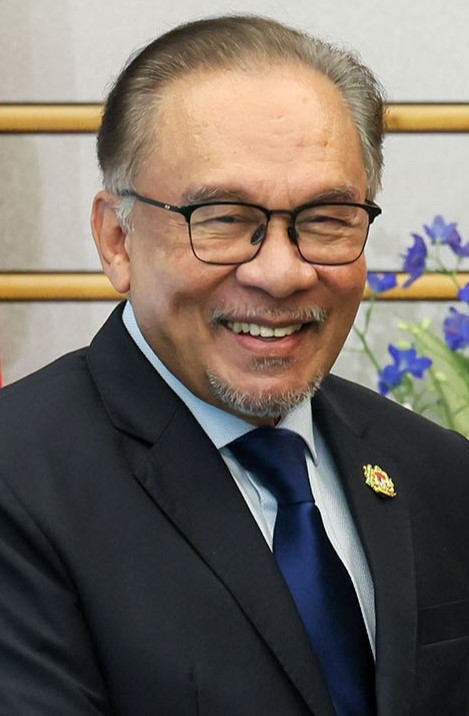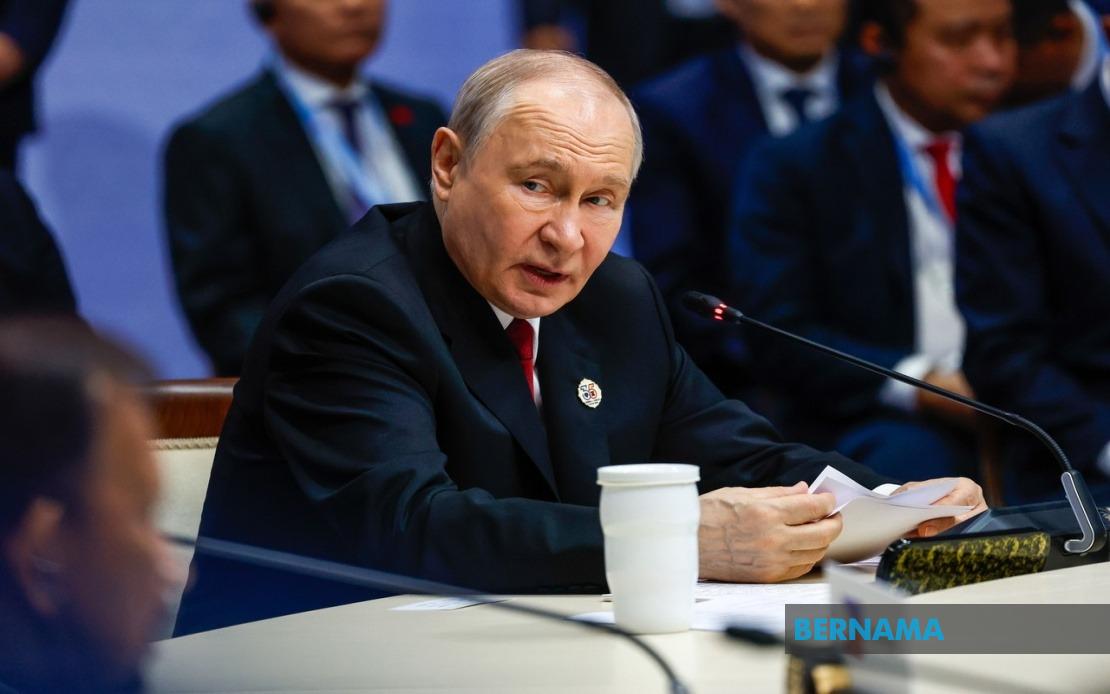
Russia and ASEAN marked three and a half decades of formal relations at a commemorative summit in Kazan, with President Vladimir Putin underscoring the strategic importance of their partnership as the region navigates deepening geopolitical uncertainties. The two-day gathering brought together Prime Minister Datuk Seri Anwar Ibrahim and other Southeast Asian leaders, including Philippine President Ferdinand Marcos Jr in his capacity as current ASEAN Chair, to assess the trajectory of cooperation and chart paths forward across multiple domains.
The formal establishment of Russia-ASEAN relations traces back to 1991 when the Soviet Union's successor state initiated diplomatic ties in Kuala Lumpur. This foundation was strengthened incrementally over subsequent decades, culminating in Russia's designation as a full ASEAN Dialogue Partner in 1996 and the subsequent elevation to Strategic Partnership status in 2018. This progression reflects a deliberate effort by both Moscow and the ten-member Southeast Asian bloc to deepen engagement beyond symbolic gestures toward substantive institutional frameworks.
Putin characterised the partnership as resting on bedrock principles of international law and mutual interest, positioning it as fundamentally different from relationships based purely on strategic convenience or temporary alignment. He argued that this principled foundation, combined with an extensive network of joint mechanisms spanning multiple sectors, has enabled sustained collaboration despite fluctuations in global geopolitical conditions. The Russian leader specifically highlighted cooperation in security matters, trade and investment flows, energy partnerships, agricultural exchanges, digital transformation initiatives, scientific collaboration, tourism development, and people-to-people cultural exchanges.
From Russia's perspective, ASEAN represents a crucial partner in its broader strategy to strengthen engagement with the Asia-Pacific region, a zone of increasing economic and strategic significance in the 21st century. Conversely, Southeast Asian nations view Russia as a valuable dialogue partner offering particular strengths in energy sectors including oil and gas, advanced technology applications, agricultural exports, and higher education opportunities. This complementarity of interests and capabilities provides practical substance to what might otherwise remain largely ceremonial diplomatic ties.
The timing of this summit reflects both the commemorative milestone and the pressing contemporary context facing the region. The Asia-Pacific continues experiencing elevated geopolitical tensions linked to great power competition, territorial disputes, supply chain vulnerabilities, and questions about the region's security architecture. Putin explicitly framed the Russia-ASEAN relationship as playing a stabilising role within this volatile environment, contributing to what he termed a balanced security architecture that resists the drift toward zero-sum competition dominating other international relationships.
Trade and investment cooperation stands as one concrete manifestation of this partnership. While Russia faces international economic sanctions following its 2022 invasion of Ukraine, Southeast Asian economies maintain more diversified diplomatic postures and continue commercial engagement with Moscow. This positioning allows ASEAN nations to benefit from Russian energy resources and technology exports while maintaining relationships with Western economies, though such balancing acts become increasingly difficult as geopolitical polarization intensifies globally.
Energy security emerged as a particularly salient topic for the summit. Russia remains among the world's leading energy producers, and several ASEAN members depend partly on hydrocarbon imports to meet growing domestic demand. As the region pursues industrial expansion and power generation capacity increases, securing reliable and reasonably priced energy supplies remains central to economic planning. Russian contributions in this domain, whether through direct exports or through technological cooperation in renewable energy development, carry strategic weight for Southeast Asian policymakers.
The commemorative summit agenda encompassed reviewing accumulated achievements across 35 years while establishing priorities for future cooperation. Discussions extended to regional and international issues affecting both parties, particularly matters affecting Asia-Pacific stability. Food security also featured prominently in discussions, given Russia's significant global role in grain and fertilizer production and ASEAN's substantial agricultural sector employing hundreds of millions of people across the region.
For Malaysia specifically, strengthening Russia-ASEAN coordination carries implications for regional multilateralism and non-alignment principles that have historically anchored Malaysian foreign policy. As Southeast Asia confronts pressures to choose sides in broader strategic competitions, maintaining substantive partnerships with diverse global actors remains attractive to Kuala Lumpur's strategic thinking. Digital transformation and science and technology cooperation offer opportunities for knowledge transfer and innovation partnerships that could benefit Malaysian enterprises and research institutions.
The educational dimensions of this partnership deserve particular attention for Malaysian and Southeast Asian observers. Russian universities have long attracted students from the region, and strengthening higher education cooperation could expand these networks further. Technology transfer in sectors ranging from telecommunications to space applications potentially opens pathways for regional technological advancement that reduces dependency on limited sources of innovation.
Putin's emphasis on the partnership serving as a stabilising force in the Asia-Pacific represents a particular positioning claim worth scrutinising. Whether Moscow's role genuinely contributes to balanced regional security architecture or instead introduces additional complexity to an already complicated diplomatic landscape remains contested. Nevertheless, the Russian president's framing reflects an understanding that ASEAN values partners capable of contributing to multilateral frameworks rather than enforcing bipolar alignments.
Looking forward, the strategic partnership faces tests as global geopolitical fractures deepen. ASEAN's established principle of non-interference in internal affairs and its preference for dialogue-based approaches to conflict resolution will be tested as tensions between major powers potentially escalate. Russia's ability to respect Southeast Asian countries' independent policy choices while advancing its own interests will substantially determine the partnership's durability and perceived value to ASEAN members grappling with competing pressures from all directions.