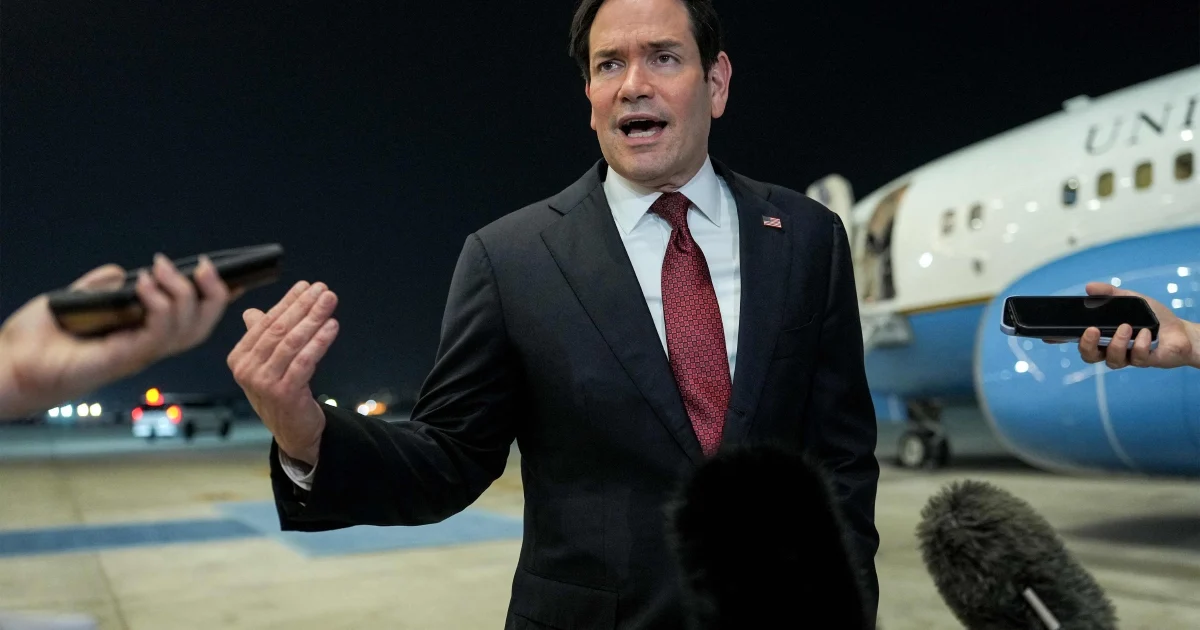
The United States, through Secretary of State Marco Rubio, delivered a stark rebuff to Iranian proposals that would levy tolls or fees on shipping traffic passing through the Strait of Hormuz. Speaking on Tuesday, Rubio made unequivocal that Washington would not countenance such arrangements, a position that underscores the mounting complications threatening efforts to broker peace in the Middle East.
The Strait of Hormuz stands as one of the world's most critical maritime chokepoints, with roughly one-third of all seaborne traded oil transiting its waters annually. Control over this corridor carries immense geopolitical and economic weight, making any attempt by Iran to impose levies a potential flashpoint for international tensions. For regional traders, energy importers, and the broader global supply chain, Iranian toll schemes would introduce new costs and operational uncertainties that could ripple across markets from Singapore to Rotterdam.
Rubio's statement signals that the United States maintains a zero-tolerance stance on unilateral Iranian actions affecting international shipping rights through international waters. The strategic importance of the waterway means that any agreement addressing regional conflict must account for freedom of passage and equitable access. Malaysia and other Southeast Asian nations, heavily dependent on stable energy supplies and secure maritime trade routes, have particular interest in maintaining open passage through the Strait, making this dispute relevant far beyond the immediate regional players.
Beyond the Hormuz toll dispute, Rubio's comments reflect a far broader landscape of disagreement that threatens to derail diplomatic progress. Nuclear inspections have emerged as a significant point of contention, with the two sides holding fundamentally different views on the scope, frequency, and intrusiveness of verification mechanisms. Iran has resisted what it characterises as excessive monitoring protocols, while the United States demands robust transparency to ensure compliance with any nuclear limitations.
Missile development presents another substantial obstacle in negotiations. The United States views Iran's ballistic missile programme as destabilising and demands constraints as a condition for lifting sanctions and normalising relations. Iran, conversely, frames its missile capabilities as legitimate defensive assets necessary for national security and refuses to subordinate its military development to foreign dictates. This disagreement touches on fundamental questions of sovereignty and regional balance of power.
These multiple friction points—tolls, inspections, and armaments—suggest that underlying the technical disputes lie deeper conflicts of interest and vision for the region's future. Both parties appear entrenched in positions that leave limited room for compromise, raising questions about whether meaningful agreements can materialise. The accumulation of unresolved issues indicates that initial optimism about ending the Middle East conflict may have been premature.
For Southeast Asian observers, these escalating tensions carry implications beyond regional politics. Protracted disputes over the Strait of Hormuz could destabilise energy markets and complicate shipping operations that Malaysian ports and logistics networks depend upon. Any military escalation stemming from diplomatic breakdown would further disrupt already fragile global supply chains.
The early strains now appearing in negotiations suggest that diplomatic progress will likely proceed slowly, if at all. Both the United States and Iran entered talks with significant redlines that appear difficult to bridge. Washington's rejection of Iranian toll proposals demonstrates that even on seemingly narrow commercial matters, fundamental disagreements about rights and authority persist.
The international community, including ASEAN nations with stakes in regional stability and maritime freedom, watches these negotiations with concern. A successful diplomatic resolution could ease tensions and create space for greater economic cooperation across the Middle East and beyond. Conversely, a negotiation breakdown risks renewed hostilities that would threaten shipping security, energy prices, and broader geopolitical stability.
Rubio's firm stance reflects an American commitment to its strategic interests in maintaining open international waters and constraining Iranian power projection. Whether this unyielding position facilitates eventual compromise or hardens the diplomatic impasse remains uncertain. What appears clear is that genuine progress toward ending conflict requires movement from both parties on multiple fronts simultaneously, a challenge that current disagreements suggest remains formidable.

