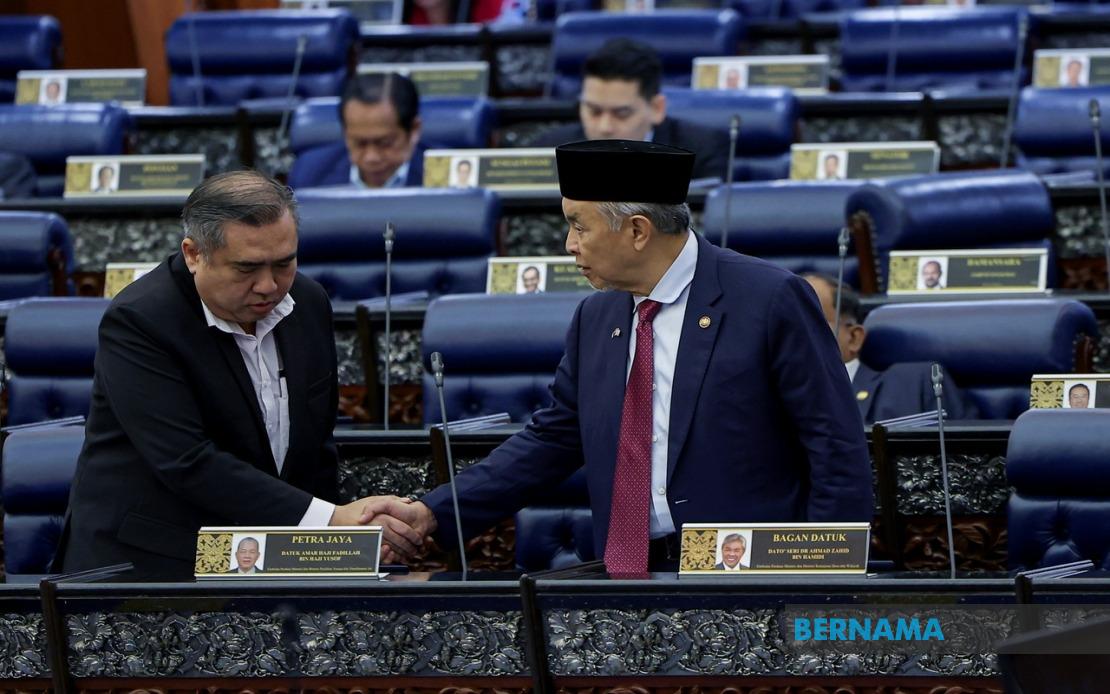
Parliament took up the Road Transport (Amendment) Bill 2026 at its first reading today, marking the start of legislative scrutiny on a comprehensive overhaul of Malaysia's road safety framework. Transport Minister Anthony Loke introduced the measure to the Dewan Rakyat, confirming that debate on the Bill's merits will proceed during the current parliamentary session. The proposed amendments represent a significant tightening of penalties across the Road Transport Act, reflecting ongoing government concerns about traffic discipline and the enforcement of motoring regulations across the country.
The Bill's most immediate impact will be felt by drivers committing routine violations. Current penalties for offences including failure to display a vehicle registration plate, driving without a valid licence, speeding, breaches of vehicle construction and equipment standards, and ignoring traffic signals would jump from a floor of RM300 to RM500. This escalation extends to illegal street racing charges as well. The adjustment, whilst modest in percentage terms, signals official dissatisfaction with existing deterrence levels and acknowledges the cumulative cost of road accidents and traffic congestion in urban and highway settings.
Driving with a suspended or revoked licence represents one of the Bill's priority areas for enhancement. Currently, offenders face a maximum of one year's imprisonment or a fine reaching RM5,000. Under the amended framework, these penalties would expand to up to three years' jail or a fine between RM3,000 and RM10,000. This recalibration acknowledges the heightened danger such behaviour poses, as drivers whose licences have been suspended typically have demonstrated patterns of recklessness or serious breaches of road rules. The government appears intent on making such conduct significantly costlier and riskier for would-be offenders.
Street racing and speed-testing on public roads, perennial challenges in Malaysian urban centres and along highways, feature prominently in the Bill's enforcement architecture. A new provision would criminalise these activities with considerable severity. First-time offenders would face fines ranging from RM2,000 to RM10,000, imprisonment up to two years, or both. Repeat offenders face substantially harsher consequences, with fines between RM5,000 and RM20,000, mandatory imprisonment of not less than five years, or both. This two-tier penalty structure aims to deter both casual and habitual illegal racers, addressing a persistent enforcement challenge that has drawn public complaint and tragic fatalities.
The Bill also strengthens the hand of authorities in dealing with false declarations and misstatements in road transport matters. Clauses 28, 28(a), and 28(b) propose penalties reaching RM200,000 or imprisonment of up to ten years for those convicted of providing false information. Such provisions target corruption and fraudulent conduct within the licensing and registration system, protecting the integrity of official records and preventing unqualified individuals from obtaining permits or certificates through deception. The severity reflects mounting frustration with administrative violations that undermine regulatory effectiveness.
Compound payments, which allow authorities to settle minor offences without court prosecution, would see their maximum amount raised from RM300 to RM500. This adjustment allows enforcement officers greater flexibility in negotiating settlements and improves cost recovery for the government whilst maintaining an incentive for compliance. The change acknowledges that penalty structures must periodically adjust to inflation and changing circumstances to remain credible and effective.
The amendments grant traffic police and road transport officers substantially expanded powers to manage traffic flow and respond to congestion or hazardous conditions. Enhanced authority to control and redirect vehicles reflects an evolution in how Malaysian enforcement agencies approach traffic management, moving beyond reactive punishment toward proactive traffic engineering during peak hours and emergency situations. These powers are intended to complement traditional enforcement mechanisms and provide flexibility in responding to real-time road situations.
A new dimension introduced by the Bill concerns micromobility vehicles—bicycles, scooters, and other lightweight conveyances that have proliferated in Malaysian cities. The amendments establish procedures for detaining and disposing of such devices when used improperly or parked illegally. This addresses friction between micromobility users and municipal authorities, particularly in Kuala Lumpur and other major centres where these vehicles have created congestion and safety hazards on pavements and public spaces. Formalising removal procedures should clarify enforcement scope and reduce disputes.
Finally, the Bill creates specific offences for obstructing or assaulting enforcement officers, classified as arrestable crimes. This protection reflects rising concerns about aggression toward traffic police and road transport inspectors during enforcement operations. By establishing this as a distinct, serious offence, the legislation aims to deter confrontations and ensure officers can perform their duties without fear. The move acknowledges the occupational hazards facing those tasked with maintaining order on Malaysian roads and signals government commitment to their safety.
The Bill also empowers the Transport Minister to prescribe fees for issuing entry permits to foreign motor vehicles, transferring this regulatory authority from the existing Act. This streamlines administration and allows more flexible fee-setting in response to policy objectives or cost adjustments. Collectively, these amendments represent the most substantial revision to Malaysia's road transport regulatory framework in recent years, reflecting accumulated experience with enforcement challenges and evolving policy priorities in road safety and urban mobility.

