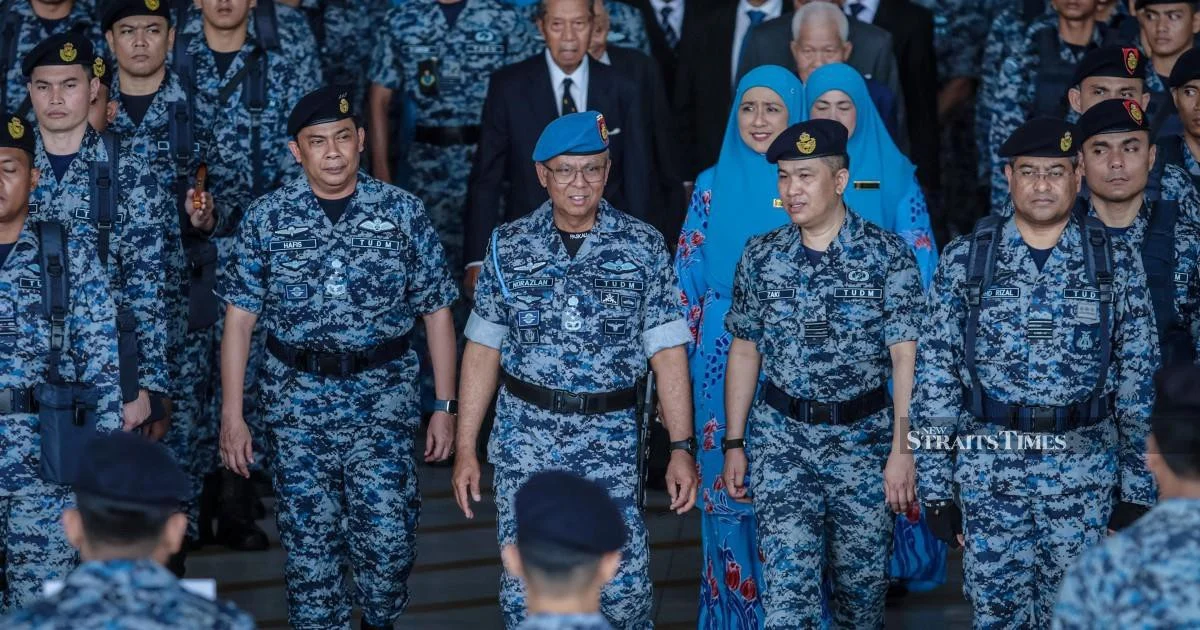
Malaysia's maritime security infrastructure faces mounting pressure from a complex web of regional geopolitical tensions, requiring a decisive shift toward air-based defence strategies, according to General Tan Sri Muhamad Norazlan Aris, the commander of the Royal Malaysian Air Force. Speaking at a defence forum in Subang, the senior military official underscored the interconnection between air supremacy and the protection of sea lanes vital to the nation's economic survival and regional stability.
The RMAF chief's warning arrives at a particularly sensitive moment for Southeast Asia, as competing regional powers jostle for influence across the South China Sea and beyond. Malaysia's position as a maritime nation with extensive coastlines and critical shipping corridors makes it especially vulnerable to challenges that span both air and sea domains. The emphasis on air power reflects a growing acknowledgment within Malaysian defence circles that future security challenges will demand capabilities that go far beyond traditional surface-based defences, requiring integrated systems that can project authority and deterrence across vast oceanic expanses.
Sea lane protection has long been a cornerstone of Malaysian national security strategy, given the nation's dependence on maritime trade and its geographic exposure to regional flashpoints. The Strait of Malacca, through which trillions of dollars in global commerce passes annually, remains a critical artery for Malaysia's economy and that of its regional neighbours. Any disruption to these shipping routes—whether from state actors, non-state groups, or environmental challenges—poses immediate risks not only to Malaysia but to the broader Indo-Pacific region's economic architecture. The RMAF's elevated focus on this domain signals recognition that air superiority and rapid response capabilities have become indispensable to maintaining the freedom of navigation that underpins regional prosperity.
The geopolitical landscape facing Malaysia has become increasingly fractured in recent years. Great power competition, territorial disputes among regional claimants, and the emergence of non-traditional security threats have collectively created an operating environment far more complex than the Cold War-era paradigm that long governed Asian security thinking. Malaysia, as a middle power with limited military resources, must navigate these crosscurrents carefully, balancing the demands of various regional actors while maintaining its own sovereignty and strategic autonomy. Air-based defence systems offer a cost-effective pathway to extending Malaysia's strategic reach without requiring the massive naval investments that traditional maritime powers pursue.
Within the broader context of Southeast Asian security, Malaysia's military modernisation has become a significant bellwether for how regional nations are responding to contemporary threats. Unlike some neighbours with deeper military traditions, Malaysia has historically focused on managing internal stability while maintaining minimal external defence posture. The shift toward enhanced air capabilities represents a meaningful departure from this historical approach, suggesting that Malaysian policymakers increasingly view air power as a prerequisite for credible deterrence in a multipolar region. This evolution reflects lessons learned from observing how other Southeast Asian nations have upgraded their military infrastructure in response to perceived threats.
The RMAF's current inventory faces significant constraints that General Tan Sri Muhamad Norazlan Aris's emphasis on air power may be designed to highlight. The service operates legacy platforms alongside newer acquisitions, and the modernisation cycle has proceeded unevenly due to budgetary constraints and shifting political priorities. By articulating the strategic centrality of air defence, the RMAF leadership is likely positioning the service for increased budgetary allocations and political support in upcoming defence spending negotiations. This represents standard institutional behaviour among military services worldwide, yet it carries particular weight in Malaysia's context, where defence budgets compete with social spending demands and electoral pressures.
Regional precedents lend credibility to the RMAF chief's assessment. Neighbouring nations including Vietnam, Indonesia, and Thailand have all invested substantially in air force modernisation and maritime patrol capabilities over the past two decades. These investments reflect a shared recognition that sea lane security and air domain control have become inseparable strategic challenges in the modern Indo-Pacific. Malaysia's comparative expenditure on defence infrastructure has not kept pace with these regional trends, potentially creating capability gaps that could prove problematic during crises. The RMAF's emphasis on air power integration may signal an attempt to achieve strategic effect through innovative operational concepts rather than simply matching neighbours' acquisition spending.
The technological dimension of air-based maritime defence cannot be overlooked. Modern maritime security relies increasingly on sophisticated surveillance capabilities, rapid reconnaissance, and the ability to respond swiftly to emerging threats. Aircraft equipped with advanced sensors and communications systems can provide persistent awareness across vast oceanic areas far more cost-effectively than surface vessels alone. For a maritime nation like Malaysia with enormous sea areas to monitor relative to available resources, air power offers a force multiplier that deserves investment priority. The integration of unmanned systems alongside crewed platforms further enhances the range and persistence of air-based surveillance and response capabilities.
International maritime law and the principles of freedom of navigation have historically underpinned Malaysia's diplomatic approach to regional disputes. By strengthening air-based maritime defence capabilities, Malaysia signals its commitment to defending these principles while avoiding the kind of aggressive military buildups that might provoke regional tensions. Air patrols and surveillance operations can be conducted as ordinary exercises that assert territorial rights and international norms without triggering the same diplomatic friction as forward-deployed naval assets. This distinction carries particular importance for Malaysia, which has successfully maintained a diplomatically moderate stance while still protecting its territorial interests.
The RMAF chief's statement should be understood alongside Malaysia's broader defence modernisation plans and strategic documents that have emerged in recent years. National security strategies and defence white papers have increasingly emphasised maritime security, cybersecurity, and cooperative regional frameworks as pillars of Malaysian defence policy. Air power capabilities fit naturally within this framework, providing tools for peacetime surveillance and crisis response while remaining compatible with Malaysia's commitment to multilateral approaches to regional security challenges. The emphasis on air defence thus reflects not merely military professional opinion but broader strategic thinking within Malaysian government circles.
Looking forward, the trajectory of Malaysia's air power development will likely depend on multiple factors beyond the RMAF's institutional preferences. Economic growth rates, defence budget allocations, domestic political priorities, and the pace of technological change will all influence how quickly and comprehensively the service can enhance its maritime defence capabilities. Regional dynamics will also matter significantly—developments in great power competition, changes in threat assessments, and potential crisis events could all shift Malaysian defence spending priorities. General Tan Sri Muhamad Norazlan Aris's emphasis on air power's criticality appears designed to establish a baseline understanding that will guide these decisions as they unfold.