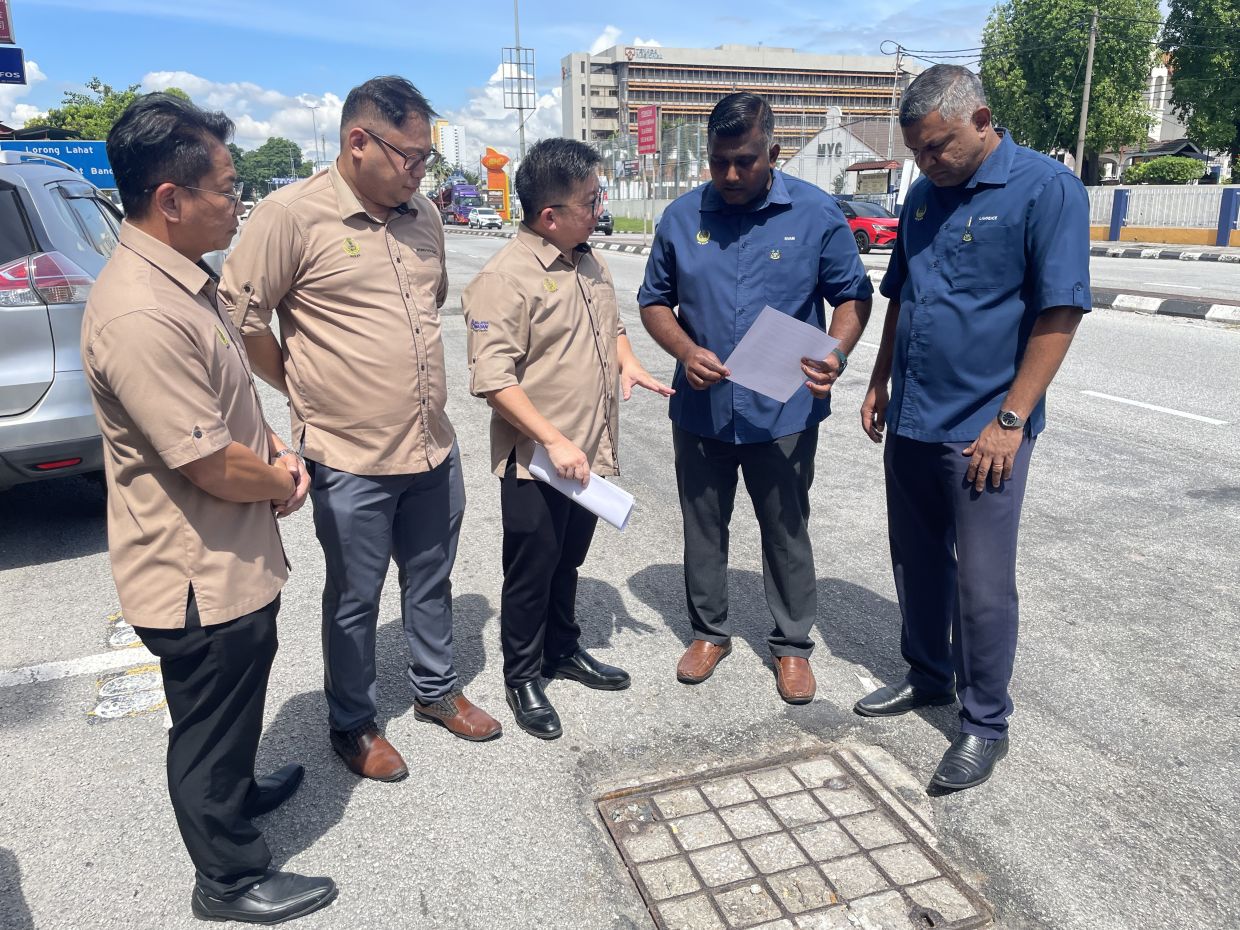
Motorists traversing Jalan Lahat in Ipoh will finally gain relief from the persistent road deterioration that has plagued the arterial route for months. Beginning in July, authorities will undertake a RM2.6mil comprehensive resurfacing programme spanning nearly 4 kilometres of one of Perak's busier urban thoroughfares. The initiative, greenlit through the Malaysian Road Records Information System (Marris) funding mechanism, represents the culmination of repeated appeals from residents, business operators and commuters frustrated by the hazardous conditions that have characterised this vital transport corridor.
The resurfacing works will transform the section of Jalan Lahat stretching from the Falim traffic lights eastward to the Jalan Leong Boon Swee junction adjacent to the Little India commercial district. This particular stretch bisects three state constituencies—Buntong, Tebing Tinggi and Menglembu—making it a politically significant infrastructure priority. Though the full length of Jalan Lahat extends approximately 10 to 11 kilometres through Ipoh's urban landscape, the current intervention concentrates resources on the most critically deteriorated segments, covering approximately 1.9 kilometres in each direction of travel.
Menglembu assemblyman Chaw Kam Foon characterised the project approval as overdue validation of persistent complaints from the road-using public. The condition of Jalan Lahat has deteriorated to such a degree that it has become synonymous with poor maintenance across online platforms and social media discussions. The situation grew acute enough to warrant immediate remedial action when a viral video circulated showing a substantial pothole on the flyover section, raising legitimate safety apprehensions among drivers traversing the area. Though authorities patched the defect promptly following public outcry, such temporary measures failed to address the systemic infrastructure failure underlying the entire corridor.
The extent of damage inflicted by the road's poor condition became quantifiable when officials reported that approximately 20 vehicles sustained tyre punctures traversing the affected stretch during a single month alone. For individual motorists, this represents tangible economic loss alongside the inconvenience and hazard associated with sudden tyre failure on an active urban route. The cumulative impact on the broader motoring public and commercial operators dependent on reliable road infrastructure underscores why the resurfacing initiative carries significance beyond mere maintenance scheduling.
Councillor K. Sivam situated the resurfacing project within a longer historical context of deteriorating conditions and unfulfilled repair requests. Demands for comprehensive rehabilitation of Jalan Lahat had persisted since at least 2024, with previous patch-and-repair approaches proving insufficient given the heavy traffic volumes and climatic conditions characteristic of the Ipoh area. The tendering process is currently advancing, with contractors expected to commence operations during the designated July timeframe. Project managers anticipate completion within approximately three weeks, assuming typical construction productivity and minimal weather disruptions.
The heavy functional demands placed upon Jalan Lahat distinguish it from secondary residential streets warranting periodic maintenance. The corridor serves as a primary access route for residential communities, educational institutions including schools dependent on reliable transportation logistics, and numerous commercial establishments requiring efficient goods movement. Large commercial vehicles and lorries constitute a significant portion of traffic using this route, subjecting the road surface to stresses beyond those typical of private automobile traffic. The cumulative wear from this mixed-use burden, combined with inadequate surface condition, created conditions where standard patching protocols proved ineffectual.
Beyond normal traffic wear, Sivam attributed notable portions of the deterioration to infrastructure excavation works carried out by utility service providers. Sewerage pipeline installation projects, among other utility installations, had necessitated road opening and restoration procedures that were apparently executed without adequate quality control. When utility companies complete excavation and backfill operations, they bear responsibility for restoring road surfaces to their pre-disturbance condition. Where restoration standards were not rigorously enforced or satisfactorily implemented, the resulting subsurface weaknesses contributed to accelerated surface breakdown and the profusion of potholes plaguing subsequent months.
The comprehensive nature of the forthcoming resurfacing initiative extends beyond simple asphalting of damaged surfaces. The project incorporates ancillary works essential for establishing durable, level road infrastructure capable of withstanding future traffic loads and environmental stresses. Technicians will level protruding utility access points, eliminate road undulations that compromise ride quality and vehicle safety, and repaint lane markings to restore visual traffic delineation. These elements collectively constitute a holistic rehabilitation approach rather than the incremental patch-and-repair methodology that had proven counterproductive.
Moving forward, accountability mechanisms will assume greater importance in preventing recurrence of the deterioration patterns witnessed along Jalan Lahat. The Corridor Utiliti Darul Ridzuan (KUDR) will exercise oversight authority regarding future utility excavation operations and mandatory road restoration procedures. This institutional framework establishes clearly defined specifications governing restoration quality, with enforcement mechanisms including financial penalties and compounding procedures for non-compliant contractors. The authority can mandate repeat restoration work from companies that initially execute substandard repairs, creating financial incentive structures encouraging proper execution of restoration obligations.
For Malaysian road users and transportation planners, the Jalan Lahat resurfacing initiative offers a case study in both infrastructure neglect and remediation pathways. The protracted period between initial deterioration and authorised repair reflects common challenges in maintaining road networks across rapidly urbanising Malaysian centres where competing infrastructure priorities strain budget allocations. The project's focus on problematic utility coordination and strengthened institutional oversight suggests recognition that sustainable road condition improvement requires addressing root causes rather than perpetuating reactive maintenance cycles. The three-week completion timeline, if realised, will demonstrate whether concentrated effort and adequate resource allocation can substantially reverse infrastructure decline across urban thoroughfares, potentially providing models applicable to similar challenged corridors across Perak and other states grappling with deteriorating transport networks.

