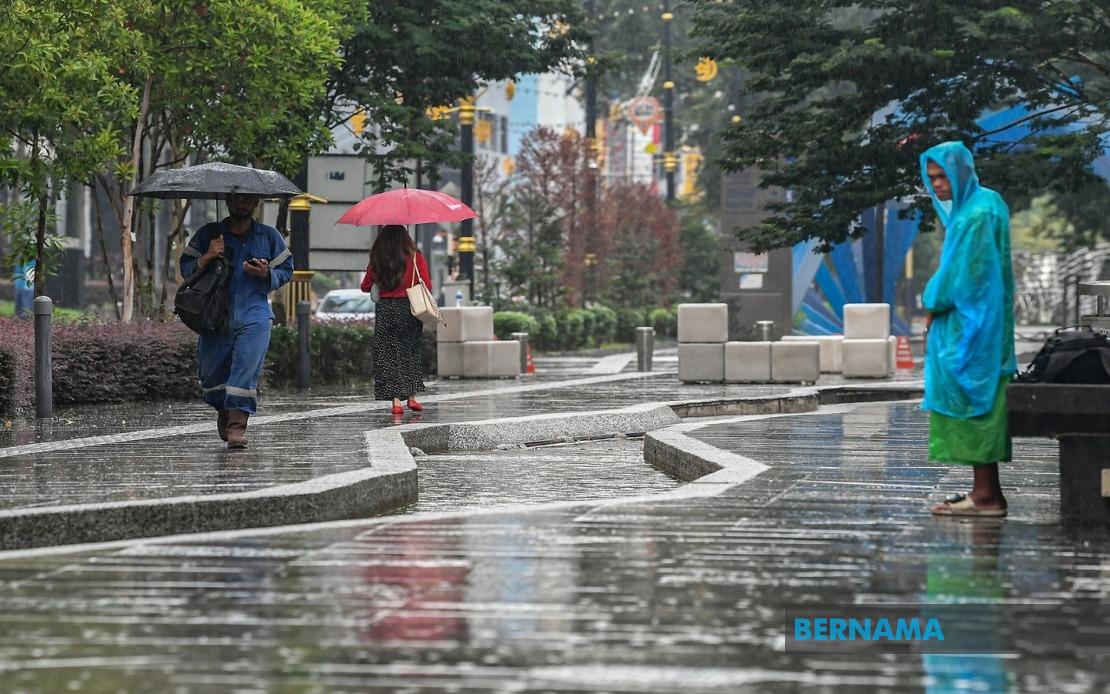
The Malaysian Meteorological Department has issued a weather advisory for Johor's state election nomination day, forecasting precipitation across a significant portion of the state that could create logistical obstacles for candidates and their supporters. Azlai Ta'at, the Johor director of MetMalaysia, indicated that rainfall will impact Johor Bahru, Muar, Batu Pahat, Kota Tinggi, Pontian, Tangkak and Kulai throughout the morning hours, while only Segamat, Kluang and Mersing are expected to remain dry during the critical early hours.
The nomination process itself is tightly scheduled to occur between 9 am and 10 am across 56 nomination centres statewide, a compressed window that coincides precisely with the predicted rainfall period. This narrow timeframe means candidates and their campaign teams will need to navigate wet conditions while submitting nomination papers and gathering at designated venues. The returning officers will subsequently announce eligible candidates immediately following the completion of nominations, leaving no buffer period to accommodate weather-related delays.
Temperature conditions across the state are expected to remain typical for late June in Johor, with minimum readings between 24 and 25 degrees Celsius and maximum temperatures reaching between 31 and 34 degrees Celsius. Segamat is forecast to experience the highest temperatures, potentially reaching 34 degrees Celsius, which when combined with humidity from the morning rain may create uncomfortable conditions for supporters who will be gathering at nomination centres and subsequently beginning their campaigning efforts.
The afternoon transition into the official campaign period is expected to bring even more volatile weather, with MetMalaysia forecasting thunderstorms across Johor Bahru, Segamat, Kluang, Kota Tinggi, Pontian, Mersing and Kulai. Meanwhile, Batu Pahat and Tangkak districts are anticipated to experience additional rainfall, though at potentially lower intensity than thunderstorms, while Muar alone is expected to have hot and presumably dry conditions. This scattered pattern of severe weather will create uneven campaign conditions across different constituencies.
The meteorological authority has issued public advisories urging candidates, supporters and voters to remain vigilant regarding changing weather conditions and to take appropriate precautions. Such alerts are particularly relevant given that nomination day traditionally attracts large crowds of campaign workers and supporters to the nomination centres, where outdoor gatherings would be directly exposed to the forecasted conditions. The timing of severe afternoon thunderstorms immediately after the completion of nominations raises concerns about the comfort and safety of large assemblies at these venues.
Pakatan Harapan has positioned itself as a formidable contender, fielding complete slates across all 56 seats with a carefully balanced composition drawn from its three component parties. The coalition is deploying 20 PKR candidates, 19 from Amanah and 17 from DAP, representing a combined strategic effort to reclaim electoral ground in Malaysia's southern major state. Barisan Nasional is similarly committing full resources by contesting all 56 seats through its established alliance framework, with UMNO furnishing 36 candidates, MCA providing 16 and MIC contributing four representatives to the overall effort.
Perikatan Nasional presents a more fragmented but potentially significant electoral challenge, with its constituent parties pursuing less comprehensive coverage. PAS will contest only 11 seats, Bersatu 16, the Malaysian Indian People's Party five and Pejuang a single seat, reflecting either strategic targeting of winnable constituencies or resource constraints compared to the two major coalitions. This selective approach may indicate confidence in specific regional strongholds rather than attempting statewide penetration.
Additional political participants further fragment the electoral landscape, with Malaysian United Democratic Alliance fielding four candidates, Parti Sosialis Malaysia contesting one seat and Parti Bersama Malaysia making its electoral debut by fielding 15 candidates. The proliferation of political contestants across multiple ideological perspectives and new entrants suggests a relatively open competitive environment where regional dynamics and local issues may prove decisive in determining outcomes across different constituencies.
The Election Commission has structured the electoral process with early voting scheduled for July 7 and general polling day set for July 11, providing a two-week window between nomination day and actual voting. This interval allows candidates to conduct their campaigns despite the initial weather challenges, with approximately 2.73 million registered voters across Johor eligible to participate in determining the composition of the state assembly. The electorate comprises 2.70 million ordinary voters alongside 12,041 military personnel and spouses and 12,710 police personnel and spouses, reflecting Johor's significant security and defence infrastructure.
The combination of challenging weather conditions during the nomination period and a crowded competitive field suggests that Johor's electoral process will unfold amid complex circumstances affecting both logistics and campaign momentum. Candidates who can effectively navigate the anticipated rain and thunderstorms while maintaining organisational coherence may gain early psychological advantages as they transition from the nomination phase into active campaigning. The weather forecasts underscore how external factors beyond political calculations can influence the practical dynamics of election administration and candidate mobilisation during critical procedural moments.

