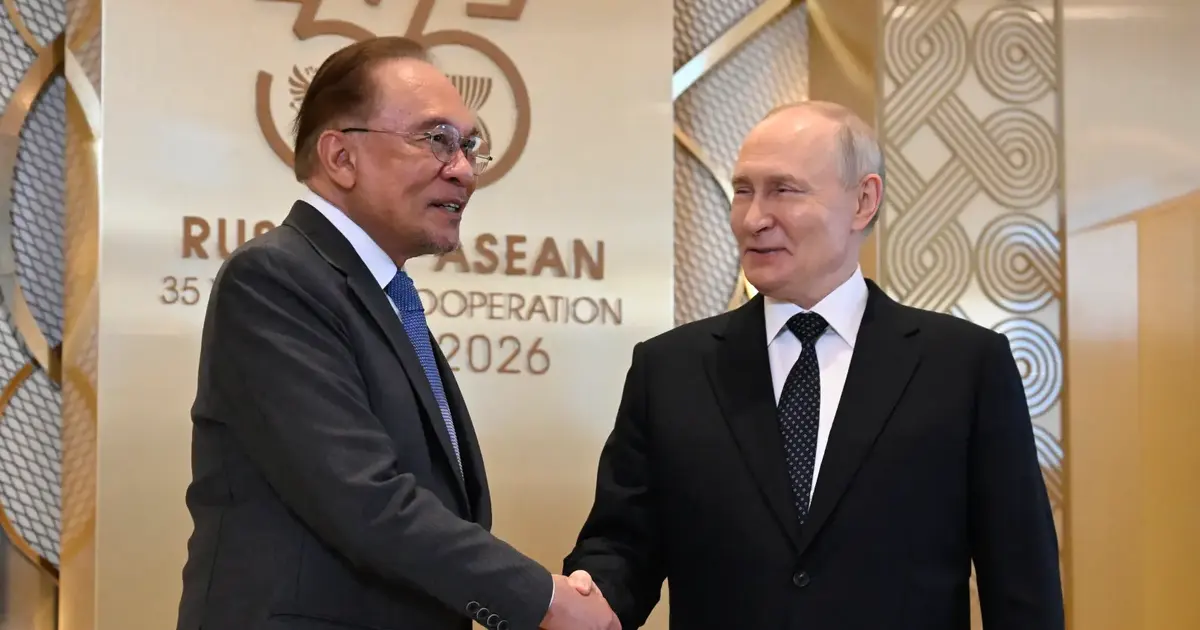
Russian President Vladimir Putin has pledged to sustain oil and natural gas deliveries to Malaysia throughout the next twenty years, according to an announcement by Prime Minister Anwar Ibrahim. The commitment reflects Russia's strategic interest in maintaining energy ties with Southeast Asian partners despite broader international tensions affecting global supply chains. For Malaysia, the assurance addresses a critical aspect of the country's energy security roadmap, which depends on diversified sources to support industrial growth and power generation demands as the nation works toward its renewable energy targets.
The long-term energy accord carries particular significance given Malaysia's position as an energy-importing nation with substantial petrochemical and manufacturing sectors. Securing predictable supplies at negotiated terms helps domestic industries plan capital investments and manage production costs. Russia has become an increasingly important supplier of energy resources to Asian markets, particularly as Western nations have reduced their reliance on Russian energy following geopolitical developments in Europe. Malaysia's willingness to maintain and expand these energy partnerships demonstrates the country's pragmatic approach to sourcing the fossil fuels that remain essential to its economy during the transition toward cleaner energy.
Prime Minister Anwar Ibrahim, speaking on the matter, highlighted that Malaysia intends to leverage enhanced diplomatic and economic cooperation to open additional doors in major East Asian markets. The statement underscores a broader strategic vision where energy agreements serve as entry points for expanding bilateral relationships. Anwar's accompanying visit to Turkmenistan indicates that Malaysia is simultaneously exploring energy opportunities across the Caspian region while strengthening ties in Central Asia. This multi-pronged approach reflects Malaysia's recognition that energy security and export competitiveness are interconnected priorities requiring sustained engagement across multiple geographies.
China, Japan, and South Korea represent markets of paramount importance to Malaysia's export-oriented economy. These three nations collectively account for a substantial share of Malaysian manufactured goods imports, particularly in electronics, petrochemicals, and palm oil products. By cultivating relationships with major energy suppliers such as Russia and Turkmenistan, Malaysia positions itself as a reliable partner capable of facilitating broader trade and investment flows. The diplomatic positioning also signals to major trading partners that Malaysia maintains constructive relationships across diverse geopolitical contexts, an asset increasingly valued in fragmented global markets.
Turkmenistan holds significance beyond its energy reserves. The Central Asian nation serves as a transit hub and production centre for natural gas destined for Asian markets, and strengthening Malaysian ties there opens possibilities for enhanced commercial cooperation. The country's geographic position along historic Silk Road corridors makes it strategically relevant for Malaysia's efforts to diversify trade routes and reduce dependence on maritime passages potentially vulnerable to disruption. A Turkmenistan visit also signals Malaysian interest in deepening South-South cooperation beyond traditional Southeast Asian frameworks.
The energy supply commitment must be contextualised within Malaysia's broader energy transition challenges. While the country targets increased renewable energy capacity through solar and hydroelectric projects, fossil fuels will remain central to the energy mix for decades. Managing this transition requires securing affordable conventional supplies during the interim period. Russia's twenty-year pledge provides budgetary certainty for power utilities and industrial consumers, reducing the volatility that might otherwise force Malaysia to pay premium prices for spot market purchases.
From a geopolitical perspective, Malaysia's energy diplomacy reflects the nation's consistent approach of maintaining constructive ties with multiple powers rather than aligning exclusively with any single bloc. This non-aligned position, reminiscent of Malaysia's Cold War diplomatic tradition, remains relevant in contemporary great power competition. By sustaining relationships with Russia while simultaneously deepening engagement with China, Japan, and South Korea, Malaysia preserves strategic autonomy and maximises economic opportunities.
The oil and gas agreement also carries implications for Malaysia's downstream industries, particularly the refining and petrochemical sectors that depend on stable feedstock supplies. Companies such as Petronas can better coordinate long-term investment decisions when secure supply arrangements exist. Downstream industries employing hundreds of thousands of workers across Johor, Terengganu, and other regions benefit from the cost predictability and supply assurance such agreements provide.
Exports to the three mentioned East Asian nations represent a cornerstone of Malaysian trade policy. Strengthening political relationships with major energy suppliers serves as diplomatic groundwork for negotiating market access and investment terms in these crucial destinations. Enhanced ties with Russia and Turkmenistan may facilitate discussions about tariffs, standards, and investment protections that ultimately benefit Malaysian exporters seeking to expand their foothold in North Asia.
Looking ahead, Malaysia faces the challenge of balancing energy security needs with environmental commitments. While fossil fuel supplies remain necessary, the nation has pledged to increase renewable energy to 31 percent of electricity generation by 2025. The Putin agreement does not contradict these sustainability goals but rather provides the stable, affordable energy base necessary to fund and deploy renewable technologies without destabilising the broader economy. This pragmatic approach suggests Malaysia will continue simultaneously pursuing energy independence through renewables while maintaining conventional supply relationships.
The diplomatic engagement with Russia and Central Asia also reflects Malaysia's growing confidence in navigating complex geopolitical environments. Rather than viewing energy security and international relations as separate concerns, Malaysian policymakers increasingly recognise their interconnection. By publicising Putin's commitment and linking it explicitly to export expansion goals, the government signals to investors and trading partners that Malaysia remains a stable, strategically positioned economy capable of securing the resources and relationships necessary for sustained growth.

