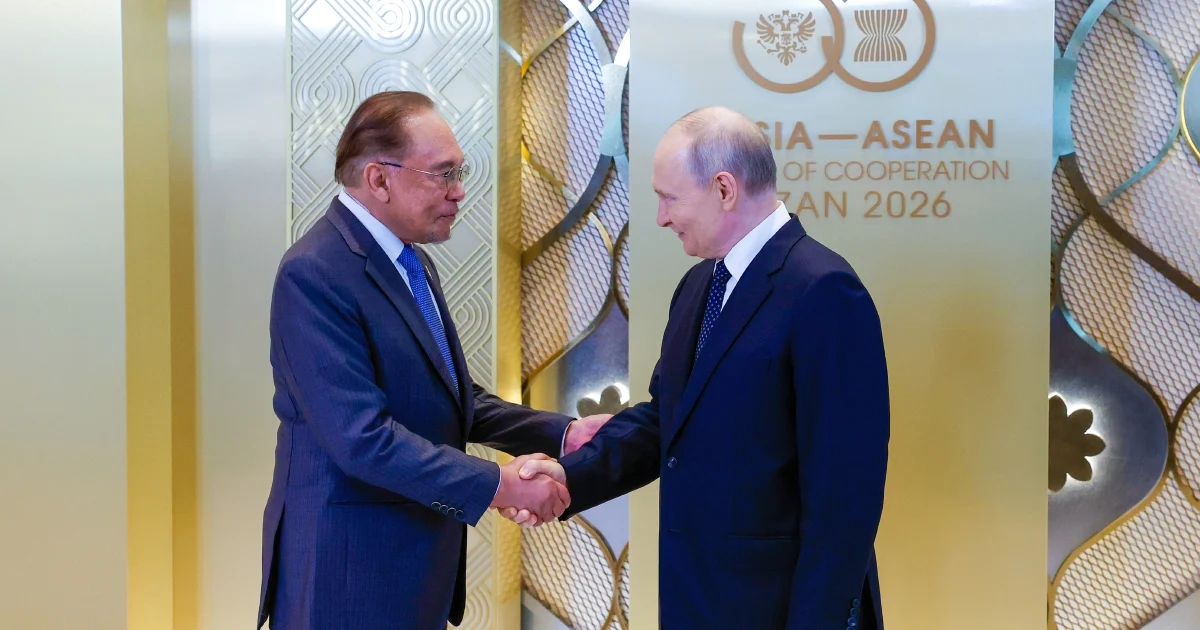
Prime Minister Datuk Seri Anwar Ibrahim disclosed in Bintulu today that Malaysia is moving decisively to fortify its standing in the world's energy landscape by cultivating partnerships with leading energy-producing nations. The assurance from Russian President Vladimir Putin underscores a deliberate diplomatic strategy to lock in reliable access to fuel resources and power generation capacity for years to come, addressing growing concerns about energy supply stability across the Asia-Pacific region.
The engagement between Malaysia and Russia on energy matters reflects broader geopolitical reorientation in Southeast Asia, where nations seek to diversify their energy portfolios away from traditional Western suppliers. For Malaysia, a country that has long relied on liquefied natural gas imports to complement domestic production from the South China Sea, securing commitments from major suppliers like Russia provides crucial flexibility in navigating volatile global energy markets. The announcement carries particular significance given escalating tensions affecting energy flows worldwide and the region's accelerating industrialization driving demand for reliable power.
Anwar's statement signals that Malaysia is adopting a multi-pronged approach to energy security rather than depending on any single source or supplier. This strategy acknowledges the vulnerabilities exposed by recent global energy crises, where price spikes and supply disruptions have tested the resilience of nations lacking diversified import channels. By engaging Moscow directly at the highest levels, Malaysia demonstrates its commitment to pragmatic diplomacy that prioritizes national interests in securing affordable, consistent energy supplies for households, manufacturers, and the broader economy.
The timing of this announcement in Bintulu, home to major oil and gas infrastructure including the Petronas liquefied natural gas plants, carries symbolic weight. The location underscores Malaysia's intention to position itself as a serious participant in global energy markets while simultaneously reinforcing its role as a significant energy producer in its own right. Bintulu's significance as an energy hub makes it an apt venue for discussing the nation's energy future and international partnerships.
Malaysia's approach aligns with a wider trend across Southeast Asia, where countries balance security concerns with economic realities. Nations in the region have increasingly engaged with non-traditional partners to secure energy access, particularly as global supply chains have become more complex and geopolitically charged. Russia, despite international sanctions related to its actions in Ukraine, remains a major supplier of energy resources globally, and countries continue to seek arrangements ensuring their populations and industries have adequate fuel.
The emphasis on long-term commitments reflects lessons learned from past energy shocks. Unlike spot market purchases that expose buyers to price volatility, long-term supply agreements provide predictability essential for planning infrastructure investments, setting electricity tariffs, and maintaining industrial competitiveness. For Malaysia, such arrangements support efforts to maintain affordable energy costs that benefit consumers while sustaining conditions attractive to foreign manufacturers seeking operational bases in Southeast Asia.
From an economic perspective, stable energy supplies underpin Malaysia's manufacturing sector, particularly energy-intensive industries like petrochemicals, steel production, and semiconductor fabrication. These sectors generate substantial employment and export revenue, making energy security a fundamental component of broader economic strategy. Securing commitments from reliable suppliers allows Malaysian policymakers to focus on industrial policy and infrastructure development without the constant worry of sudden supply interruptions.
The announcement also reflects Malaysia's careful navigation of international relations, maintaining pragmatic engagement with multiple global powers while avoiding exclusive alignment. By openly discussing energy partnerships with Russia while maintaining ties with Western nations and regional neighbours, Malaysia demonstrates its capacity to pursue independent foreign policy responsive to national priorities. This balanced approach has characterized Malaysian diplomacy for decades and continues to define its role as an influential middle power in Southeast Asia.
For regional stability, Malaysia's efforts to secure energy supplies through multilateral partnerships contribute to predictability and reduce competition among nations that might otherwise scramble for limited resources. When major economies conclude binding energy agreements, they reduce uncertainty that could otherwise trigger regional tensions or force countries into uncomfortable geopolitical corners. Malaysia's diplomatic engagement exemplifies how nations can pursue energy security through constructive international cooperation.
Looking ahead, the implications of this energy partnership will likely unfold across multiple dimensions. Malaysia may expect competitive pricing on Russian energy supplies, potentially easing pressure on its current account balance and freeing resources for investment in renewable energy transition initiatives. Simultaneously, the country signals to its international partners that it remains open to diverse supply sources and refuses to be constrained by Cold War-style bloc politics that many Southeast Asian nations found restrictive and counterproductive.
The broader context reveals Malaysia's understanding that energy security represents a prerequisite for achieving its development aspirations and maintaining social stability. As the nation pursues advanced manufacturing, digital economy growth, and eventual transition toward cleaner energy sources, reliable access to conventional fuels during the transition period remains essential. Russia's commitment to supplying energy on favorable terms supports this gradual evolution.
Prime Minister Anwar's statement ultimately reflects Malaysia's maturation as a nation capable of conducting sophisticated, multi-level diplomacy to secure national interests. By cultivating relationships with major energy powers while advancing domestic renewable energy capabilities and maintaining strong regional ties, Malaysia charts a course designed to ensure its citizens and industries never face the debilitating energy shortages that have crippled other developing nations. This strategic positioning reinforces Malaysia's standing as a stable, growth-oriented economy capable of attracting investment and maintaining prosperity in an increasingly complex global landscape.

