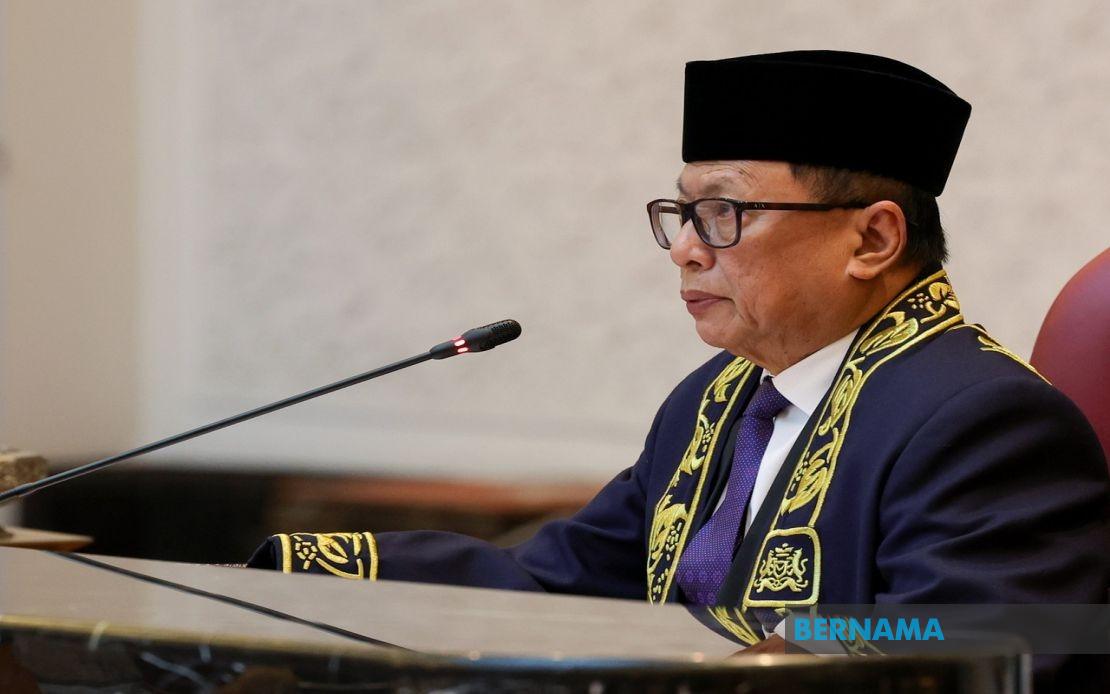
A significant rupture has emerged within Johor UMNO following the departure of Datuk Dr Mohd Puad Zarkashi, a Supreme Council member and incumbent Rengit state assemblyman, who announced his immediate resignation on June 25. The move represents a direct challenge to the state party's leadership, with Puad launching pointed criticism at Chief Minister Onn Hafiz Seri Iskandar, whom he characterises as a compliant figurehead lacking genuine authority within the party structure.
In a statement released through social media, Puad articulated his decision as a deliberate choice to preserve his political independence rather than face forced expulsion. He emphasised that departing voluntarily would liberate him from internal party constraints, enabling him to express dissenting views without accusations of disloyalty. This framing suggests that underlying tensions within Johor UMNO have reached a critical juncture where open criticism from senior figures has become untenable under current party discipline.
The former Batu Pahat Member of Parliament levelled serious allegations regarding the integrity of Barisan Nasional's candidate selection process for the forthcoming Johor state election. Rather than presenting these concerns through internal channels, Puad chose the public domain to amplify his message, indicating either a breakdown in party communication mechanisms or a deliberate strategy to apply external pressure on leadership. His characterisation of Onn Hafiz as a "pak turut" (yes-man) and Johor UMNO as a "tethered puppet" suggests entrenched frustration with how decisions are made and implemented at the state level.
Puad's political trajectory provides context for his current grievances. As a former State Legislative Assembly Speaker and Deputy Education Minister between 2009 and 2013, he commands respect through extensive government service. He also directed the Special Affairs Department (JASA) from 2015 to 2018, positioning him as someone familiar with high-level administrative operations. His earlier parliamentary representation in Batu Pahat, won with a 12,968-vote majority in the 12th General Election, demonstrated electoral strength, though he subsequently lost the seat to PKR's Datuk Mohd Idris Jusi by 1,524 votes in the subsequent election.
Notably, Puad had previously signalled his intention not to contest the Rengit seat in the upcoming election despite securing victory there in 2022. His stated preference for enabling younger candidates to pursue opportunity suggests a measured approach to succession planning. However, his sudden departure indicates that candidate selection decisions made contrary to his recommendations triggered deeper discontent, transforming a personal political calculation into a principled stand against state leadership governance.
The timing of this resignation carries significance for Johor's political landscape. With state elections anticipated, intra-party divisions at the senior leadership level risk undermining UMNO's cohesion precisely when party unity proves most valuable for electoral performance. The public nature of Puad's departure and his explicit allegations of irregularities in candidate selection create a narrative that opposition parties can potentially exploit to question the legitimacy of Barisan Nasional's slate and internal democratic processes.
For Malaysian observers, this episode illustrates persistent tensions within UMNO regarding the balance between concentrated executive power and democratic party structures. Puad's invocation of "political courage" frames his departure as principled whistleblowing rather than mere factional infighting, appealing to broader governance concerns beyond narrow party politics. His emphasis on exposing wrongdoing before it escalates suggests his assessment that systemic problems within Johor UMNO require urgent external accountability mechanisms.
The accusation that Onn Hafiz functions as a yes-man rather than a decisive leader strikes at the heart of questions about decision-making authority within the state party apparatus. If accurate, such dynamics would indicate that actual power resides elsewhere—possibly with federal party structures, informal factional networks, or business interests—rather than with the publicly recognised state leadership. This interpretation resonates with historical patterns of Malaysian party politics where formal positions sometimes diverge sharply from substantive influence.
Puad's deliberate choice to resign rather than accept expulsion demonstrates tactical awareness of how such departures are perceived publicly. Voluntary resignation allows him to retain the moral and political high ground, positioning himself as someone upholding principles rather than responding to disciplinary action. This approach preserves his political options and potential future relevance, whether within UMNO if circumstances change or within alternative political configurations.
The broader implications for Southeast Asian politics are noteworthy, as Malaysian party developments often presage regional trends. Intra-party democracy challenges, questions about leadership legitimacy, and generational tensions within established political organisations affect stability across the region. Puad's case exemplifies how senior figures navigate institutional loyalty against personal conviction and how public dissent serves as a pressure valve for internal grievances.
For Johor specifically, this departure removes a significant voice from within the UMNO hierarchy and potentially emboldens other party members harbouring similar concerns but lacking comparable platform or seniority to articulate them publicly. Whether additional resignations or defections follow will indicate whether Puad's action represents an isolated incident or signals broader organisational instability requiring leadership response and reform.

