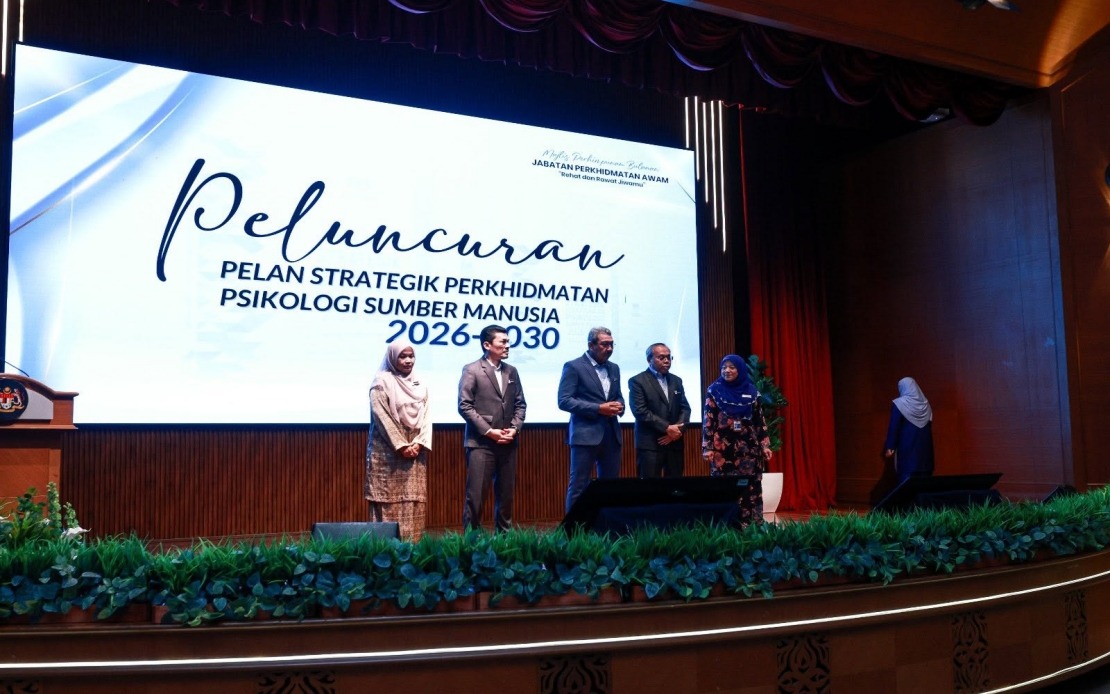
Malaysia's Public Service Department has unveiled an ambitious roadmap to transform how the nation's civil service supports the mental health and psychological well-being of its workforce over the next five years. Launched at the department's June assembly in Putrajaya, the Human Resources Psychology Services Strategic Plan 2026-2030 represents a landmark commitment to addressing mental health within the government sector, which employs approximately 1.6 million people across federal, state, and local authorities. The comprehensive framework encompasses 12 distinct strategies, 22 targeted programmes, and 48 key performance indicators designed to create measurable improvements in how psychological services are delivered and utilised throughout the public administration system.
PSD Director-General Tan Sri Wan Ahmad Dahlan Abdul Aziz formally unveiled the strategy at the department's monthly assembly held under the resonant theme "R&R (Rest and Treat) Your Soul", signalling a deliberate pivot toward normalising self-care and mental health intervention within government employment culture. The messaging emphasised that organisational effectiveness fundamentally depends on the psychological health of individual employees, establishing a causal link between personal well-being and institutional performance that reflects growing international best practices in human resource management. By framing mental health support as essential rather than optional, the strategy seeks to address what has long been a significant gap in Malaysia's public sector infrastructure.
A central pillar of the strategic plan involves dismantling entrenched stigma surrounding psychological services and mental health treatment among civil servants. Tan Sri Wan Ahmad Dahlan articulated this through the concept of "Treat", which calls on employees to abandon passive acceptance of psychological distress and instead take proactive steps to seek professional intervention. This represents a notable shift from traditional attitudes in many Asian workplace cultures, where discussing mental health concerns has historically been viewed as a sign of weakness or instability. The strategy acknowledges that without direct confrontation of these cultural barriers, even well-resourced psychological services will remain underutilised by those most in need of support.
The "Rawat" intervention framework introduced by PSD provides the operational backbone for this cultural transformation. Rawat, which translates to "care" or "treatment" in Malay, encapsulates proactive identification and management of mental health challenges before they escalate into severe crises that compromise both employee welfare and government service delivery. Rather than waiting for psychological problems to manifest as absenteeism, performance degradation, or medical emergencies, the framework encourages early intervention through accessible professional support services. This preventive approach aligns with evidence-based mental health practice and should theoretically reduce long-term costs associated with untreated psychological conditions among the civil service population.
The five-year plan's integration with existing PSD reform initiatives demonstrates strategic coherence in the department's broader modernisation agenda. The H.E.M.A.T work culture framework—encompassing governance shift, public empathy, progressive mindset, innovation appreciation, and transparent administration—provides complementary structural support for psychological well-being initiatives. These parallel reform streams suggest that PSD recognises mental health not as an isolated personnel issue but as interconnected with workplace governance, management philosophy, and organisational culture. Creating a service environment where employees feel empowered, heard, and valued psychologically becomes inseparable from broader reforms aimed at improving public administration quality.
The establishment of 48 specific key performance indicators signals PSD's commitment to evidence-based evaluation and accountability throughout the implementation process. These metrics will likely track utilisation rates of psychological services, employee satisfaction with mental health support, reduction in stigma-related barriers to seeking help, and measurable improvements in workplace well-being indicators. By quantifying outcomes across multiple dimensions, PSD creates mechanisms for identifying programme strengths and weaknesses, enabling mid-course adjustments throughout the five-year implementation window. This data-driven approach should generate valuable evidence about what mental health interventions prove most effective within the Malaysian civil service context.
For Malaysian civil servants navigating complex and often stressful administrative roles, the strategic plan offers tangible recognition that psychological well-being matters within government employment. The explicit messaging that "rest when you are tired and take care of your soul before it gets worse" legitimises self-care as a professional obligation rather than personal indulgence. This framing carries particular significance in Asian contexts where work-life balance and mental health remain comparatively underprioritised relative to Western peer nations. By positioning mental health support as organisational priority rather than individual responsibility, the strategy potentially reduces the shame and hesitation that might otherwise prevent civil servants from accessing available services.
The 22 programmatic components of the strategic plan will likely encompass diverse interventions ranging from counselling services and mental health awareness campaigns to manager training and workplace environment modifications. Effective implementation requires substantial investment in trained psychological professionals, accessible service delivery infrastructure, and sustained organisational commitment across multiple government agencies and local authorities. The success of such an ambitious initiative depends heavily on line managers and senior administrators actively promoting psychological well-being rather than merely complying with PSD directives, representing a significant cultural change management undertaking.
This strategic plan carries implications extending beyond Malaysia's immediate civil service. As Southeast Asian governments increasingly confront mental health challenges among public sector employees, Malaysia's comprehensive approach provides a model for peer nations considering similar interventions. Thailand, Indonesia, and the Philippines each employ millions of civil servants working under conditions that often generate substantial psychological stress. Malaysia's willingness to invest in systematic mental health support within government employment potentially demonstrates regional leadership in recognising that sustainable public administration depends fundamentally on psychological resources of the workforce.
The pathway to meaningful change nonetheless requires sustained implementation commitment and sufficient resource allocation across five years and multiple change cycles. Initial enthusiasm at departmental launch must translate into consistent budget allocations, professional training programmes, and genuine cultural shifts in how civil servants experience psychological support availability. The metrics established within this framework will ultimately determine whether the strategic plan succeeds as transformative reform or remains as aspirational documentation without commensurate implementation impact. Demonstrating measurable improvements in civil servant mental health outcomes within the 2026-2030 timeframe would establish PSD as a progressive force reshaping public sector human resource practices across the region.

