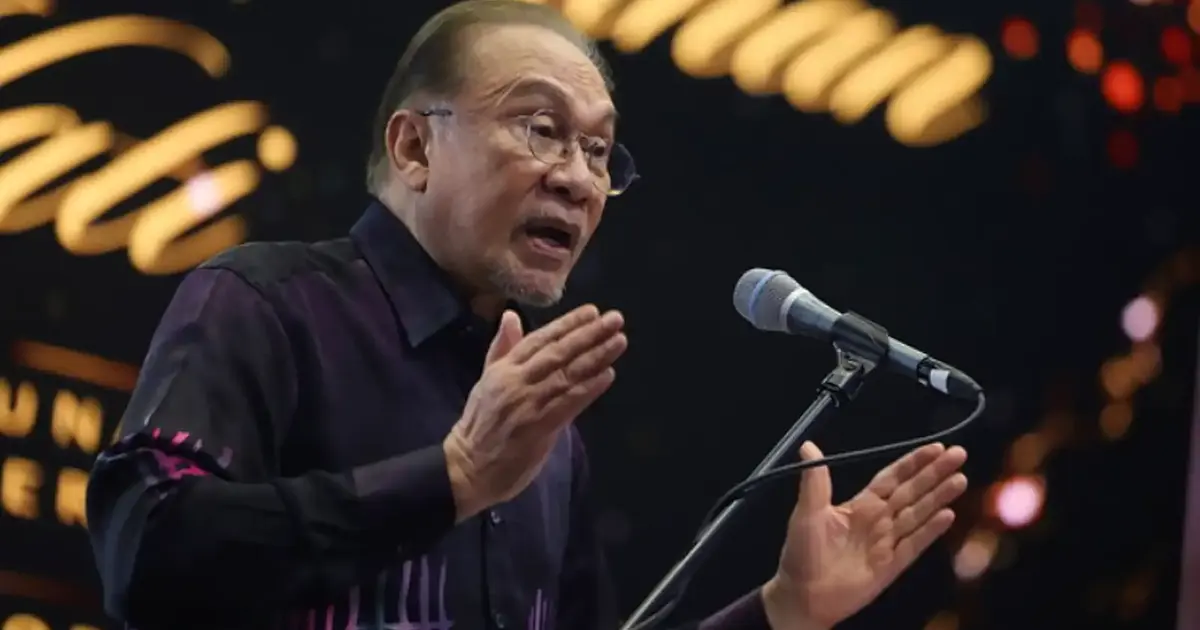
Prime Minister Anwar Ibrahim has made a direct appeal to Malaysians to reject divisive and hate-filled rhetoric being peddled by certain political figures, positioning national cohesion as essential to the country's continued progress and stability. His statement underscores growing concern among government leadership about inflammatory political discourse that threatens the delicate fabric of Malaysia's multicultural society, particularly as the nation navigates complex economic and social challenges.
Anwar's message emphasises that Malaysia's defining characteristic—its plurality across ethnic, religious, and cultural lines—constitutes not a weakness to be exploited for political gain, but rather a profound asset that has enabled the nation to develop as a thriving regional economy. This framing directly counters narratives from certain quarters that attempt to weaponise identity issues for electoral advantage or ideological positioning. By publicly highlighting ethnic diversity as a strength, the prime minister signals the government's commitment to inclusive governance while implicitly criticising competitors who deploy divisive tactics.
The timing of this statement carries significance within Malaysia's political landscape. In recent years, particularly in the run-up to electoral contests and during periods of policy debate, some political actors have sought to mobilise voter blocs through appeals to ethnic and religious anxieties. These approaches often present zero-sum framings of resource distribution, economic opportunity, and cultural representation—narratives that contradict the foundational principle of bumiputera protections coexisting with broader economic integration. Anwar's intervention appears designed to delegitimise such strategies by elevating the conversation toward nation-building rather than factional gain.
For Malaysian citizens across the political spectrum, the prime minister's remarks prompt reflection on the responsibilities that come with democratic participation. The proliferation of inflammatory rhetoric across digital platforms and in traditional media discourse has created an environment where extreme positions gain disproportionate amplification. Anwar's call to "rise above" such messaging suggests an expectation that voters will exercise discernment in evaluating political messaging and prioritise candidates and parties committed to bridging rather than widening societal divisions.
The emphasis on ethnic diversity as a strength also carries economic implications that merit consideration. Malaysia's attractiveness to foreign investors, its ability to foster innovation across sectors, and its regional influence partly stem from its reputation as a stable, multicultural society. Political instability fuelled by communal tensions creates economic uncertainty, dampens investment confidence, and diverts governmental attention and resources from pressing development priorities. By defending pluralism, Anwar positions unity as pragmatically necessary, not merely aspirational.
Regional dynamics further contextualise this message. Southeast Asia faces mounting geopolitical pressures and economic headwinds, making internal coherence particularly valuable. Malaysia's performance as a regional actor—whether in ASEAN forums, South China Sea deliberations, or bilateral engagements—depends partly on the stability and legitimacy of its government. Political polarisation rooted in identity disputes weakens Malaysia's capacity to project influence and respond decisively to external challenges.
The prime minister's appeal also speaks to challenges within Malaysia's own coalition politics. Different component parties and leaders within the government maintain distinct bases and sometimes competing priorities. Anwar's elevation of national cohesion above partisan advantage suggests an attempt to establish ethical parameters for political competition—a framework whereby even fierce opponents respect boundaries that protect communal peace. Whether this rhetorical stance translates into concrete mechanisms for managing political rivalry remains an open question that will unfold through subsequent policy choices and enforcement of standards.
Civil society organisations focused on interfaith dialogue, communal harmony, and democratic participation will likely seize on the prime minister's statement as validation for their work. His public affirmation that diversity strengthens rather than weakens Malaysia provides political cover for initiatives promoting cross-community engagement and mutual understanding. Simultaneously, his criticism of "certain leaders" peddling hate raises expectations that the government will demonstrate consistent action against those who incite communal discord, whether through legal mechanisms or public censure.
The practical challenge ahead involves translating aspirational rhetoric into institutional outcomes. While political leaders can articulate visions of inclusion, realising those visions requires addressing material grievances, ensuring equitable resource distribution, and creating genuine opportunities for upward mobility across all communities. Citizens increasingly evaluate leaders not merely by their words but by whether their actions align with stated values. Anwar's message thus represents both an opportunity and an accountability mechanism—his commitment to rejecting hate speech can only be validated through demonstrable governance outcomes.
Looking forward, this intervention may reshape the tone of Malaysian political discourse, particularly if other leaders—irrespective of factional affiliation—acknowledge the costs of inflammatory rhetoric and commit to more constructive engagement. However, the durability of such shifts depends on reinforcement through consistent messaging, institutional support, and most critically, recognition that Malaysia's continued prosperity and regional standing fundamentally depend on preserving the very diversity that Anwar has now publicly championed.

