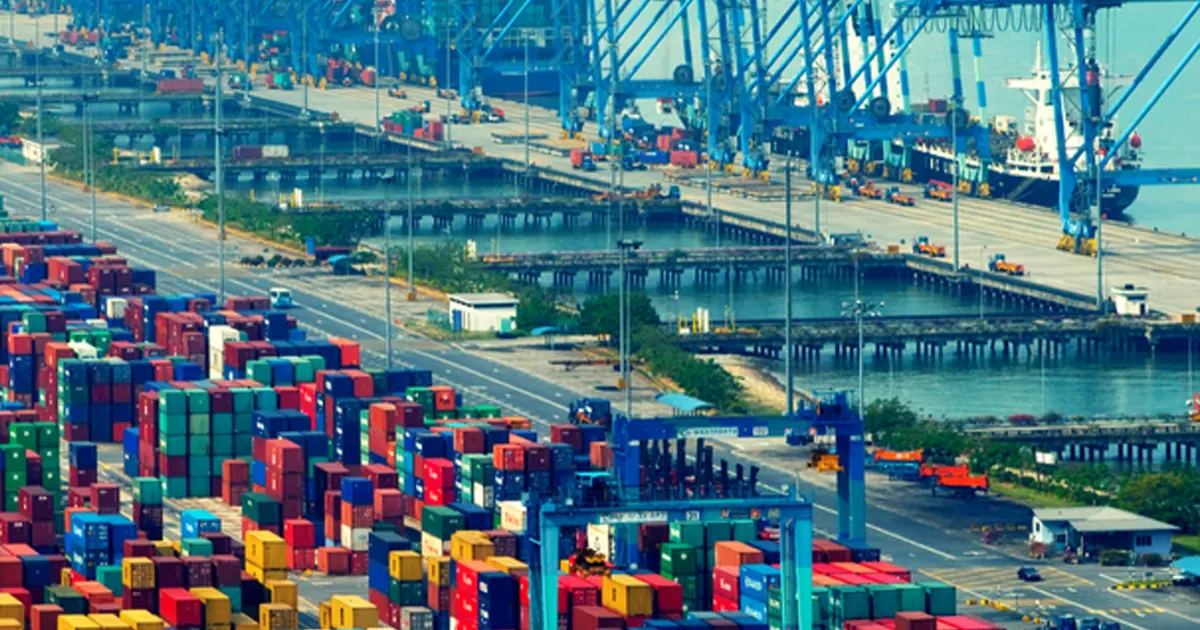
The Port Klang Free Zone has reached a significant milestone, generating RM108 million in revenue as its sprawling reactivation initiative advances to 86 per cent completion. Transport Minister Loke Siew Fook announced the figures, describing the performance over the past 18 months as a period of steady and encouraging development that demonstrates the zone's potential for sustained economic contribution.
The recovery trajectory marks a dramatic shift for an enterprise that has long symbolised the complexities of managing large-scale port infrastructure in Malaysia. The PKFZ, located strategically within one of the country's busiest maritime gateways, has undergone significant operational restructuring aimed at maximising its role as a catalyst for trade, logistics, and value-added manufacturing. The steady revenue accumulation reflects growing confidence among businesses in the zone's operational environment and its ability to facilitate cross-border commerce effectively.
Loke's confidence in the reactivation programme appears grounded in tangible commercial activity. As the zone pushes towards full operational capacity, the achievement of 86 per cent completion suggests that most planned infrastructure improvements, facility upgrades, and tenant accommodations have been implemented or are nearing finalisation. This progression indicates that bottlenecks and operational challenges that once hindered the zone's functioning have been systematically addressed, allowing businesses to operate with greater efficiency and reliability.
For Malaysia's broader logistics and trade sector, the PKFZ's recovery holds implications beyond the zone's immediate commercial footprint. As a duty-free processing area, it serves as an intermediary hub for regional supply chains, particularly for manufacturers seeking to consolidate, repackage, or add value to goods transiting through Southeast Asia. The zone's revitalisation therefore supports not only local port operations but also the competitiveness of Malaysian businesses within increasingly complex international trade networks.
The reactivation effort has likely involved substantial investment in modernising warehouse facilities, improving customs clearance procedures, and enhancing digital infrastructure for cargo tracking and documentation. These improvements address long-standing operational complaints from tenants and international shippers who viewed the zone as cumbersome compared to regional competitors. By streamlining processes and updating facilities, the zone positions itself more attractively within the competitive landscape of Southeast Asian free zones.
Revenue generation of RM108 million within the 18-month timeframe suggests that operational costs are being offset by growing commercial activity. This financial sustainability is crucial for the long-term viability of the zone and its ability to attract additional investment and tenant commitments. As businesses observe positive financial performance and operational reliability, they become more willing to expand their operations or commit to longer-term leases, creating a positive feedback loop that reinforces growth.
The timing of this recovery also aligns with broader shifts in global trade patterns. Post-pandemic supply chain restructuring has prompted companies to reassess their logistics hubs and processing centres, and Malaysia's strategic geographic position and established infrastructure make it an attractive option for regional consolidation. The PKFZ's revival capitalises on this shift, positioning Port Klang as a destination of choice for companies seeking reliable, efficient customs-free facilities.
However, the path to 100 per cent reactivation requires sustained focus. The remaining 14 per cent of the programme likely involves more complex operational challenges or tenant acquisition that cannot be rushed. Transport Ministry oversight remains essential to ensure that outstanding reactivation components receive adequate resources and attention, preventing complacency as the zone approaches completion of major structural improvements.
Looking forward, the PKFZ's success depends on maintaining the momentum generated over the past 18 months whilst expanding the tenant base and deepening commercial relationships with regional and international logistics operators. The zone's operators must continue demonstrating that operational costs and processing times are competitive with alternatives, particularly ports in Singapore, Thailand, and Indonesia that have long-established market presence.
The minister's positive assessment reflects broader government commitment to revitalising strategic infrastructure assets. Port Klang itself remains one of Malaysia's most critical economic installations, and the free zone's recovery contributes meaningfully to the port's overall competitiveness and attractiveness to international shipping lines and trading enterprises seeking Southeast Asian processing hubs.
As the reactivation programme approaches completion, stakeholders will be watching whether the zone can convert its improved operational metrics and growing revenue base into sustained, accelerating growth. The RM108 million revenue figure and 86 per cent reactivation completion rate provide encouraging signals, but the true test lies in whether the zone can retain existing tenants and attract new ones in the increasingly competitive regional marketplace for customs-free logistics infrastructure.

