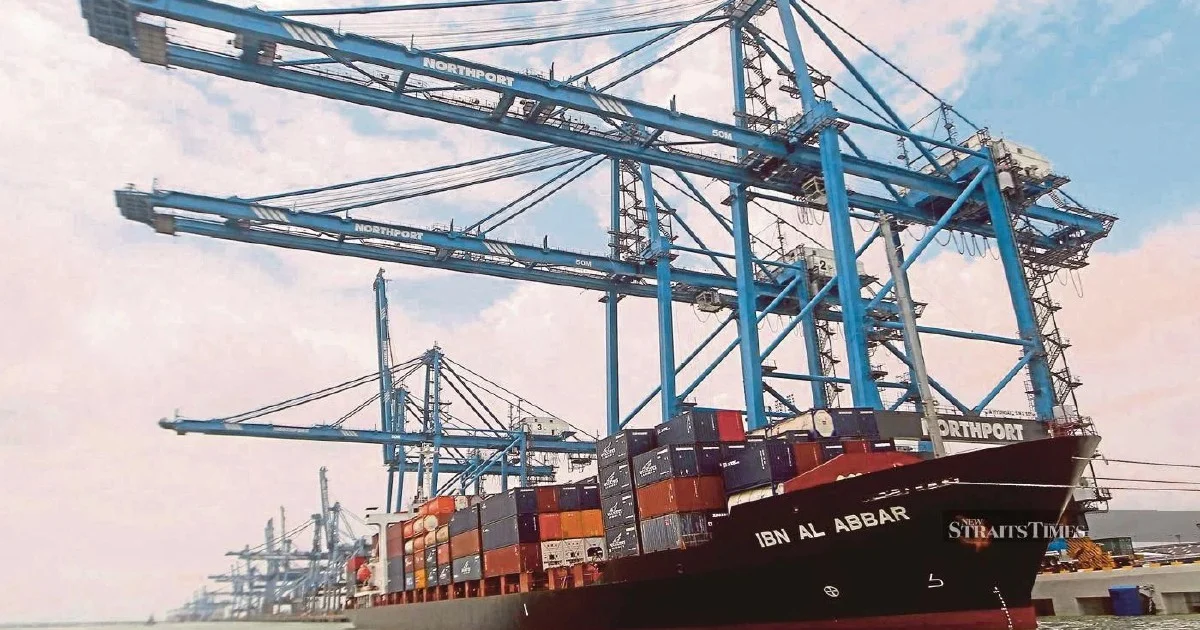
The long-anticipated Port Klang 3 expansion project remains aligned with its development schedule and stands ready to commence construction imminently, provided that lingering land ownership and allocation disputes with the Selangor state government are successfully resolved. Transport Minister Anthony Loke made this assessment today, signalling the government's continued commitment to advancing the major port infrastructure initiative despite administrative hurdles that have delayed its earlier phases.
Port Klang 3 represents a critical expansion of Malaysia's busiest and most strategically important container terminal, handling a significant share of the country's maritime trade and serving as a crucial logistics hub for Southeast Asia's regional commerce. The facility has operated at or near capacity for several years, and congestion has increasingly constrained the ability of shipping lines and logistics operators to efficiently move goods through Malaysia's principal seaport. This expansion becomes even more pressing as container traffic continues to grow across the broader Asian region, with competitors including Singapore's Port of Singapore Authority and Thai ports actively expanding their own infrastructure.
The delay in commencing Port Klang 3 reflects a broader pattern of administrative friction between federal development authorities and Selangor's state government over land designation and usage rights. Malaysia's federal system distributes control over land matters primarily to individual states, creating coordination challenges when major national infrastructure projects require acquisition or allocation of state-owned properties. The Selangor government's interests in protecting local development priorities and revenue streams from land can sometimes conflict with federal transport and trade objectives, a dynamic that has complicated other major infrastructure projects throughout the country.
Resolution of these land-related complications carries substantial economic implications extending well beyond Port Klang itself. Delays in port capacity expansion create bottlenecks that increase shipping costs, extend vessel turnaround times, and ultimately make Malaysian ports less competitive relative to nearby alternatives. For the thousands of Malaysian companies dependent on maritime trade—from importers of raw materials and industrial components to exporters of manufactured goods and agricultural products—port efficiency directly affects their operational costs and international competitiveness. The semiconductor and electronics sectors, which represent enormous shares of Malaysia's export value, rely particularly heavily on smooth port operations for moving high-value components and finished devices.
The project also carries broader implications for Malaysia's positioning within regional supply chains and strategic trade corridors. As geopolitical tensions continue reshaping global commerce and major international firms seek to diversify manufacturing locations away from over-reliance on single countries, Malaysia competes actively to attract foreign direct investment in logistics-intensive manufacturing. Port infrastructure quality and reliability rank among the primary criteria that multinational corporations evaluate when deciding where to establish regional production and distribution hubs. Delays in modernising Port Klang consequently risk undermining Malaysia's attractiveness as a location for manufacturing expansion.
Anthony Loke's public statement appears designed partly to reassure the business community and port users that momentum remains intact despite the administrative friction. The Transport Ministry has invested considerable political capital in the Port Klang 3 project, and delays extending significantly into future years would reflect poorly on the ministry's capacity to execute major infrastructure initiatives. By publicly affirming the project's continued viability and suggesting construction could commence within months, the minister seeks to maintain stakeholder confidence and demonstrate to shipping lines and logistics firms that Malaysia remains committed to enhancing port capacity.
The specific nature of the land disputes with Selangor authorities remains somewhat opaque from public statements, though they likely involve questions about property ownership, compensation arrangements, and the procedural mechanisms through which federal development projects acquire state-owned land. Selangor, as Malaysia's most economically developed state and the location of Kuala Lumpur's metropolitan periphery, contains substantial state-owned land that state authorities view as strategic assets for revenue generation and development planning. Negotiating the terms upon which such land transfers to federal control for transport infrastructure can consume considerable time, particularly when state governments maintain political leverage through their electoral strength and control of local planning authorities.
Successful completion of Port Klang 3 would substantially increase the facility's annual container handling capacity and reduce congestion that currently constrains throughput during peak seasons. Modern container terminals worldwide employ advanced automation and digital logistics integration that accelerates cargo handling and reduces the time vessels spend in port—expensive periods that shipping companies desperately seek to minimise. Port Klang 3, when completed, would incorporate contemporary container-handling technology and operational practices, positioning the facility to compete more effectively with regional competitors and serve as an attractive gateway for international trade flows.
The timeline for resolving land matters with Selangor likely depends on whether negotiators can reach consensus on compensation frameworks, procedural pathways, and any arrangements that address state government concerns about the project's impacts on broader regional development. Such negotiations typically involve multiple stakeholder groups including port authorities, federal transport agencies, state officials, and potentially private sector partners if private investment plays a role in the project's financing. The complexity of coordinating these various interests across multiple government levels explains why transport infrastructure projects in Malaysia often experience timeline delays even when political commitment to the projects remains strong.
Should the land disputes reach resolution during the coming months, Port Klang 3 would join several other major Malaysian infrastructure initiatives currently under construction or in advanced planning stages, including the expansion of Kuala Lumpur International Airport and improvements to major highway corridors. Clustering these large projects simultaneously creates opportunities for efficiency gains through shared procurement and labour resources, but also generates significant demand pressures on Malaysia's construction industry. The successful sequencing and coordination of these multiple major infrastructure efforts will substantially influence whether Malaysia can realise the economic benefits these projects promise or whether cost overruns and timeline slippage undermine their effectiveness.

