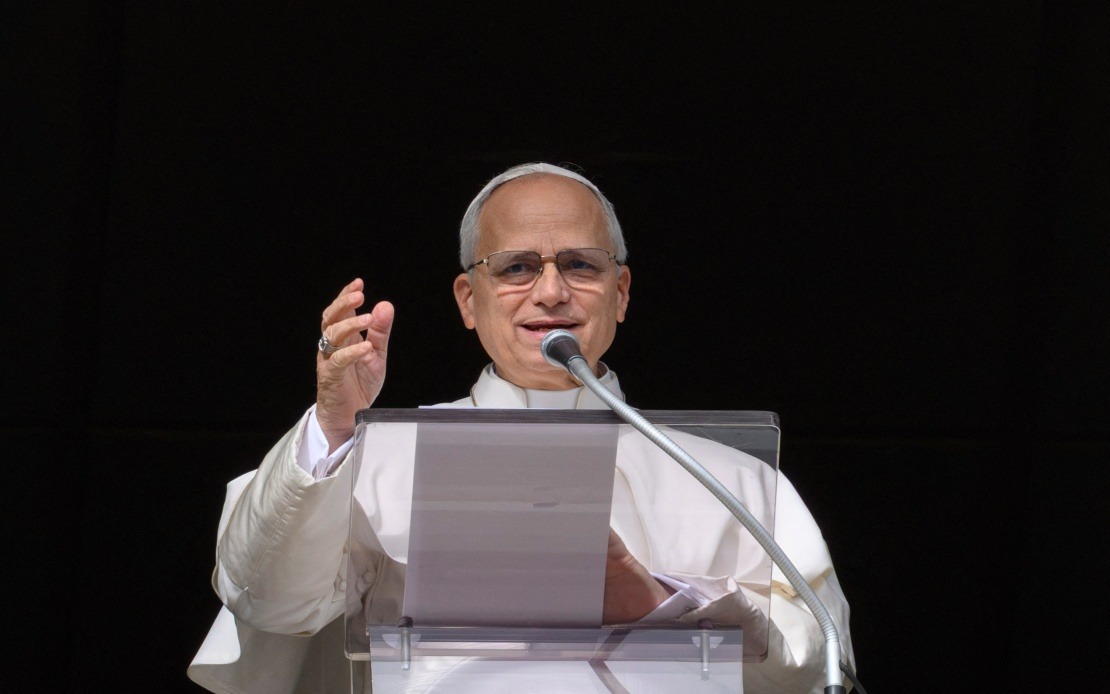
Pope Leo XIV has issued a significant warning about the dangers of treating artificial intelligence as a morally neutral technology, arguing instead that every AI system inherently embodies value judgments and reflects particular views about humanity and society. Speaking through social media platform X, the pontiff challenged a widespread assumption in technology circles that AI can be deployed without ethical consequence, urging stakeholders to recognise the profound moral dimensions embedded within algorithmic systems from the earliest stages of development.
The papal statement addresses a critical gap in how societies approach AI governance. Many technology companies and policymakers have attempted to position AI as a purely technical tool—a neutral instrument whose ethics depend solely on how users apply it. Leo's intervention directly contradicts this notion, arguing that such neutrality is impossible. Every decision made during the design phase, from selecting training data to establishing algorithmic priorities and classification systems, reflects deliberate choices rooted in specific understandings of human nature and the ideal organisation of society. These choices are not technical conveniences; they are fundamentally moral acts that shape how the technology will operate and whom it will benefit or disadvantage.
For Malaysian policymakers and technologists, this papal intervention carries particular relevance. As Malaysia develops its own AI regulatory frameworks and domestic capacity in artificial intelligence, understanding that no system is truly neutral should inform how the country approaches these technologies. Malaysian businesses developing AI solutions, regulatory bodies overseeing deployment, and educational institutions training the next generation of technologists all need to confront the reality that their choices have moral weight and societal consequences. The pontiff's emphasis on design choices suggests that Malaysia's AI future depends not merely on acquiring the technology but on actively shaping its moral architecture according to Malaysian values and priorities.
The pope highlighted that ethical scrutiny of AI must go far deeper than examining how systems are ultimately used. Comprehensive moral analysis requires examining the data itself—where it comes from, whose perspectives it represents, and whose experiences it marginalises or omits. Historical datasets often encode existing social biases and inequalities, potentially amplifying discrimination when translated into algorithmic decisions. For developing economies like Malaysia, this presents an urgent concern. If local institutions adopt AI systems trained on predominantly Western data using Western priorities, those systems may poorly serve Malaysian contexts, reinforce foreign assumptions, and undermine the development of indigenous technological capacity grounded in local understanding.
Beyond data scrutiny, the pontiff emphasised that examination must extend to the fundamental vision of humanity embedded within AI models and systems. Different AI architectures reflect different assumptions about human nature—whether humans are primarily economic actors, security risks, or beings with intrinsic dignity deserving of respect and autonomy. These underlying assumptions profoundly influence how AI systems interact with people and what outcomes they prioritise. A system designed around one conception of humanity may optimise for efficiency at the expense of human flourishing, while another might protect human agency even at some efficiency cost. The choice between these approaches is not technical but philosophical and moral.
The pontiff then turned to the question of accountability, articulating what may be the most practically urgent dimension of his message. He insisted that responsibility must be crystalline and clearly attributed at every stage of an AI system's lifecycle. This includes those who conceptualise and construct the technology, those who implement it in organisational contexts, and those who depend on its outputs for consequential decisions affecting people's lives. In practice, accountability often becomes diffuse and difficult to locate—developers claim they merely built tools according to specification, deployers claim they followed the provider's guidelines, and users claim the system made autonomous decisions beyond their control. This accountability vacuum allows harm to occur without anyone bearing clear responsibility.
The mechanism of accountability itself demands serious attention. Leo stressed the importance of identifying not just who bears responsibility but who must justify decisions made by or with AI assistance, monitor their operation to ensure alignment with ethical principles, and possess the authority to challenge problematic outputs or decisions. This accountability structure requires not just policies but practical systems—independent auditors, accessible appeals processes, and genuine power to halt or modify AI deployments when they cause harm. For Malaysia, constructing such accountability mechanisms will require coordination across technology companies, government agencies, and civil society, with clear lines of authority and genuine consequences for violations.
The implications of this papal intervention extend across Southeast Asia and particularly affect developing nations navigating rapid AI adoption. Many countries in the region face pressure to adopt AI systems quickly to remain economically competitive, often without time for thorough ethical evaluation. However, Leo's argument suggests that accelerating adoption without interrogating moral foundations risks embedding problematic assumptions, biases, and power structures into critical systems affecting healthcare, education, finance, and governance. The initial investment of time and resources into morally conscious AI development may slow short-term deployment but creates foundations for more legitimate, beneficial, and sustainable long-term technological integration.
For Malaysian businesses developing AI solutions intended for regional or global markets, the pontiff's message offers both challenge and opportunity. Companies that carefully examine and justify the moral dimensions of their systems, that source and clean their training data with attention to representation and bias, and that establish clear accountability mechanisms may gain competitive advantage through greater legitimacy and user trust. Conversely, companies treating AI as merely technical tools without moral reflection risk regulatory backlash, reputational damage, and ultimate rejection in markets increasingly conscious of technology's social impact. The pope's intervention signals that the era of morally unexamined AI development is ending.
Looking forward, Leo's emphasis on defining responsibility clearly at every stage suggests that future AI governance will increasingly require collaborative frameworks bringing together technologists, ethicists, affected communities, and government authorities. Malaysia has opportunity to position itself as a leader in morally conscious AI development, one that explicitly integrates ethical reflection into technical processes rather than treating ethics as an afterthought or constraint. This approach aligns with Malaysia's multicultural context and Islamic values emphasising human dignity, justice, and accountability—values that can serve as foundations for AI systems that genuinely serve Malaysian and Southeast Asian communities rather than importing external moral frameworks.

