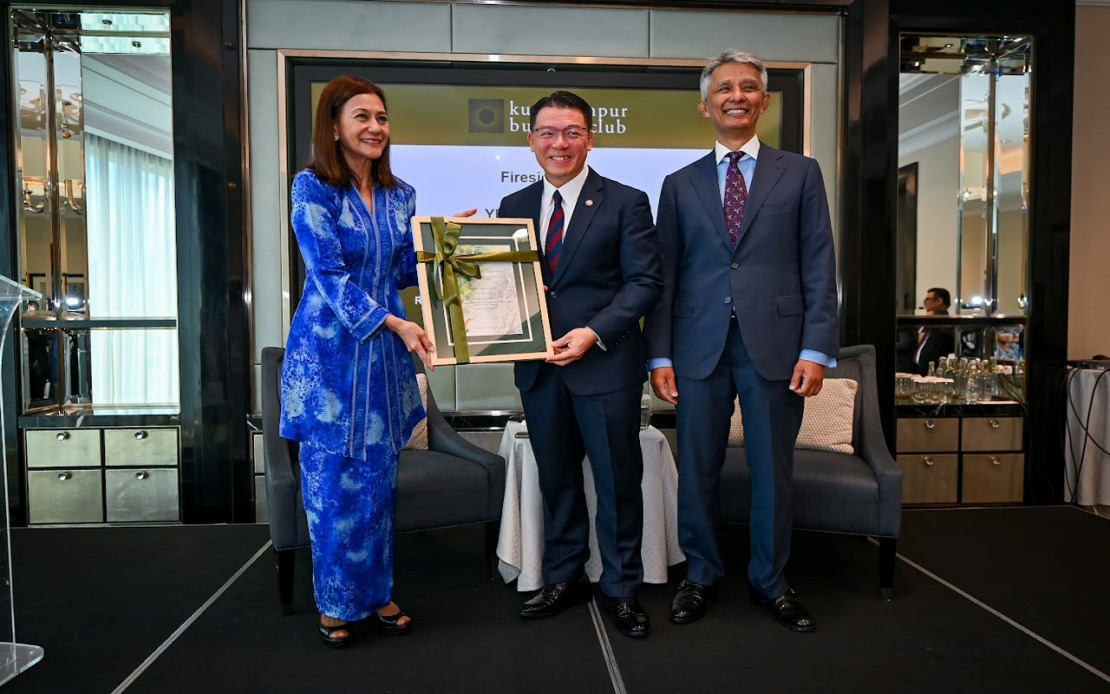
The sustainability of Malaysia's economic reforms hinges on maintaining unwavering policy direction, according to Housing and Local Government Minister Nga Kor Ming, who highlighted the critical role of governance continuity in driving the nation's long-term development agenda. Speaking after a fireside chat hosted by the Kuala Lumpur Business Club, Nga emphasised that the MADANI framework requires steadfast implementation to translate ongoing initiatives into tangible economic improvements that benefit stakeholders and citizens alike.
Nga's remarks underscore a fundamental challenge facing policymakers across Southeast Asia: the tension between introducing reform and consolidating gains through persistent execution. In Malaysia's context, where structural economic transformation has been a stated objective for successive administrations, the minister argues that premature shifts in direction or diluted commitment can undermine investor confidence and fragment reform momentum. This insight carries particular weight given Malaysia's position as a middle-income economy seeking to transition toward higher-value economic activities and innovation-driven growth.
The minister stressed that institutional stability and consistent governance frameworks directly influence how international and domestic investors assess risk and opportunity. When government priorities shift frequently, even well-intentioned reforms can falter as businesses struggle to adapt to changing regulatory environments and policy incentives. Malaysia's experience with competing development initiatives in recent years illustrates how fragmented approaches can dilute impact, making Nga's argument for sustained focus relevant to current economic debates.
Nga attributed recent improvements in Malaysia's investment attractiveness to measurable policy successes, citing the nation's strengthened position as a destination for foreign capital. He pointed to clear policy frameworks, robust economic fundamentals, and political stability as enablers of this shift, suggesting that these conditions require continuous nurturing rather than episodic attention. The backdrop here is Malaysia's competition with regional peers—Thailand, Vietnam, Indonesia—for foreign direct investment, where consistency in rules and institutional reliability often prove decisive factors in investor location decisions.
Among concrete achievements highlighted by the minister are improvements in Malaysia's Corruption Perceptions Index rankings, reflecting efforts to strengthen governance standards and institutional integrity. These gains matter beyond symbolic value; they influence borrowing costs, foreign direct investment flows, and the broader business environment that shapes competitiveness. Countries that demonstrate sustained commitment to anti-corruption measures tend to attract capital seeking lower governance risk, a dynamic directly relevant to Malaysia's efforts to remain attractive amid tightening global capital markets.
The minister also referenced Malaysia's enhanced international credit ratings as evidence of fiscal credibility improvements. Stronger ratings lower borrowing costs for both government and private sector entities, creating positive spillovers throughout the economy. These improvements typically accumulate gradually and can reverse quickly if policy direction becomes uncertain, reinforcing the case for continuity in macroeconomic management and fiscal discipline.
Nga's reference to strategic partnerships—including a RM52.73 billion arrangement with Turkmenistan and energy collaboration with Russia—illustrates how sustained foreign policy can create new economic opportunities. Long-term partnerships require consistency and reliability; countries that frequently shift diplomatic or economic partnerships risk being viewed as unreliable counterparts. Malaysia's ability to negotiate substantial partnerships reflects accumulated credibility from previous policy commitments, an asset that could erode if future administrations pursue divergent directions.
The minister's emphasis on policy continuity touches on a broader governance challenge relevant across Southeast Asia. Developing and middle-income economies often struggle to maintain reform momentum across electoral cycles, as new governments prioritise different constituencies or policy agendas. This cycle can trap countries in incomplete reform equilibria where initial improvements create constituencies defending existing arrangements, while pursuing deeper structural change becomes politically challenging. Malaysia's experience navigating this dynamic offers lessons for neighbouring economies wrestling with similar pressures.
For Malaysian businesses and investors—both domestic and foreign—the minister's remarks signal confidence in the government's commitment to the reform agenda. This matters for investment planning horizons; companies making ten-year capital commitments need assurance that policy frameworks will remain broadly consistent. Conversely, uncertainty about future policy direction typically leads to shorter investment horizons, smaller commitments, and delayed expansion plans, all of which dampen economic dynamism.
The urban development focus of the Kuala Lumpur Business Club event—centred on how MADANI reforms reshape Malaysia's urban economy—reflects recognition that cities function as economic growth engines requiring coordinated policy frameworks spanning zoning, infrastructure, governance, and regulation. Disrupting these frameworks through policy shifts can create inefficiencies and underutilised infrastructure investments, arguments particularly salient for Malaysian policymakers given substantial urban development commitments already undertaken.
Looking forward, Malaysia's capacity to sustain policy continuity while remaining responsive to emerging challenges will substantially influence its economic trajectory. The MADANI framework represents a coherent development vision; whether it delivers transformational outcomes depends critically on execution consistency over multiple electoral cycles. For regional observers, Malaysia's experience will offer evidence about whether middle-income democracies can maintain reform discipline while managing political transitions—a question with implications extending well beyond Malaysia's borders.

