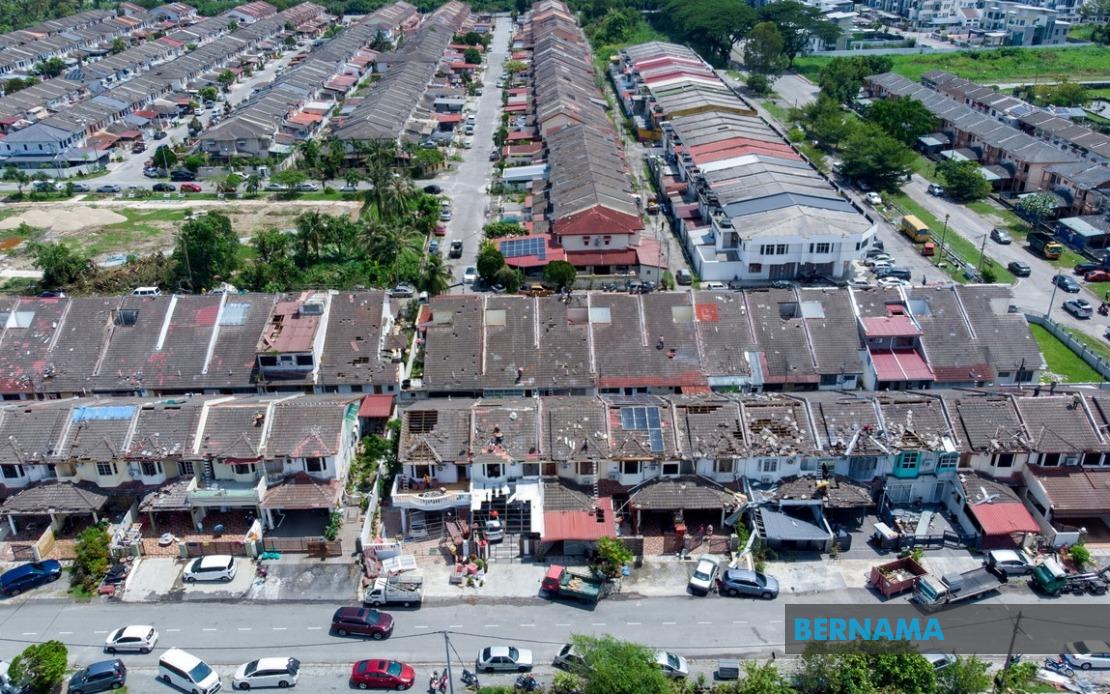
Authorities in Ipoh have moved to secure storm-damaged neighbourhoods in Bercham by establishing controlled access points across five affected zones, a preventive measure designed to deter opportunistic crime during the recovery period. The Ipoh district police chief ACP Muhammad Najib Hamzah announced the cordon strategy after inspecting the Incident Control Post at Bercham police station, signalling heightened security concerns as vulnerable properties await repairs and cleanup.
The decision to restrict movement reflects a calculated balance between preventing theft and accommodating residents who need access to their damaged homes. While police acknowledge the necessity of allowing some flexibility for homeowners conducting nighttime cleaning and salvage operations, the force intends to enforce stricter protocols after dark in areas still without electricity, including Anjung Bercham. This targeted approach recognises that darkness creates opportunities for criminals to pose as cleanup workers while looting unoccupied or partially damaged properties.
The storm, which struck on Friday, has been characterised as extraordinary by Ipoh Barat Member of Parliament M. Kulasegaran, who also serves as Deputy Minister in the Prime Minister's Department (Law and Institutional Reform). Preliminary assessments indicate that more than 200 houses in Bercham sustained damage, though the full extent of property losses remains under evaluation. Meteorological analysis suggests the destruction resulted from a landspout phenomenon, a relatively rare and violent weather event that can cause concentrated, severe damage across localised areas.
Geographically, the disaster has impacted multiple residential communities across the Bercham region. The affected neighbourhoods include Anjung Bercham Utara, Taman Mujur, Kampung Bercham, Kampung Tersusun Tasek, Taman Pusat Bercham and Taman Indah Sakti, collectively representing a significant residential population. The breadth of the damage across these distinct areas underscores the indiscriminate nature of the weather event and the complexity of mounting an effective emergency response.
As of 8 am on the day of the police announcement, authorities had documented 492 storm-related incident reports through Op Bencana, the national disaster response operation framework. The ongoing acceptance of reports means that affected residents continue to lodge complaints as they assess damage to their properties, suggesting that the full scope of the disaster may not yet be apparent. The absence of a reporting deadline provides assurance to victims that they retain the ability to document losses even as recovery operations progress.
The security measures implemented by police represent an essential component of disaster management that extends beyond immediate rescue and relief efforts. In the aftermath of natural disasters, communities become vulnerable to criminal exploitation, with reports of looting and home invasion increasing substantially in affected areas. By establishing visible police presence and access controls, authorities aim to discourage criminal activity while maintaining the balance required for legitimate recovery work to proceed.
Nighttime surveillance protocols prove particularly critical given the infrastructure damage across Bercham. The loss of electrical supply in neighbourhoods such as Anjung Bercham eliminates natural deterrents to criminal activity and complicates residents' ability to assess damage safely. Police verification procedures ensure that individuals entering cordoned zones at night possess legitimate claims to affected properties, creating an additional layer of protection against fraud and theft masked as cleanup activities.
From a Malaysian disaster management perspective, the Bercham incident demonstrates the emerging challenges posed by extreme weather events in urban and semi-urban settings. Landspouts and similar phenomena represent relatively low-frequency hazards that can surprise communities accustomed to more conventional storm patterns. The concentration of damage across multiple residential neighbourhoods highlights the vulnerability of densely populated areas and the cascading effects of infrastructure damage on community safety and recovery capacity.
The police response also reflects evolving best practices in post-disaster law enforcement, where security concerns must be addressed without impeding legitimate recovery activities. The protocol of monitoring and verification during nighttime access attempts represents a nuanced approach that acknowledges both the rights of affected residents and the legitimate security interests of the broader community. As electrical services are restored and cleanup progresses, these restrictions will likely be eased in phases.
For residents across Malaysia's northern region, the Bercham incident serves as a sobering reminder of weather-related risks and the importance of community preparedness. The rapid establishment of police controls and incident management infrastructure demonstrates coordination between local law enforcement and disaster response agencies, though questions remain regarding the adequacy of warning systems and building resilience measures in areas vulnerable to meteorological extremes. The landspout phenomenon in particular may warrant increased public awareness campaigns in susceptible regions.
The full damage assessment in Bercham remains ongoing, with authorities still compiling comprehensive loss data. This extended evaluation period reflects the practical complexity of surveying hundreds of properties across multiple neighbourhoods and coordinating with residents whose own information may be incomplete during the immediate post-disaster phase. The gradual clarification of impacts will inform both relief assistance decisions and longer-term urban planning considerations for the affected communities.

